
US Orders Evacuations in Gulf as Drone Strike Hits Embassy in Riyadh
By Tahir Shah :
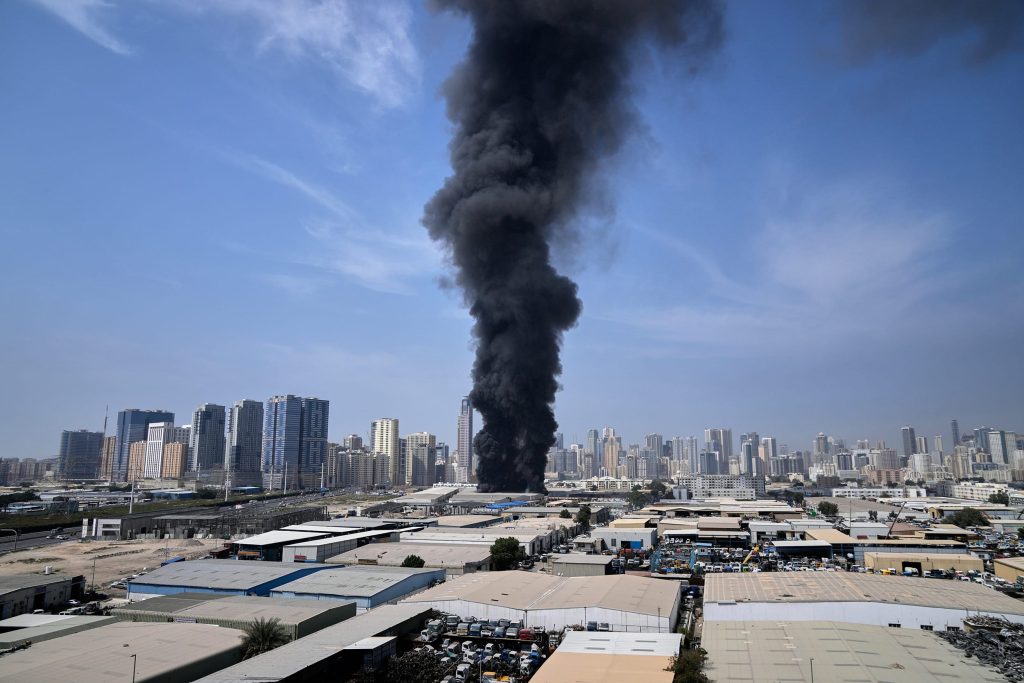
The United States has ordered the evacuation of non-emergency personnel and family members from Bahrain and Jordan, citing escalating security risks amid the widening conflict with Iran.
In an online notice issued on Tuesday, the United States Department of State said the decision was taken “due to safety risks” as hostilities across the Middle East intensify. The department has also urged American citizens in more than a dozen countries in the region to consider leaving while commercial options remain available.
US Embassy in Riyadh Targeted
The United States Embassy in Riyadh confirmed it had come under attack from Iranian drones early Tuesday.
Saudi Arabia’s defence ministry said two drones struck the diplomatic compound in the capital, Riyadh, causing a limited fire and minor structural damage. No casualties were reported.
The incident followed a separate attack on the US embassy in Kuwait a day earlier.
Rising Regional Toll
The conflict, which began with US and Israeli strikes on Iran, has expanded rapidly, drawing in regional actors and prompting retaliatory missile and drone attacks across the Gulf.
Iranian strikes have targeted energy facilities in Qatar and Saudi Arabia, ships in the Strait of Hormuz, and infrastructure in the United Arab Emirates and Bahrain. Oil and natural gas prices have surged as a result of the disruption.
The Iranian Red Crescent said at least 555 people had been killed in US-Israeli strikes, though those figures have not been independently verified. In Israel, 11 people have been killed in Iranian missile attacks, according to local authorities, while Lebanon has reported dozens of casualties following Israeli strikes on Hezbollah-linked targets.
The US military has confirmed six American service members have died in the conflict. According to a US official speaking anonymously, the fatalities were soldiers from the same logistics unit based in Kuwait.
Nuclear Sites and Military Targets
Iran’s ambassador to the International Atomic Energy Agency said airstrikes had targeted the Natanz nuclear enrichment facility, a key site in Iran’s nuclear programme.
Washington and Tel Aviv have not formally acknowledged striking Natanz in the latest round of operations, though both governments have stated their objective is to dismantle Iran’s missile capabilities and prevent it from acquiring a nuclear weapon.
Israeli Prime Minister Benjamin Netanyahu said Iran had been constructing new underground facilities linked to its nuclear programme, but did not provide evidence.
US President Donald Trump signalled the campaign could last four to five weeks, adding that operations would continue until “all objectives are achieved”. Secretary of State Marco Rubio warned that “the hardest hits are yet to come”.
Conflict Spreads to Lebanon
The violence has also intensified along Israel’s northern border.
The Iran-backed group Hezbollah launched missiles towards Israel on Monday, while Israel responded with airstrikes on Beirut’s southern suburbs and parts of southern Lebanon. Lebanese health officials reported at least 52 people killed and more than 150 injured in overnight strikes.
An Israeli military spokesman said “all options remain on the table”, including a possible ground operation.
Growing Humanitarian Concerns
International organisations have warned of mounting humanitarian consequences.
Amy Pope, director general of the International Organization for Migration, called for urgent de-escalation, warning that millions were already displaced in the region before the latest outbreak of fighting.
With airspace closures affecting travel and commercial flights suspended in several countries, many foreign nationals remain stranded.
The situation remains fluid, with diplomatic efforts yet to produce a ceasefire or clear path towards de-escalation.
About Author