Pakistan power regulator declares revenue-based outages illegal as government refuses to back down
By Shahzad Paracha :
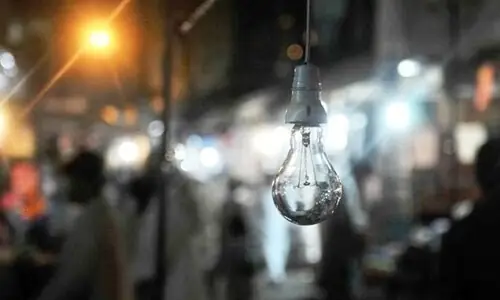
Pakistan’s power sector has been thrust into renewed controversy after the country’s regulator publicly declared revenue-based load shedding unlawful, only for the government to signal it will continue the practice to contain mounting financial losses.
At a public hearing convened by National Electric Power Regulatory Authority, officials confirmed that cutting electricity supply to areas with poor bill recovery violates existing rules. The statement, delivered during discussions on a modest fuel cost adjustment, highlighted a widening disconnect between regulatory policy and government action.
Despite the regulator’s stance, the Power Division made clear it had no immediate plans to halt the outages. Officials argued that abandoning the policy would significantly worsen the country’s circular debt — a chronic issue in Pakistan’s energy sector — which has already surged to nearly Rs1.8 trillion. Without such measures, they warned, liabilities could rise by a further Rs400 billion.
The issue came into sharper focus as senior officials from the Power Planning and Monitoring Company acknowledged that the controversial load shedding model is being applied across parts of the country. Chief financial officer Naveed Qaisar told the hearing that while supply constraints were not affecting K-Electric’s overall capacity, outages were still being enforced in high-loss neighbourhoods due to weak revenue collection.
The admission underscored a longstanding tension within Pakistan’s power system, where distribution companies often struggle to recover costs in certain areas, leading to targeted outages despite adequate generation capacity. Critics argue that the approach disproportionately affects lower-income communities and undermines public trust in the system.
During the proceedings, regulator member Amina Ahmed reiterated that such practices had been ruled illegal in multiple prior decisions. She questioned how a policy deemed unlawful could continue openly, particularly when acknowledged by the very entities subject to regulation. Her concerns, however, were met with silence from other officials presiding over the hearing, reflecting the sensitivity and complexity of the issue.
Alongside the debate on load shedding, the government indicated it was exploring measures to ease pressure on consumers facing rising electricity bills. One proposal under consideration involves removing the petroleum levy on furnace oil used in power generation, a move aimed at offsetting higher costs caused by limited availability of liquefied natural gas.
Any such relief, however, would require approval from the International Monetary Fund, as Pakistan remains bound by fiscal commitments under its financial support programme. The country’s reliance on imported fuels, coupled with currency pressures and structural inefficiencies, continues to drive volatility in electricity tariffs.
Officials also noted a recent improvement in gas supply to the power sector, which has increased significantly in recent weeks and is expected to rise further with the arrival of additional LNG cargoes. Even so, the gains may offer only temporary relief in a system burdened by deep-rooted financial and operational challenges.
The ongoing dispute between the regulator and the government highlights the broader dilemma facing Pakistan’s energy sector: balancing financial sustainability with equitable access to electricity. With circular debt climbing once again and policy contradictions laid bare, the path forward remains uncertain for both consumers and policymakers.
About Author