Global Airlines Suspend Middle East Flights as Airspace Closures Paralyze Regional Travel
By Zeeshan Naseem :
Major international airlines have suspended flights to and from multiple Middle Eastern destinations following the joint United States-Israel military strikes on Iran, which triggered widespread airspace closures across the Gulf region and sent global aviation into turmoil.
The unprecedented disruption began late Friday when Iran closed its airspace to civilian traffic after explosions rocked Tehran and other major cities. Within hours, Iraq, Israel, and several Gulf states followed suit, effectively severing the primary air corridors connecting Europe with Asia and the Middle East.
Carriers Ground Services
Emirates, one of the world’s largest international carriers, announced the suspension of all flights to and from Dubai International Airport until further notice. The airline cited regional security developments and the need to ensure passenger and crew safety. Qatar Airways followed suit, grounding its entire fleet as Hamad International Airport became a holding center for tens of thousands of stranded travelers.
Etihad Airways halted operations from Abu Dhabi, while low-cost carrier flydubai canceled all scheduled departures. Across the Gulf, airport terminals transformed from transit hubs into makeshift shelters as passengers awaited clarity on when normal operations might resume.
European carriers scrambled to respond. Lufthansa suspended all flights to Tehran and Beirut, while KLM and Air France canceled services to multiple regional destinations. British Airways advised passengers to check flight status before traveling to airports, warning of significant disruptions.
The Scale of Disruption
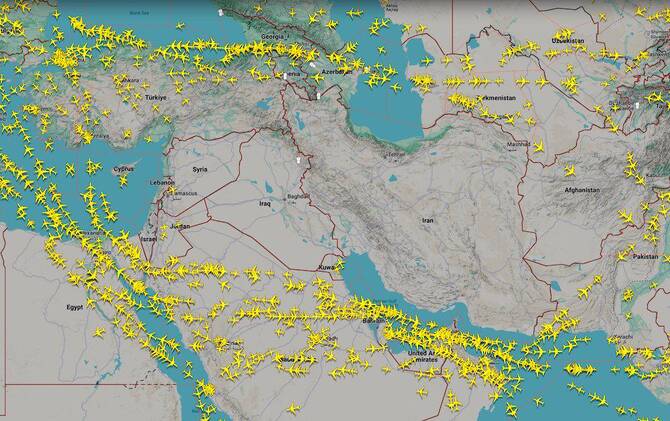
Flight tracking platforms showed aircraft rerouting around the Gulf, with many turning back mid-flight or diverting to alternative hubs in Saudi Arabia, Oman, and Turkey. The closures affected not only passenger travel but also global cargo operations, with freight carriers forced to find alternative routes or park aircraft indefinitely.
Russian carriers suspended all flights to Israel and Iran, according to the country’s transport ministry, with alternative routes being prepared for flights to Persian Gulf countries.
Human Toll
For travelers, the disruption meant hours of uncertainty. At Dubai International, families with young children waited near departure gates, unsure when or if their flights would depart. Business travelers crowded information desks, seeking updates that ground staff could not provide. Hotels near major airports quickly reached capacity as stranded passengers sought overnight accommodation.
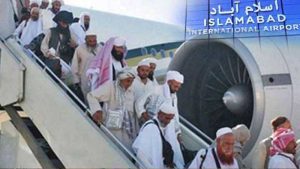
Pakistan’s national carrier, Pakistan International Airlines, adopted a wait-and-see approach, holding several Middle East-bound flights on tarmacs in Karachi and Lahore while assessing the evolving situation.
Regional Impact
The closures sent shockwaves through economies heavily dependent on aviation and tourism. Dubai International Airport, the world’s busiest for international passenger traffic, stood nearly empty as flight after flight appeared canceled on departure screens. Qatar Airways, which relies heavily on connecting traffic through its Doha hub, faced what analysts described as one of the most significant operational challenges in its history.
What Comes Next
Aviation authorities across the region indicated that airspace would remain closed until security assessments confirmed it was safe to resume normal operations. Officials urged passengers to stay in contact with airlines and avoid traveling to airports until further notice.
For the thousands stranded across the Gulf, the wait continued with no clear end in sight as the region braced for potential further escalation.
About Author