Govt Announces Austerity Measures as Global Oil Prices Surge Amid Gulf Conflict
By Shahzad Paracha :
Govt has introduced sweeping austerity measures to deal with the economic fallout of a sharp rise in global oil prices triggered by the ongoing conflict in the Gulf region.
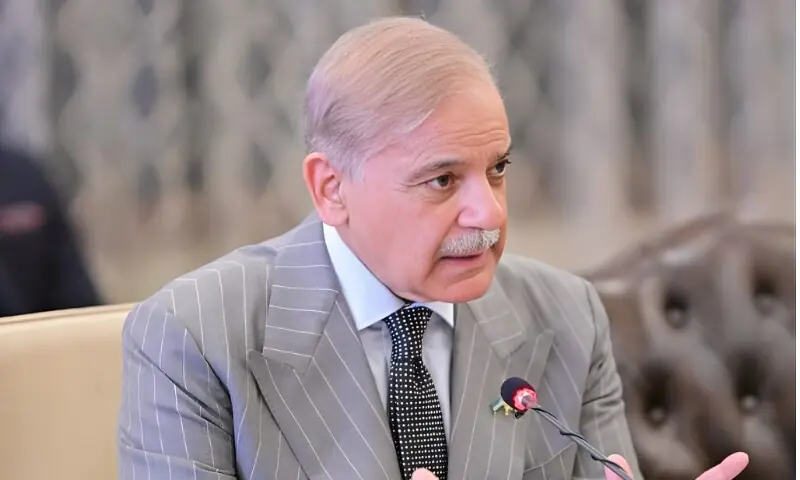
In a televised address to the nation on Monday night, Shehbaz Sharif said the government had adopted an emergency plan aimed at conserving fuel and managing the country’s limited oil reserves. He warned that international oil prices were expected to climb further in the coming days due to the war involving the United States and Israel and its impact on Iran.
Among the key steps announced was a shift to a four-day working week for government offices, operating from Monday to Thursday. Banks, however, will continue to operate as usual, while the agriculture and industrial sectors as well as essential services such as hospitals and ambulance operations will remain unaffected.
The government also ordered the closure of schools and colleges across the country for two weeks. Universities and other institutions operating under the Higher Education Commission will continue their academic activities online during this period.
Under the new policy, both public and private organisations must ensure that at least 50% of their staff work from home. The rule does not apply to agriculture, industry or essential services.
Fuel use within the government will also be significantly curtailed. Official vehicles will receive 50% less fuel over the next two months, while 60% of government vehicles will remain unused during the same period. Ambulances and public transport vehicles are exempt from the restriction.
The prime minister also announced financial sacrifices within the government. Federal ministers, advisers and special assistants will forgo their salaries for two months, while members of parliament will see their salaries cut by 25%.
Senior government officials in grade 20 and above earning more than Rs300,000 per month will have two days’ salary deducted. Government departments have also been directed to reduce their operational spending by 20%.
Foreign travel by federal and provincial ministers, advisers and government officials has been banned, except for visits deemed essential for national interest. The restriction also applies to the prime minister, chief ministers and governors.
To further limit fuel consumption, all government meetings will be conducted online. Official iftar dinners, receptions and similar functions have been banned, while conferences and seminars must be held in government buildings rather than hotels.
‘Difficult decisions’
Mr Sharif acknowledged that the measures would be challenging but said they were necessary to shield Pakistan’s economy from external shocks.
He noted that global oil prices had already crossed $100 per barrel and could rise further if the conflict continued. Pakistan relies heavily on energy imports from Gulf countries, making the situation particularly difficult for the country’s economy.
The prime minister also condemned the attacks on Iran by the United States and Israel, which he said resulted in the killing of Ali Khamenei. At the same time, he criticised Iran’s retaliatory strikes on regional states including Saudi Arabia, Qatar, the United Arab Emirates, Turkiye, Oman, Kuwait, Bahrain and Azerbaijan.
Provinces introduce their own steps
Provincial governments have also begun implementing separate conservation measures.
In Punjab, Chief Minister Maryam Nawaz ordered the closure of all schools, colleges and universities from 10 to 31 March, with institutions allowed to hold classes online. Examinations will continue according to the existing schedule.
She also announced that provincial ministers would not receive free petrol during the ongoing fuel crisis and that allowances for official vehicles had been cut by half. The use of protocol vehicles has been restricted, with ministers allowed only one additional security vehicle.
Government offices in Punjab will adopt a work-from-home model with only essential staff attending physically. Official meetings will be conducted online, and outdoor government activities have been suspended. The Horse and Cattle Show 2026 scheduled for late March has also been postponed.
In Khyber Pakhtunkhwa, the provincial cabinet approved a “Fuel Conservation and Responsible Governance Initiative”, which includes a 25% reduction in fuel allowances for official vehicles for two months. Police, rescue services and law enforcement agencies are exempt.
Authorities also plan to introduce a 50% work-from-home policy for government departments and shift official meetings to virtual platforms. The cabinet further decided to limit the use of VIP protocol vehicles and helicopters while monitoring fuel stations to prevent hoarding.
Meanwhile, Balochistan has ordered the closure of all public and private educational institutions until 23 March. Officials said admissions, school census activities and scheduled examinations would continue despite the temporary shutdown.
The government in Sindh has yet to announce similar measures. Provincial ministers said consultations were underway with the business community, particularly in Karachi, before deciding on steps such as earlier market closures and energy-saving programmes.
Officials say the federal government will continue to review fuel supplies and energy sector developments daily as the regional situation evolves
About Author