PM Shehbaz to unveil austerity plan as fuel crisis deepens amid global tensions
By Tahir Shah :
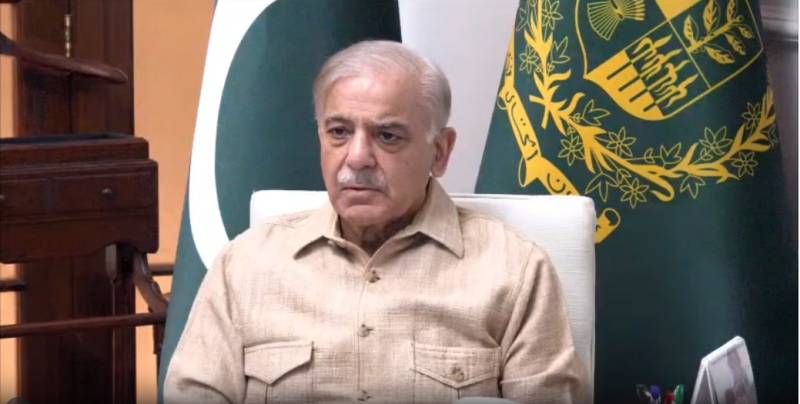
Prime Minister Shehbaz Sharif has announced that the government will unveil a nationwide austerity plan on Monday in response to the ongoing global fuel crisis triggered by the escalating conflict involving the United States, Israel, and Iran.
According to a statement released by the Prime Minister’s Office of Pakistan, the premier chaired a high-level meeting in Lahore on Sunday to review proposed austerity measures aimed at stabilizing the country’s economy amid rising international oil prices and regional instability.
Officials at the meeting informed the prime minister that the final strategy for austerity and energy conservation would be announced the following day. The plan is expected to include several measures designed to reduce fuel consumption and manage the economic impact of soaring petroleum prices.
The meeting comes just days after the government raised petroleum product prices by up to Rs55 per litre, citing a surge in global oil prices linked to intensifying tensions in the Middle East.
During the briefing, officials assured the prime minister that Pakistan currently has adequate reserves of petrol and diesel and that precautionary steps have already been taken to address any potential supply disruptions.
However, authorities warned that the situation remains fluid due to the ongoing geopolitical conflict, which has caused significant volatility in international energy markets.
In response to the crisis, the government had earlier considered implementing temporary measures such as work-from-home arrangements and distance learning to conserve fuel. The proposals were part of a contingency plan developed to reduce commuting and transportation-related fuel consumption.
Prime Minister Shehbaz Sharif, however, decided to delay immediate implementation of these steps and instead ordered that the situation be reviewed on a weekly basis before introducing any nationwide restrictions.
Chairing the meeting, the prime minister stressed the importance of responsible and prudent use of petroleum products during the ongoing crisis.
He emphasized that while the government was taking steps to manage the economic impact, the burden of austerity must be shared across society.
“The burden of austerity should be borne judiciously by all segments of society, while the elite and privileged class should set an example by adopting adjustments and austerity measures,” the prime minister said.
He also directed members of the federal cabinet, provincial ministers, and senior government officials to actively contribute to efforts aimed at providing relief to the public and ensuring efficient use of national resources.
According to officials, the upcoming austerity package is likely to include measures targeting government expenditures, energy consumption, and transportation practices.
Experts believe that the government may introduce limits on official travel, restrictions on government vehicle usage, and reduced electricity consumption in public offices as part of the broader effort to manage resources.
The prime minister reiterated that the government is closely monitoring fluctuations in international oil prices and remains committed to protecting the interests of the public.
“The government is fully aware of the situation and the fluctuations in international oil prices, and therefore measures are being taken to provide maximum relief to the people,” he said.
Pakistan, like many other energy-importing countries, has been facing increasing pressure due to rising fuel costs in the global market. The situation has worsened in recent days following the widening regional conflict that has disrupted oil supply expectations and driven prices upward.
Earlier this week, the government decided in principle to introduce weekly revisions in petroleum prices starting from March 8. The move aims to allow authorities to respond more quickly to global market changes and avoid sudden major adjustments in fuel prices.
Economic analysts say the decision reflects the growing uncertainty in the international energy market and the need for flexible pricing mechanisms.
The government is also reportedly exploring additional energy-saving measures to minimize the economic impact of the crisis. These include encouraging remote work in both public and private sectors, promoting energy-efficient transportation, and raising public awareness about fuel conservation.
Meanwhile, the meeting also reviewed the broader economic implications of the international crisis and discussed strategies to safeguard Pakistan’s financial stability.
Officials briefed the prime minister on potential scenarios should the conflict continue to escalate and affect global oil supplies further.
They noted that while Pakistan’s current reserves are sufficient, prolonged disruption in the international market could put additional pressure on the country’s import bill and foreign exchange reserves.
In such a situation, careful management of fuel consumption and government spending would become even more critical.
Prime Minister Shehbaz Sharif reaffirmed the government’s commitment to taking all necessary steps to protect the economy and ensure the availability of essential resources.
He assured the public that the government was working proactively to mitigate the effects of the global crisis.
“The government will provide significant relief to the masses once the situation stabilises,” he said.
Officials also stressed that the austerity plan would focus not only on reducing government expenditure but also on promoting responsible consumption habits among citizens.
Policy experts believe that encouraging energy conservation at both institutional and individual levels will be key to managing the crisis effectively.
The meeting concluded with instructions to relevant ministries and departments to finalize the proposed measures and prepare them for announcement.
Separately, Prime Minister Shehbaz Sharif visited the residence of senior politician and former provincial minister Zaeem Qadri to offer condolences to the bereaved family.
During the visit, the prime minister expressed sorrow over the passing of the veteran political leader and prayed for the elevation of the departed soul’s ranks.
He also prayed for patience and strength for the family members during this difficult time.
Speaking on the occasion, the prime minister said that the services of the late Zaeem Qadri for democracy and public service would always be remembered.
The visit was also attended by Attaullah Tarar, Federal Minister for Information and Broadcasting, and the prime minister’s Special Assistant Talha Burki.
The government’s announcement of an austerity plan comes at a time when Pakistan is grappling with multiple economic challenges, including inflation, rising import costs, and pressure on foreign exchange reserves.
Analysts say the success of the upcoming measures will depend largely on public cooperation and the government’s ability to implement reforms effectively.
With global energy markets expected to remain volatile in the coming weeks, authorities are preparing for a period of economic uncertainty while attempting to shield the public from the worst effects of the crisis.
About Author