Israel Expands Air Campaign to Lebanon as Trump Signals Prolonged Assault on Iran
By Tahir Shah :
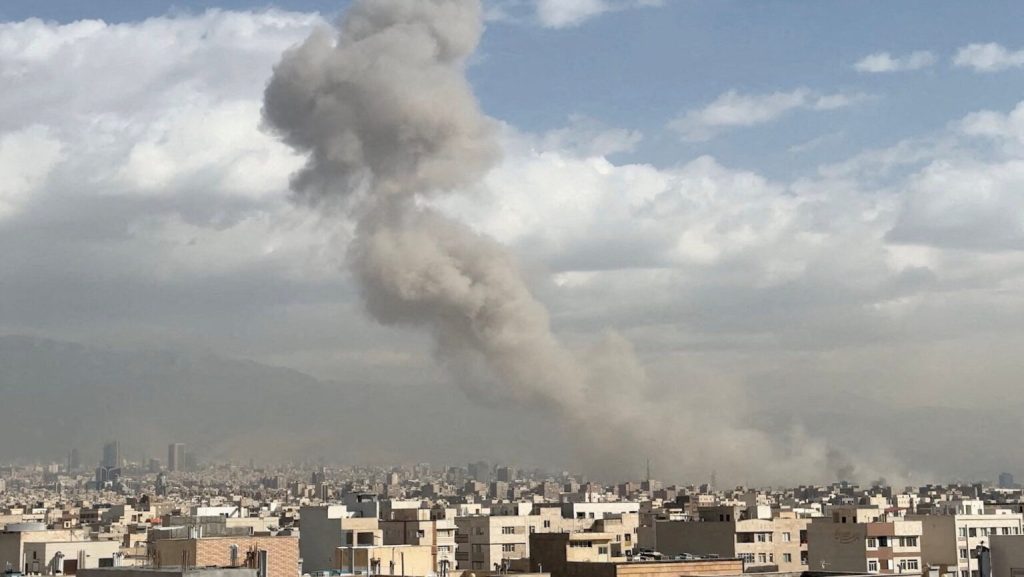
Israel has launched fresh air strikes on Tehran and widened its military campaign to target Hezbollah positions in Lebanon, as US President Donald Trump indicated the joint US-Israeli offensive against Iran could continue for weeks.
The escalation follows the killing of Iran’s Supreme Leader, Ali Khamenei, in coordinated strikes on Tehran. Hezbollah, the Iran-backed Shia armed group based in Lebanon, said it had fired missiles and drones towards Israel in retaliation.
Strikes on Beirut and Southern Lebanon
The Israeli military said it intercepted at least one projectile launched from Lebanon, with others landing in open areas. In response, Israeli aircraft struck what it described as Hezbollah-linked targets in Beirut’s southern suburbs, an area long regarded as a stronghold of the group.
Residents fled on foot and by car as explosions were heard across parts of the Lebanese capital in the early hours of Monday. Israel said it had also targeted senior Hezbollah militants near Beirut.
Hezbollah and Israel had agreed to a US-brokered ceasefire in 2024 after more than a year of cross-border fighting. Lebanese officials said they had received assurances from Washington that Israel would not escalate provided there were no hostile actions from Lebanese territory.
Israel’s military warned that Hezbollah would be held responsible for any further escalation and urged residents in dozens of villages in southern and eastern Lebanon to evacuate.
Air Superiority Over Tehran
Late on Sunday, Israel said its air force had established aerial superiority over Tehran and had struck intelligence, security and military command centres across the capital.
In Iran, President Masoud Pezeshkian announced that a temporary leadership council comprising himself, the head of the judiciary and a member of the Guardian Council had assumed the duties of supreme leader following Khamenei’s death.
Air raid sirens sounded across Israel, including in Tel Aviv, as Iran launched fresh missile barrages. Streaks of light were seen in the night sky as interception systems were activated.
First US Casualties Confirmed
The US confirmed its first fatalities since the campaign began. Three American service members were killed at a base in Kuwait, according to US officials speaking anonymously. President Trump paid tribute to them as “true American patriots” but warned more casualties were likely.
American forces have struck more than 1,000 Iranian targets since major combat operations began on Saturday, the US military said. Mr Trump stated that nine Iranian naval vessels and a naval facility had been destroyed, and that Iran’s military command structure had been severely degraded.
In a video message, the president said strikes would continue until “all our objectives are achieved”, without detailing specific goals. He called on members of Iran’s military and the powerful Islamic Revolutionary Guard Corps to surrender, promising immunity to those who laid down arms and warning of “certain death” for those who resisted.
He also urged Iranians to rise against their government, declaring: “America is with you.”
Political and Economic Risks
An extended conflict could carry domestic political risks for Mr Trump’s Republican Party ahead of US midterm elections. A Reuters/Ipsos poll published on Sunday suggested only about a quarter of Americans support the military operation.
The administration is expected to brief members of Congress on Tuesday. Officials have so far offered limited detail on longer-term objectives for Iran, which now faces uncertainty over its leadership structure.
Regional and Global Impact
Iran’s Revolutionary Guards claimed to have struck US and UK oil tankers in the Gulf and the Strait of Hormuz, and to have targeted military bases in Kuwait and Bahrain with drones and missiles. Shipping data indicated hundreds of vessels had dropped anchor in nearby waters, raising fears of sharp increases in crude oil prices.
Global aviation has also been heavily disrupted. Major airports across the Middle East, including Dubai, were forced to suspend operations amid ongoing air strikes, contributing to one of the most significant interruptions to air travel in recent years.
Oman’s foreign ministry said Iran’s Foreign Minister Abbas Araqchi had indicated Tehran was open to de-escalation. However, in a separate message on X, he suggested Iran was prepared to continue fighting.
Uncertain Future for Iran
Khamenei, who had led Iran since 1989 following the death of Ruhollah Khomeini, leaves behind a deeply entrenched clerical system and a powerful security apparatus.
Analysts say while the loss of senior leadership figures is a major blow, it may not immediately dismantle Iran’s governing structure or diminish the influence of the Revolutionary Guards.
Much now depends on how Iran’s political establishment consolidates power — and how its population responds — as the conflict shows no immediate sign of easing.
About Author