Pakistan Reopens Offshore Exploration Frontier After Nearly Two Decades
By Shahzad Paracha :
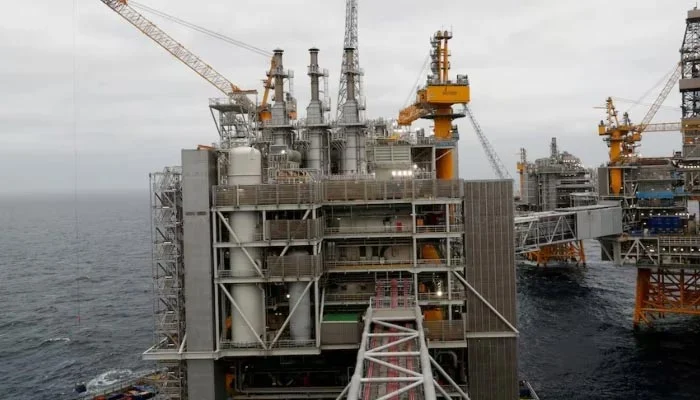
Pakistan has formally reopened its offshore exploration frontier after almost 20 years as the government signed Production Sharing Agreements (PSAs) and Exploration Licences (ELs) for 23 offshore blocks awarded under the Offshore Bid Round 2025.
The signing ceremony was witnessed by Federal Minister for Petroleum Ali Pervaiz Malik, marking a significant step towards reviving offshore oil and gas exploration in the country.
According to the Petroleum Division, the Offshore Bid Round 2025 attracted bids covering approximately 54,600 square kilometres of Pakistan’s offshore territory located in the Indus and Makran offshore basins adjoining the territorial waters of Sindh and Balochistan.
Officials said the move represents one of the country’s most ambitious efforts in recent years to attract foreign and domestic investment into the energy sector and reduce dependence on imported fuel.
The ministry stated that two offshore blocks — Offshore Deep-C and Offshore Deep-F — had already been awarded earlier on December 2, 2025, to a consortium comprising Mari Energies Limited, Turkish Petroleum Overseas Company and Fatima Petroleum Company Limited during a ceremony held at the Prime Minister’s Office.
With the signing of the remaining 21 agreements, the contractual process for the entire offshore licensing round has now been completed.
Speaking at the event, Petroleum Minister Ali Pervaiz Malik described the development as a major milestone for Pakistan’s energy sector. He said the agreements reflected growing investor confidence in Pakistan’s offshore upstream potential spread over approximately 282,623 square kilometres.
The minister pointed out that only 18 exploratory wells had been drilled in Pakistan’s offshore areas since independence, highlighting the largely untapped nature of the country’s offshore energy resources.
He said the successful completion of the offshore bid round demonstrated the government’s commitment to creating a transparent and investor-friendly regulatory environment for international energy companies.
According to the minister, the government introduced new Offshore Petroleum Rules and a revised Model Production Sharing Agreement aimed at improving transparency, competitiveness and investor confidence in Pakistan’s offshore sector.
Among participating companies, Mari Energies emerged as the most active player, securing involvement in all 23 offshore blocks, including 18 as operator and five as a joint venture partner.
Oil and Gas Development Company Limited and Pakistan Petroleum Limited were each awarded eight exploration blocks, including two blocks each as operators.
Meanwhile, Prime Global Energies Limited received one offshore block as operator, while United Energy Pakistan Limited and Orient Petroleum Incorporation also joined the offshore ventures as joint venture partners.
The Petroleum Division estimated that the awarded offshore blocks would attract an initial investment of around $82 million during the first phase of the three-year licence period.
Officials added that total investment could increase to nearly $1 billion if exploration activities advance into second-phase drilling operations.
During the initial phase, companies will conduct geological and geophysical studies, seismic surveys, data acquisition, processing and interpretation to assess hydrocarbon potential in offshore basins.
If the studies produce encouraging results, exploratory drilling operations will begin in prospective offshore areas during the next phase.
The division also stated that the companies involved had committed to carrying out social welfare and capacity-building initiatives in the coastal regions of Sindh and Balochistan as part of their investment obligations.
Energy experts believe the reopening of Pakistan’s offshore frontier could potentially transform the country’s long-term energy outlook if commercially viable oil or gas reserves are discovered.
The government hopes the initiative will not only strengthen energy security but also attract further foreign investment into Pakistan’s upstream petroleum sector in the coming years.
About Author