
Microsoft AI Chief Warns White-Collar Jobs Could Face Massive AI Disruption Within Two Years
By Tanveer Ahmed :
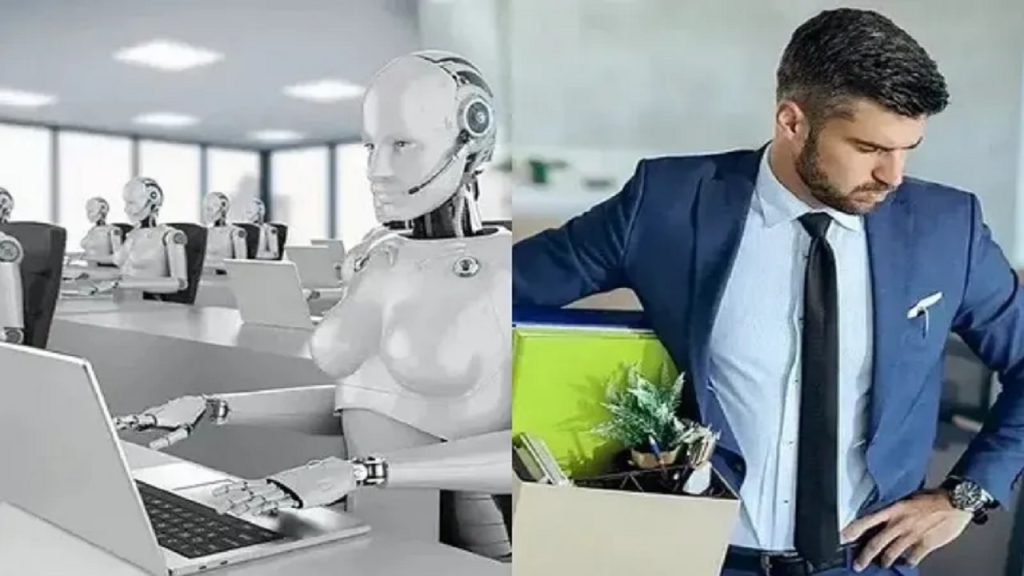
The future of office jobs is rapidly becoming one of the most debated topics in the global technology industry after Mustafa Suleyman warned that artificial intelligence could automate a large portion of white-collar work within the next 18 months.
Speaking in an interview with the Financial Times, Suleyman said AI systems are advancing at an extraordinary pace and may soon be capable of performing many professional tasks at a level comparable to humans. His comments have intensified concerns among workers in industries such as law, accounting, marketing, customer support, software development and project management.
According to Suleyman, jobs that primarily involve computer-based tasks and digital workflows are especially vulnerable to automation. He said AI tools are quickly evolving to handle activities such as data analysis, coding, legal document review, report writing and even certain decision-making functions traditionally carried out by trained professionals.
The remarks reflect a growing belief among technology executives that AI development is accelerating much faster than previously expected. Over the past year, several major technology firms have invested billions of dollars into artificial intelligence systems aimed at improving efficiency and reducing operational costs.
Suleyman attributed much of the rapid progress to advances in computing power and AI model development. He explained that modern AI systems are significantly more powerful than earlier generations and continue to improve in accuracy and capability.
He also suggested that future AI systems could outperform many human coders and analysts, particularly in repetitive or data-heavy tasks. The warning comes as Microsoft continues expanding its investment in AI infrastructure and advanced machine learning technologies.
Businesses accelerating AI adoption
Many companies across the world are already integrating AI into workplace operations. Businesses are increasingly using AI-powered tools for drafting emails, generating summaries, reviewing contracts, analysing spreadsheets and automating customer interactions.
Industry analysts say corporations are attracted by AI’s potential to complete tasks more quickly and at a lower cost than human workers. As a result, some organisations have reportedly slowed recruitment or restructured teams while expanding automation efforts.
Reports published in 2026 have also linked thousands of job reductions globally to AI adoption, although the total number remains relatively small compared to the overall workforce.
Despite these developments, many experts believe the complete replacement of office workers may not happen as quickly as some technology leaders predict.
Experts caution against overestimating AI
While AI systems have become more capable, many professionals argue that the technology still requires significant human oversight. Experts note that AI tools often generate inaccurate information, make logical errors or require extensive correction before their work can be used reliably.
Several recent studies have shown mixed productivity results from AI adoption in workplaces. In some cases, employees using AI systems reportedly spent additional time reviewing and correcting outputs produced by the software.
Researchers say this highlights one of the biggest challenges facing current AI systems: reliability.
Although AI can assist with repetitive tasks and speed up certain processes, experts argue that many professional roles still depend heavily on human judgement, emotional intelligence, creativity and strategic thinking.
New jobs and skills emerging
Despite fears of job losses, analysts believe AI could also create new employment opportunities and reshape how professionals work rather than eliminating entire industries.
Future careers are expected to place greater emphasis on creativity, communication, leadership, problem-solving and AI management skills. Workers who understand how to collaborate effectively with AI systems may remain highly valuable in the changing economy.
Technology experts predict increasing demand for AI trainers, ethics specialists, prompt engineers, cybersecurity professionals and managers capable of overseeing automated systems.
The discussion surrounding AI’s impact on employment has become increasingly important as governments, businesses and educational institutions attempt to prepare for major changes in the labour market.
Microsoft’s broader AI ambitions
Suleyman also discussed Microsoft AI’s long-term objective of developing “superintelligence” — highly advanced AI systems capable of solving problems beyond human capabilities.
Microsoft has been aggressively expanding its AI operations to remain competitive in the rapidly evolving global AI race. The company continues investing heavily in advanced models, computing infrastructure and AI research as competition intensifies among major technology firms.
The debate over whether AI will replace or simply transform office work is likely to continue for years. While some experts foresee large-scale disruption, others believe human workers will continue to play a central role alongside increasingly sophisticated AI systems.
What remains clear is that artificial intelligence is already reshaping modern workplaces, and businesses worldwide are preparing for an era where automation will become a defining part of daily operations.
About Author