Opposition, Civil Society Reject Proposal to Raise Voting Age to 25
By Tahir Shah :
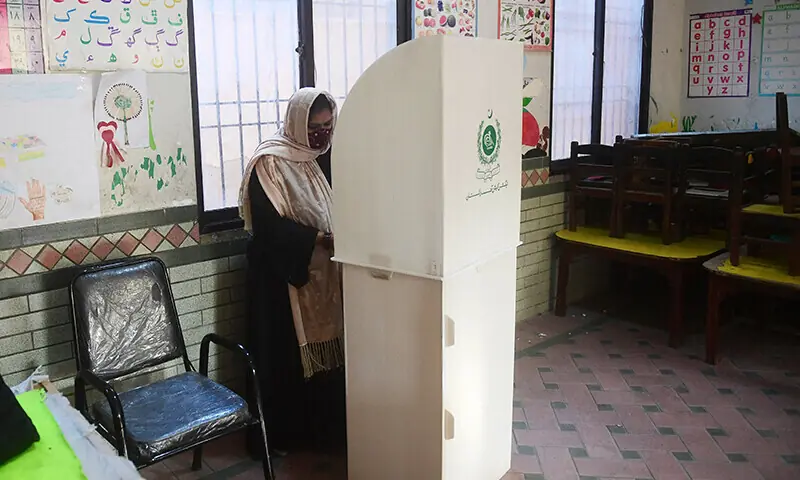
Opposition parties and civil society activists have strongly criticised a proposal to raise Pakistan’s minimum voting age from 18 to 25, calling it an undemocratic attempt to disenfranchise millions of young voters amid discussions surrounding a possible 28th Constitutional Amendment.
The controversy erupted after Rana Sanaullah confirmed during a television appearance that increasing the voting age was among the proposals being discussed in connection with potential constitutional reforms.
Speaking on Geo News, Rana Sanaullah said the proposal was aimed at bringing the voting age in line with the minimum age required to contest elections, which currently stands at 25 years in Pakistan.
“If an individual cannot contest an election before the age of 25, then either the age to contest elections should be reduced to 18, or the voting age should be increased,” he said.
He argued that representation and voting carried equal responsibility and claimed that 25 was generally considered the age at which individuals attained the maturity needed for public representation.
However, Sanaullah clarified that the proposal should not be interpreted as an official government policy.
“It is under discussion, but that does not mean we are going to implement it, or that my party supports it,” he said.
The remarks immediately triggered a political backlash, particularly from the opposition Pakistan Tehreek-e-Insaf (PTI), which enjoys significant support among younger voters.
PTI Information Secretary Sheikh Waqas Akram termed the proposal a “masterpiece of political panic masquerading as constitutional wisdom”.
He criticised what he described as selective standards regarding youth participation in national affairs.
“How extraordinarily convenient that the same ruling elite which happily recruits 18-year-olds to defend Pakistan’s borders, permits them to marry, raise families and contribute to the economy, suddenly discovers these citizens are too immature to choose their government,” he said.
Referring to international democratic practices, Akram noted that most countries lowered the voting age to 18 decades ago under the principle of “old enough to fight, old enough to vote,” particularly following the Vietnam War era reforms in the United States.
He added that Pakistan itself reduced the voting age from 21 to 18 in 2002 during the tenure of former military ruler Pervez Musharraf.
The PTI leader also linked the proposal to the ruling coalition’s concerns over youth support for PTI founder Imran Khan.
“No matter what arbitrary age they conjure — 25, 30, or even 50 — the youth of Pakistan will continue to support PTI and Imran Khan,” he claimed.
The proposal also drew criticism from academics, lawyers and civil society members, many of whom warned that such a move could undermine democratic representation.
Ali Hasnain, an economist and researcher at Lahore University of Management Sciences (LUMS), highlighted demographic data showing the scale of potential disenfranchisement.
Citing Pakistan Bureau of Statistics figures, he noted that around 30.1 million Pakistanis fall within the 18–24 age bracket, representing nearly 24 percent of the voting-age population.
“This sort of change should not be possible in a democracy without a referendum,” he wrote on X.
Digital rights activist Usama Khilji also criticised the proposal, questioning whether young citizens would then be exempted from taxes if denied voting rights.
“There should be no taxation without representation,” he argued.
Barrister Abuzar Salman Niazi warned that raising the voting age could potentially violate Pakistan’s obligations under international law.
He pointed to Article 25 of the International Covenant on Civil and Political Rights (ICCPR), which guarantees universal and equal suffrage.
“Raising the voting age to 25 would not be democratic reform; it would be constitutional exclusion disguised as legislation,” he stated.
Niazi argued that excluding millions of younger voters, particularly in the current political environment, would appear more like “electoral engineering” than genuine reform.
Under Pakistan’s Constitution, the right to vote is protected through Article 106(2), which states that every citizen aged 18 or above, registered on the electoral roll and not declared of unsound mind by a competent court, is eligible to vote.
Any attempt to alter the voting age would require a constitutional amendment passed by a two-thirds majority in parliament, making support from coalition partners essential for such a move.
The debate has emerged amid broader political tensions surrounding discussions of a reported 28th Constitutional Amendment and growing differences within the ruling coalition over legislative and electoral matters.
About Author