Uncertainty Deepens Over US–Iran Talks as Delegations Head to Islamabad Amid Rising Tensions
By Sabeeh Zanair :
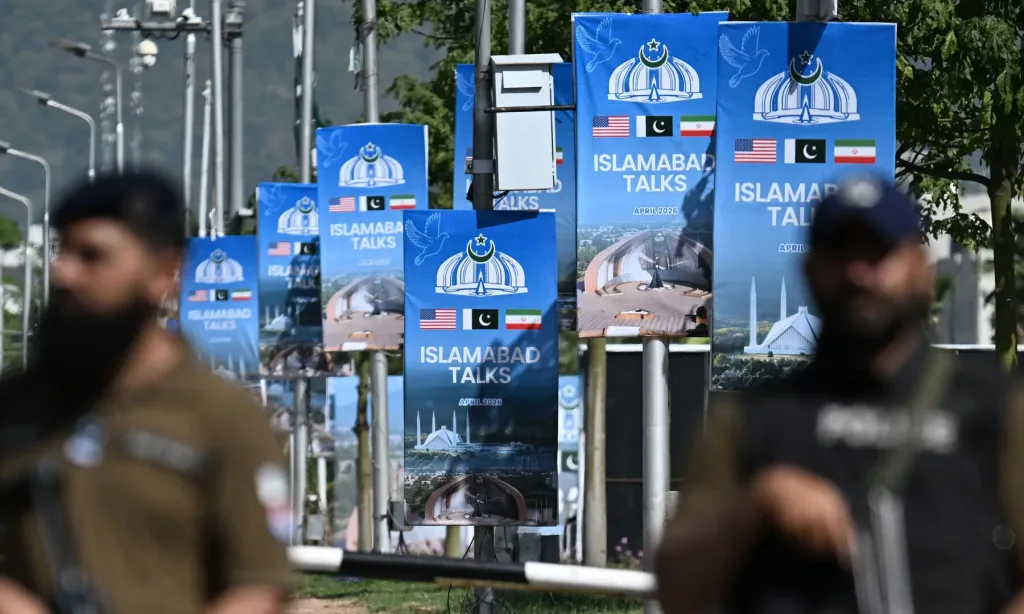
Uncertainty continued on Monday over whether a second round of direct negotiations between the United States and Iran would take place in Islamabad, as conflicting statements emerged from both Tehran and Washington ahead of a high-security diplomatic push in Pakistan.
US President Donald Trump said that Vice President JD Vance and a US delegation were en route to Pakistan and expected to arrive within hours for talks with Iran. He expressed confidence that a deal could be reached and indicated he would consider meeting Iranian leaders if progress is made.
“We’re supposed to have the talks,” Trump said, suggesting negotiations remained on track despite doubts over whether they would proceed smoothly.
However, Iranian officials struck a more cautious tone. Foreign Ministry spokesperson Esmaeil Baqaei said Tehran had not yet decided whether to attend a new round of talks, adding that no formal arrangements had been finalised.
His remarks were reinforced by comments from senior Iranian lawmakers, including Mohammad Bagher Ghalibaf, who reiterated Tehran’s deep mistrust of Washington and warned that Iran remained prepared for further escalation if necessary.
Iran also linked the diplomatic uncertainty to developments around the Strait of Hormuz, where tensions have intensified following US enforcement actions and Iran’s own restrictions on maritime movement. Tehran has repeatedly argued that its cooperation on regional security depends on what it describes as an end to economic and naval pressure.
Despite the uncertainty, preparations in Islamabad have accelerated. Authorities have imposed extraordinary security measures across the capital and nearby Rawalpindi, with more than 10,000 personnel deployed and key areas sealed off. Two major hotels have been vacated in anticipation of high-level delegations.
Reports also indicated that advance US security teams arrived in Islamabad over the weekend, while discussions on logistics were held between Pakistani officials and American diplomats.
The diplomatic push follows a fragile ceasefire that has already been strained by maritime incidents, including US action against Iranian-linked shipping and Tehran’s temporary closure of the Strait of Hormuz. Both sides have accused each other of violating the truce.
Iranian officials maintain that negotiations are still possible but insist they will not proceed under what they describe as pressure or “unrealistic demands”. Meanwhile, Washington continues to push for restrictions on Iran’s nuclear programme and maritime activities.
With contradictory signals from both capitals and no confirmed agenda for the next round of talks, the prospects for a breakthrough in Islamabad remain uncertain, even as preparations on the ground suggest momentum toward a potentially decisive diplomatic engagement.
About Author