Trump claims Iran seeks deal as US enforces Strait of Hormuz blockade
By Sabeeh Zanair :
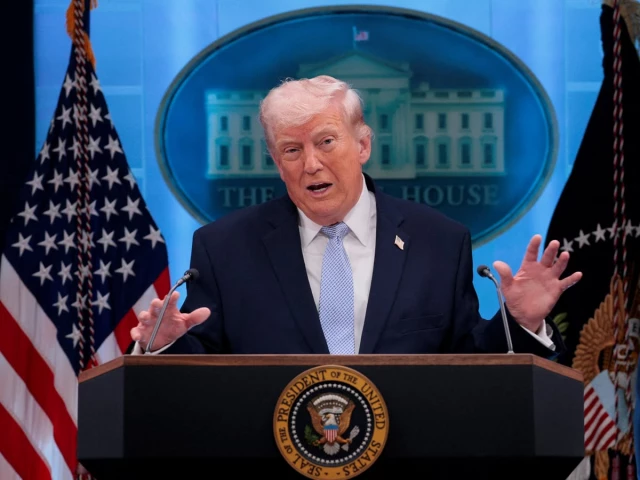
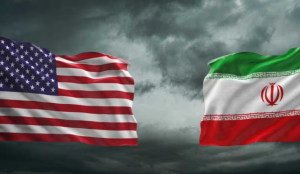
US President Donald Trump has said that Iranian representatives had reached out to Washington expressing interest in a deal, as the United States moved to impose a naval blockade on the strategically vital Strait of Hormuz.
Speaking outside the Oval Office on Monday, Mr Trump said “the right people” from Iran had made contact earlier in the day, indicating a willingness to negotiate. However, he did not provide details about the communication or whether any progress had been made.
“I can tell you that we’ve been called by the other side,” he said, suggesting Tehran was seeking renewed engagement following stalled talks.
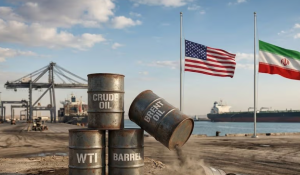
The remarks came just hours after the United States began enforcing a blockade aimed at preventing vessels from entering or leaving Iranian ports via the Strait of Hormuz, one of the world’s most critical shipping routes for oil and gas.
The move followed the conclusion of high-level talks between the US and Iran in Islamabad, which ended without agreement in the early hours of Sunday, raising uncertainty over the future of a fragile two-week ceasefire due to expire on April 22.
In a post on his Truth Social platform, Mr Trump warned that any Iranian vessels approaching the blockade would face a “forceful” response, saying US forces would act swiftly against what he described as potential threats from Iranian fast-attack boats.
Iran’s Islamic Revolutionary Guard Corps (IRGC) responded with a warning of its own, vowing retaliation against what it called hostile action.
Shipping data suggested an immediate impact, with vessel tracking service MarineTraffic reporting that at least two ships altered course shortly after the blockade announcement, including a tanker bound for China that had departed from the United Arab Emirates.
While Mr Trump initially suggested the United States would coordinate the blockade with allies, key NATO partners distanced themselves from the Steps. UK Prime Minister Keir Starmer said Britain would not take part, emphasising that his government would avoid being drawn into the conflict.
“We’re not supporting the blockade,” he said, adding that the UK’s focus remained on de-escalation.
NATO Secretary General Mark Rutte indicated that European allies had been asked to provide commitments to help secure the waterway, though no unified position has emerged.
French President Emmanuel Macron announced plans to convene a multinational conference aimed at establishing a separate mission to safeguard maritime navigation in the region. He said the initiative would be defensive in nature and independent of the parties involved in the conflict.
According to French officials, the proposed mission could involve around 30 countries, including Gulf states and major maritime nations, and may be discussed as early as this week in Paris or London.
The developments underscore growing tensions in the region, where diplomatic efforts have yet to produce a breakthrough and military measures risk further escalation in one of the world’s most sensitive strategic corridors.
About Author