Iran Condemns Trump’s ‘Stone Age’ Threat as War Escalates Across Middle East
By Sabeeh Zanair :
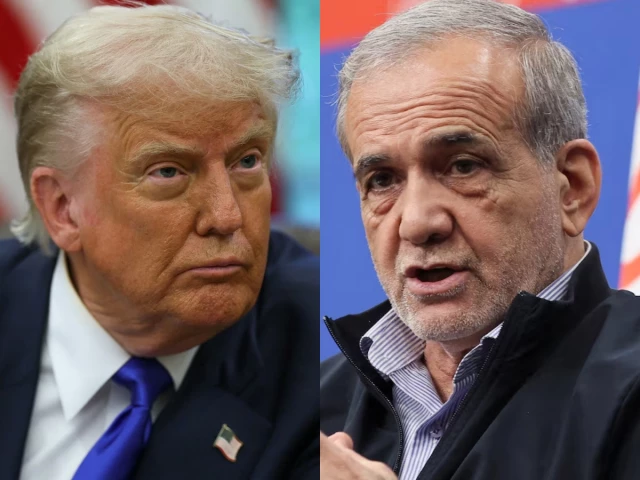
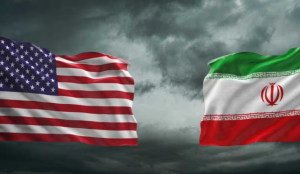
Iranian President Masoud Pezeshkian on Friday condemned remarks by US President Donald Trump suggesting Iran could be pushed back to the “Stone Age”, calling the statement a potential war crime as tensions across the Middle East continued to escalate.
In a message posted on social media platform X, Pezeshkian said threatening to destroy an entire nation raised serious legal and moral concerns. He said he had raised the issue with Finland’s president, who is trained in law, questioning whether such threats amounted to a major violation of international law. The Iranian leader added that history had shown many who remained silent in the face of wrongdoing eventually paid a heavy price.
Trump, meanwhile, wrote on his Truth Social platform that the United States could take control of the Strait of Hormuz “with a little more time”, signalling the possibility of further escalation in a conflict that has already spread across several countries in the region.
The latest developments come amid a surge of attacks and retaliatory strikes. Iranian missiles struck northern Israel on Friday, hitting areas near the strategic port city of Haifa and injuring at least six people, according to Israeli media. A 79-year-old man was among those wounded when a missile landed near residential areas in Haifa and the nearby city of Kiryat Ata. Several houses were also damaged.
Haifa is a key industrial and energy hub and hosts Israel’s largest oil refinery, which accounts for around 70 per cent of the country’s refining capacity. The city has been targeted multiple times since the conflict intensified.
The attack followed rocket fire from Lebanon, where the Hezbollah group said it launched around 15 strikes against Israeli positions in northern Israel and southern Lebanon. Air raid sirens were triggered in border towns including Kiryat Shmona and Metula as Israeli defence systems intercepted some of the rockets while others landed in open areas.
The conflict has also spread to the Gulf. Kuwait reported that an Iranian attack damaged a desalination facility, a critical source of drinking water for the country, where roughly 90 per cent of water supplies depend on desalination. Earlier, drones struck Kuwait’s Mina al-Ahmadi oil refinery, causing fires but no reported injuries.
In the United Arab Emirates, falling debris from an intercepted missile or drone sparked a fire at the Habshan gas processing facility, forcing authorities to suspend operations while emergency teams responded. The Abu Dhabi Media Office said no casualties had been reported.
Saudi Arabia and the UAE also reported intercepting multiple drones and missiles on Friday as their air defence systems responded to new waves of attacks. Saudi authorities said their forces destroyed 14 drones during the latest incidents.
Iran’s Islamic Revolutionary Guard Corps said it had carried out a ballistic missile strike targeting what it described as a gathering of US aviation personnel near a military installation in the UAE. The Guard claimed the strike caused heavy casualties, though no independent confirmation has been reported.
Tehran also claimed it had shot down a US F-35 fighter jet over central Iran, marking the second such claim since the latest phase of hostilities began in late February. Iranian media said the fate of the pilot remained unknown, although Washington has not commented on the report. Iran earlier claimed to have downed an Israeli F-16 aircraft, another assertion that has not been independently verified.
The fighting has raised further concerns about attacks on civilian infrastructure. A drone strike early Friday reportedly hit a Red Crescent warehouse in Iran’s Bushehr province, destroying relief containers, buses and emergency vehicles but causing no reported casualties. Bushehr is an important port city and hosts Iran’s first nuclear power facility.
Trump has intensified his rhetoric in recent days, warning that the United States had “not even started destroying what’s left in Iran” and suggesting further strikes could target bridges and electricity infrastructure. One recent attack destroyed a newly constructed bridge between Tehran and the nearby city of Karaj, killing eight people and injuring dozens, according to Iranian state media.
Iranian Foreign Minister Abbas Araqchi said attacks on civilian structures would not force the Iranian people to surrender and warned of continued retaliation.
The escalating conflict has also triggered growing concern among legal experts. More than 100 American scholars of international law warned that statements and actions by US officials could raise serious questions under international humanitarian law, including the possibility of war crimes.
Efforts to restore stability in the region have so far produced little progress. Britain hosted a virtual meeting of around 40 countries to discuss reopening the Strait of Hormuz, one of the world’s most vital oil shipping routes, but officials said no concrete agreement emerged.
The United Nations Security Council is expected to vote on a proposal from Bahrain aimed at protecting commercial shipping in the strait. However, China has indicated it would oppose any resolution that authorises the use of force.
Iran has effectively closed the strategic waterway, which normally carries about a fifth of global oil shipments, in retaliation for US-Israeli attacks that began in late February. Tehran has also proposed a new framework with neighbouring Oman that would require ships to obtain permits to pass through the strait, a proposal the European Union has rejected.
As the conflict deepens, humanitarian agencies warn that the human and economic toll is rapidly mounting. Thousands of people have reportedly been killed and tens of thousands injured across the region, while disruptions to oil supplies are already driving fuel shortages in parts of Asia and raising fears of wider economic fallout worldwide.
About Author