Pakistan Confirms Talks with Afghanistan in China to Address Rising Security Tensions
By Tahir Shah :
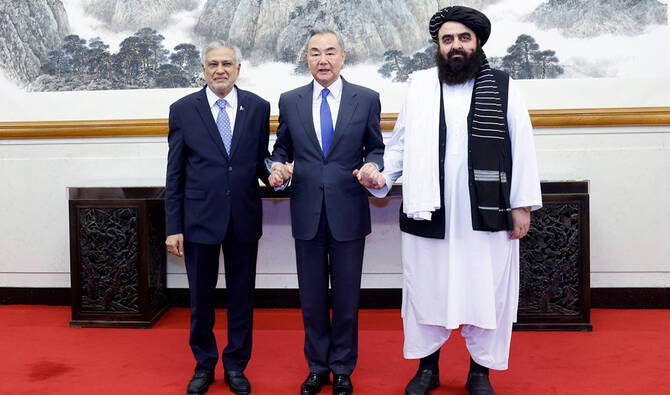
Pakistan has confirmed that it is holding talks with Afghanistan aimed at reducing escalating tensions and addressing cross-border security concerns, marking the most serious diplomatic engagement between the two neighbours since the Taliban returned to power in 2021.
Foreign Office spokesperson Tahir Andrabi said during a weekly media briefing on Thursday that senior officials from both countries were meeting in the Chinese city of Urumqi. He said the primary objective of the discussions was to address Pakistan’s concerns about militant groups operating from Afghan territory.
Andrabi said Pakistan’s participation in the dialogue reflects its long-standing concerns over terrorism originating from across the border. However, he stressed that the responsibility for meaningful progress rests with the Afghan side, which Pakistan expects to take “visible and verifiable” action against groups using its soil to launch attacks inside Pakistan.
Responding to questions about recent diplomatic contacts involving Afghanistan, the spokesperson said any assurances from Kabul must be backed by concrete and written commitments that Afghan territory would not be used for cross-border militancy. He noted that a similar pledge had been made by the Taliban during the Doha negotiations in 2021 but had not been fully implemented.
The spokesperson added that Pakistan’s ongoing counterterrorism campaign, Operation Ghazab-Lil Haq, continues without change. Security forces have recently carried out further actions under the operation despite the diplomatic engagements.
Highlighting broader diplomatic activity, Andrabi said Prime Minister Shehbaz Sharif held telephone conversations over the past week with Kuwait’s Crown Prince, Iran’s President Masoud Pezeshkian and European Council President António Costa. Deputy Prime Minister and Foreign Minister Ishaq Dar also spoke with his counterparts from China, Egypt, Qatar, Indonesia and Iran, as well as United Nations Secretary-General António Guterres.
The discussions focused on regional developments, bilateral ties and global issues of shared concern. Andrabi also referred to Dar’s recent visit to China, which concluded on Wednesday, during which Pakistan and China jointly unveiled a five-point initiative aimed at promoting peace and stability in the Gulf and the wider Middle East.
The proposal calls for an immediate ceasefire, renewed diplomatic engagement to prevent further escalation and the restoration of normal maritime traffic through the Strait of Hormuz. According to the Foreign Office, China expressed strong support for Pakistan’s diplomatic efforts and reiterated the strategic partnership between the two countries.
Maritime security was also discussed during Dar’s visit, with Iran allowing an additional 20 Pakistani-flagged vessels to pass through the Strait of Hormuz, a development the spokesperson described as a positive sign for regional stability.
Andrabi also highlighted last week’s meeting in Islamabad involving the foreign ministers of Pakistan, Saudi Arabia, Turkey and Egypt. The gathering focused on easing tensions between the United States and Iran and supporting diplomatic efforts to prevent further conflict in the region.
Following the talks, Dar suggested that Pakistan could host potential negotiations between Washington and Tehran in the near future. He said Islamabad would be willing to facilitate dialogue between the two sides in pursuit of a lasting settlement, adding that both countries had expressed confidence in Pakistan’s role as a neutral intermediary.
The visiting foreign ministers also met Prime Minister Shehbaz Sharif and reviewed the evolving situation in the Gulf. According to the Foreign Office, the meeting provided an opportunity to examine regional challenges and discuss ways to reduce the risk of military escalation.
Andrabi reiterated Pakistan’s position that dialogue and diplomacy remain the only viable path to resolving regional conflicts, emphasising adherence to the principles of the United Nations Charter, including respect for sovereignty and territorial integrity.
He also said Pakistan had joined several Muslim-majority countries in condemning restrictions imposed by Israel on religious worship in occupied Jerusalem. A joint statement issued by the foreign ministers of Pakistan, Egypt, Jordan, the United Arab Emirates, Indonesia, Turkey, Saudi Arabia and Qatar criticised the limitations placed on Muslims and Christians seeking to worship in the city.
The spokesperson further dismissed what he described as misinformation circulating from India regarding Pakistan’s diplomatic role in the Iran-US tensions, calling such claims misleading and potentially harmful during a sensitive period of regional diplomacy.
Andrabi also rejected remarks by Indian officials regarding Pakistan’s Shia community, describing the comments as “cynical and diversionary”. He said Pakistan would continue pursuing diplomatic initiatives aimed at promoting stability and peace despite criticism from some quarters.
About Author