Sino Pakistan Alliance Proposes Five Point Peace Plan to Resolve Middle East Crisis
By Tahir Shah :
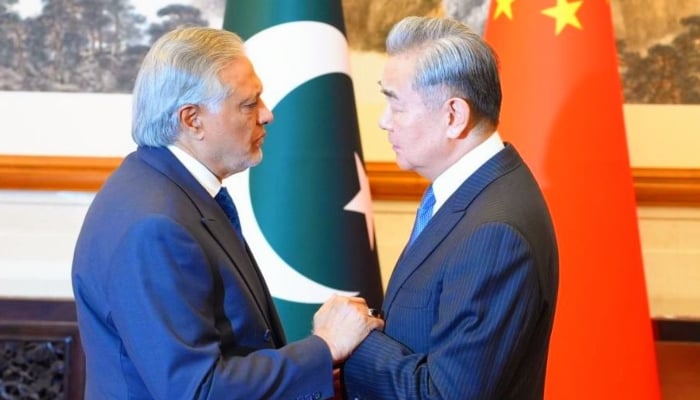
In a landmark diplomatic intervention, Pakistan and China have jointly unveiled a comprehensive five-point initiative aimed at de-escalating the month-long conflict in the Gulf. The framework, announced following high-level talks in Beijing between China’s Foreign Minister Wang Yi and Pakistan’s Deputy Prime Minister Senator Ishaq Dar on Tuesday, March 31, 2026, marks the first direct Chinese-led effort to mediate the escalating war between the United States and Iran.
The proposed initiative prioritizes an immediate cessation of hostilities and the urgent resumption of diplomatic dialogue to prevent the regional spillover of combat. Central to the proposal is the restoration of normal maritime traffic through the Strait of Hormuz, linking the resolution of the conflict directly to the stability of global energy markets. Both nations emphasized that the protection of non-military infrastructure—including desalination plants, energy facilities, and peaceful nuclear installations—is a non-negotiable requirement under international humanitarian law.
Senator Dar’s visit to Beijing followed a consultative summit in Islamabad with the foreign ministers of Saudi Arabia, Turkey, and Egypt, signaling a coordinated effort to align regional interests with Beijing’s growing influence. Diplomatic sources suggest that China’s endorsement of the plan is intended to provide the necessary political leverage to nudge Tehran toward face-to-face negotiations with Washington, potentially hosted on Pakistani soil.
The joint statement also reaffirms a commitment to the United Nations Charter and the territorial integrity of all Gulf states. Analysts have noted that by placing a ceasefire and maritime security at the forefront, Islamabad and Beijing have created a baseline that aligns with the preferences of both the Gulf monarchies and global powers. Professor Vali Nasr of Johns Hopkins University characterized the statement as a significant opening for Beijing to step into a direct mediatory role, while regional experts highlighted that the focus on the Strait of Hormuz creates a clear area where international pressure for restraint can build rapidly.
As the conflict continues to disrupt global trade and threaten energy supplies, the Sino-Pakistan framework is being viewed by international observers as a critical endorsement of the peace process. Former Pakistani officials and foreign policy experts have described the development as a historic shift, noting that it represents the first time China has taken such a proactive lead in managing a global security crisis of this magnitude. The initiative now awaits a formal response from the primary combatants as the April 6 deadline for a negotiated settlement approaches.
About Author