Trump Criticises NATO Support as Iran War Escalates Across Middle East
By Web Desk
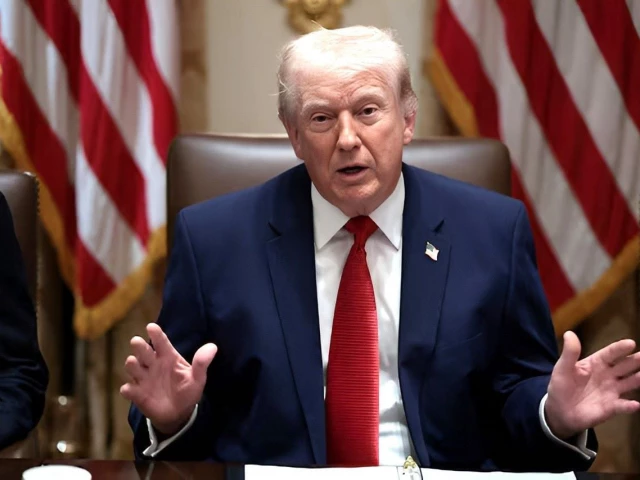
US President Donald Trump has criticised the North Atlantic Treaty Organisation (NATO) for failing to support Washington during its ongoing conflict with Iran, as hostilities across the Middle East continued to intensify on Saturday.
Speaking at an investment forum, Mr Trump questioned the alliance’s commitment to the United States, despite what he described as substantial financial support from Washington.
“NATO wasn’t there for us. We send billions of dollars to them every year to protect them,” he said. “We would have always been there for them, but based on their actions, I guess we don’t have to be, do we?”
His remarks come as the war involving the United States, Israel and Iran expands across the region, triggering missile strikes, drone attacks and growing diplomatic tensions.
Attacks and retaliation across the region
Iran’s Islamic Revolutionary Guard Corps (IRGC) said its forces targeted a US military support vessel near the Omani port of Salalah. In a statement reported by the semi-official Tasnim news agency, the IRGC said the strike took place at a considerable distance from the port and emphasised that Iran respected Oman’s sovereignty.
Iranian President Masoud Pezeshkian also issued a warning to neighbouring countries, urging them not to allow their territories to be used for attacks against Iran.
“If regional countries desire development and security, they should not allow enemies to run the war from their lands,” he wrote in a post on X. He added that Iran would respond forcefully to any attacks on its infrastructure or economic facilities.
Earlier on Saturday, Iranian media reported that a US-Israeli strike on a residential building in the northwestern city of Zanjan killed at least five people and injured seven others.
Iran has meanwhile launched retaliatory strikes against US military positions in the Gulf. According to regional reports, Bahrain’s military said it had intercepted and destroyed 174 Iranian missiles and 385 drones since the conflict began.
Regional bases targeted
A US official told CNN that around 10 American service members were injured after an Iranian strike on Prince Sultan Air Base in Saudi Arabia. Two of the injured reportedly suffered shrapnel wounds, while a refuelling aircraft was also damaged.
Separately, the Islamic Resistance in Iraq a coalition of Iran-backed armed groups claimed attacks on several air bases and an airport in Jordan.
Drone strikes were also reported in Kuwait and Oman. Kuwait’s civil aviation authority said drones targeted Kuwait International Airport, damaging radar equipment but causing no casualties. In Oman, a worker was injured in a drone strike at Salalah port.
Houthis join the conflict
Yemen’s Houthi rebels said they had launched a missile towards Israel — their first such attack since the conflict began. According to Israeli military officials, the missile was intercepted near Beer Sheba in southern Israel and no injuries were reported.
The Houthis had earlier warned they could intervene directly if attacks against Iran continued or if additional countries joined the war.
Diplomatic efforts and rising global concerns
Despite the ongoing military escalation, US Secretary of State Marco Rubio said Washington expected its operations to conclude within weeks rather than months.
The conflict has strained relations between the United States and some of its traditional allies, many of whom have avoided direct involvement.
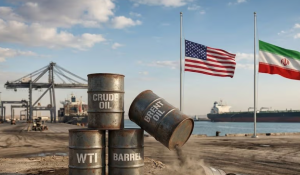
Meanwhile, global concerns are mounting over the war’s economic impact. Brent crude oil prices have surged above $112 per barrel a rise of more than 50 percent since the fighting began fuelling inflation fears and triggering volatility in financial markets.
Russia has also entered diplomatic discussions on the conflict. Russian Foreign Minister Sergei Lavrov and his Iranian counterpart Abbas Araghchi reportedly discussed possible avenues for a political settlement.
Heavy casualties and continuing strikes
The conflict has already caused thousands of civilian deaths, particularly in Iran and Lebanon, while major infrastructure has been damaged in multiple countries.
Iran’s foreign minister warned that Tehran would exact a “heavy price” for Israeli strikes on industrial and nuclear facilities, including steel plants and power infrastructure.
Israel’s military confirmed it had struck targets in Tehran and other locations, while also intercepting missiles fired from Iran. One person was reported killed in Tel Aviv and several others injured after Iranian missiles struck the city.
As fighting continues across several fronts, analysts warn that the widening conflict risks drawing more countries into a prolonged regional war.
About Author