Regional Diplomacy Intensifies as Turkish and Egyptian Foreign Ministers Arrive in Islamabad
By Tahir Shah :
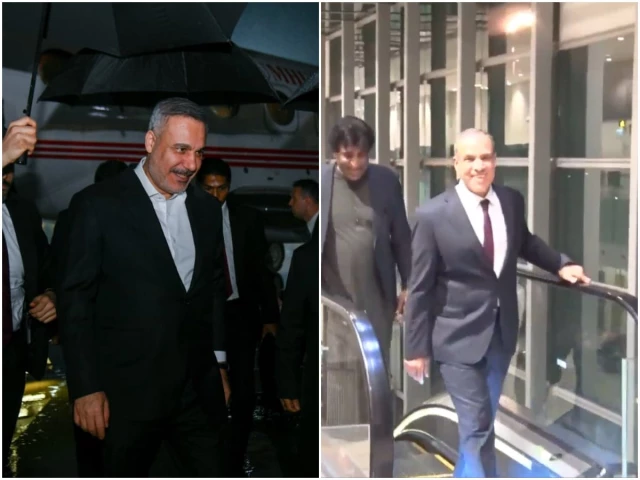
The foreign ministers of Turkiye and Egypt arrived in Islamabad on Saturday, with Saudi Arabia’s top diplomat expected to follow, as Pakistan hosts high-level consultations aimed at easing tensions amid the ongoing US–Israeli conflict with Iran.
The visits, scheduled from March 29 to 30, come at the invitation of Deputy Prime Minister and Foreign Minister Ishaq Dar and are part of a wider diplomatic effort to explore ways to de-escalate the crisis in the Middle East.
According to Pakistan’s Foreign Office, Egyptian Foreign Minister Dr Badr Abdelatty was received at the airport by Additional Foreign Secretary Syed Ahmed Maroof. During his visit, he is expected to hold consultations on regional developments and meet Prime Minister Shehbaz Sharif.
In a statement posted on social media platform X, the Foreign Office said the visit reflected the “close and brotherly relations between Pakistan and Egypt” and ongoing coordination on regional and international issues.
Turkish Foreign Minister Hakan Fidan also arrived in Islamabad on Saturday and was welcomed by Additional Foreign Secretary Syed Ali Asad Gillani at Nur Khan Airbase. He is scheduled to hold bilateral talks with Mr Dar covering both regional developments and bilateral relations.
Saudi Foreign Minister Prince Faisal bin Farhan Al Saud is expected to join the consultations later.
The Foreign Office said the three visiting ministers would engage in “in-depth discussions on a range of issues, including efforts to de-escalate tensions in the region”, and would also call on the Pakistani prime minister.
Islamabad has increasingly positioned itself as a diplomatic intermediary as the conflict between Iran and the United States and Israel continues to raise concerns about regional stability and global energy supplies.
The four countries Pakistan, Turkiye, Egypt and Saudi Arabia have been involved in efforts to facilitate communication between Washington and Tehran, with each facing potential economic risks from disruptions to trade routes and energy markets.
Speaking ahead of his visit, Mr Fidan said the meeting aimed to establish a mechanism to reduce tensions.
“We will discuss where negotiations in this war are heading, how the four countries assess the situation and what can be done,” he told Turkish broadcaster A Haber.
Pakistan has also reportedly conveyed to Tehran a US proposal outlining a possible framework for ending the conflict and has offered to host peace talks. Iranian officials have suggested that any negotiations could potentially take place in Pakistan or Turkiye.
US President Donald Trump has previously said that discussions with Iran were progressing “very well”, though Tehran has denied direct negotiations with Washington.
Iran is currently reviewing a reported 15-point US proposal addressing issues such as its nuclear programme, missile development and control of strategic waterways including the Strait of Hormuz. Iranian officials have reportedly criticised the framework as “one-sided and unfair”.
Earlier this week, Prime Minister Shehbaz Sharif publicly offered Pakistan as a venue for US–Iran talks — a proposal that drew attention when President Trump reshared the offer on his Truth Social platform, a move widely viewed in Islamabad as a signal of support for Pakistan’s emerging mediating role.
Foreign Minister Ishaq Dar confirmed on Thursday that indirect communication between Washington and Tehran was taking place through messages relayed by Pakistan, with Turkiye and Egypt also assisting diplomatic efforts.
As part of the broader diplomatic push, Mr Dar has held consultations with several international figures, including British High Commissioner Jane Marriott, Chinese Ambassador Jiang Zaidong, UAE Deputy Prime Minister Sheikh Abdullah bin Zayed Al Nahyan and Iranian Foreign Minister Abbas Araghchi.
Officials say the latest visits are expected to strengthen coordination among the four countries as they explore possible pathways to reduce tensions in the Middle East.
About Author