US Push for Talks With Iran Faces Major Obstacles Amid Ongoing Conflict
By Sabeeh Zanair :
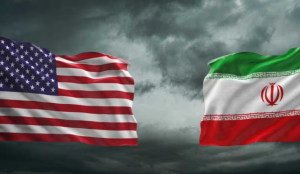
Efforts to restart negotiations between the United States and Iran are facing significant challenges despite renewed diplomatic signals from Washington, as fighting linked to the ongoing US–Israel conflict with Iran continues to reshape regional dynamics.
Nearly a month ago, US Special Envoy Steve Witkoff and former adviser Jared Kushner held indirect contacts with Iranian representatives in Geneva while the Trump administration publicly maintained that diplomacy remained its preferred approach. Two days later, the United States and Israel launched military strikes on Iran.
Now Washington says it is again seeking a diplomatic path after President Donald Trump announced on Monday that talks were under way to end the conflict. However, officials and analysts say major differences between the two sides could delay any meaningful negotiations.
Sources told CNN that Gulf and European allies are increasingly concerned about the lack of progress towards either a ceasefire or a formal negotiating process.
Wide Gap Between US and Iranian Demands
Although efforts are being made to arrange a meeting between the two countries, sources say the gap between their positions remains substantial.
Earlier this week, the United States reportedly sent a list of 15 demands to Iran through Pakistan. These include commitments by Tehran to abandon nuclear weapons development, transfer highly enriched uranium to US control, restrict its defence capabilities and halt support for regional proxy groups.
Analysts say such conditions are unlikely to be accepted by Iran.
“If that is truly the US position, there is no world where there will be successful negotiations,” said Nate Swanson, a former US National Security Council official responsible for Iran policy.
Iran has also presented its own demands. According to Iranian state media, Tehran is seeking a complete halt to attacks against it, guarantees that military action will not resume, compensation for war damages and recognition of its sovereignty over the Strait of Hormuz.
Strait of Hormuz Raises Stakes
Iran’s influence over the Strait of Hormuz — a key shipping route for global oil and gas supplies — has emerged as a critical factor in the conflict.
The strategic waterway handles roughly a fifth of global oil and liquefied natural gas shipments during normal conditions. Disruptions there have already pushed global fuel prices higher and unsettled international markets.
Analysts say Tehran’s ability to restrict traffic through the strait could strengthen its bargaining position in any negotiations.
“The Strait of Hormuz is a new tool for them in a way we haven’t seen before,” Mr Swanson said, adding that Iran may attempt to use control of the passage as leverage in future talks.
Allies Divided on Next Steps
Some US allies in the Gulf region are urging an immediate ceasefire and reopening of the strait, while others argue that a broader agreement addressing Iran’s nuclear programme, missile capabilities and regional activities is needed.
In an opinion article in The Wall Street Journal, the United Arab Emirates’ ambassador to the US, Yousef Al Otaiba, argued that a temporary ceasefire would not resolve the underlying security concerns.
“A simple ceasefire isn’t enough,” he wrote. “We need a conclusive outcome that addresses Iran’s full range of threats.”
Israel is also reportedly cautious about the possibility of a temporary pause in fighting to allow negotiations. Israeli officials worry that a ceasefire might not fully address concerns about Iran’s missile programme or its support for armed groups across the region.
Possible Talks Through Mediators
Iranian officials have said they are not currently engaged in direct negotiations with Washington but acknowledged that messages are being exchanged through intermediaries.
Foreign Minister Abbas Araghchi said communication between the two countries should not be interpreted as formal negotiations.
“The fact that messages are being sent and we respond with warnings or state our positions is not called negotiation or dialogue,” he said in remarks broadcast on Iranian state television.
US officials are reportedly exploring the possibility of holding talks in Pakistan this weekend. Vice President JD Vance could travel to the country alongside other senior officials, although the timing and location remain uncertain. Turkey has also been discussed as a potential venue.
Iranian representatives are said to prefer dealing with Mr Vance rather than Witkoff or Kushner, according to regional sources.
Military Pressure Continues
Despite diplomatic signals, military tensions remain high.
Around 1,000 US soldiers from the Army’s 82nd Airborne Division are expected to deploy to the Middle East in the coming days, according to sources familiar with the plans.
White House press secretary Karoline Leavitt said talks with Iran were continuing and described them as “productive”, but warned that the United States was prepared to escalate further if diplomacy failed.
“If Iran fails to accept the reality of the current moment,” she said, President Trump “is prepared to unleash hell.”
About Author