Pakistan Ranked World’s Most Polluted Country in 2025, Global Air Quality Report Finds
By Sardar Burhan :
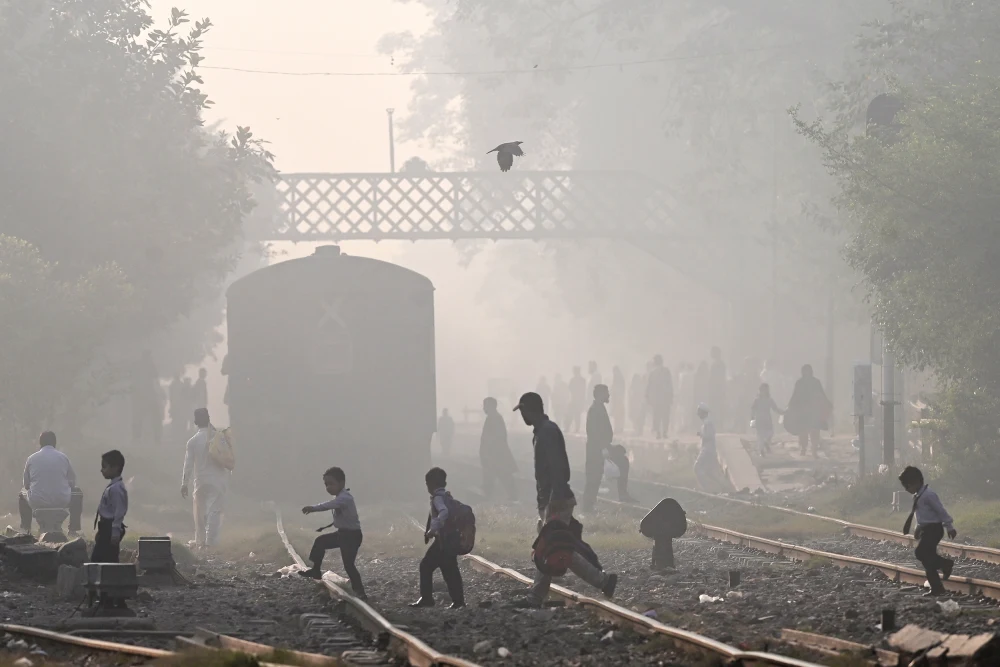
Pakistan was the most polluted country in the world in 2025, with levels of harmful airborne particles far exceeding international safety limits, according to a new global air quality report.
Research published by Swiss air monitoring firm IQAir found that concentrations of PM2.5 fine particulate matter that can penetrate deep into the lungs and bloodstream reached levels up to 13 times higher than the World Health Organization’s (WHO) recommended limit.
PM2.5 particles are typically produced by vehicle emissions, industrial activity, burning of fuels and wildfires. Long-term exposure has been linked to heart and respiratory diseases as well as premature death.
South Asia Dominates Pollution Rankings
The report said the world’s 25 most polluted cities in 2025 were all located in India, Pakistan and China.
Loni, a city in India, recorded the highest average PM2.5 concentration at 112.5 micrograms per cubic metre, making it the most polluted city globally. It was followed by Hotan in China’s Xinjiang region with 109.6 micrograms per cubic metre.
Bangladesh and Tajikistan ranked second and third among the most polluted countries, while Pakistan topped the list.
Within Pakistan, major urban centres also recorded concerning pollution levels. Karachi experienced hazardous air quality on several occasions, including on 29 September 2025 when the Air Quality Index (AQI) exceeded 100, a level considered “unhealthy for sensitive groups”. Cities such as Hyderabad and Lahore have also faced persistent air quality problems.
Few Countries Meet WHO Air Standards
The report found that only 13 countries and territories maintained annual average PM2.5 levels within the WHO guideline of less than 5 micrograms per cubic metre in 2025. This marked an improvement from seven countries in 2024.
Countries meeting the WHO standard included Australia, Iceland, Estonia and Panama.
However, the overall global picture remained troubling. Out of 143 monitored countries and territories, 130 failed to meet the recommended pollution limits.
Just 14% of cities worldwide achieved the WHO standard in 2025, compared with 17% the previous year. Researchers said large-scale wildfires in Canada contributed to increased PM2.5 levels across the United States and parts of Europe.
Weather Patterns Bring Mixed Results
Some countries recorded improvements in air quality due to changing weather conditions. Laos, Cambodia and Indonesia reported significant reductions in PM2.5 concentrations, largely attributed to wetter and windier conditions linked to the La Niña climate pattern.
Mongolia also saw notable progress, with average pollution levels falling by 31% to 17.8 micrograms per cubic metre.
Chad, which had been ranked the world’s most polluted country in 2024, dropped to fourth place in 2025. Researchers cautioned that the apparent improvement may partly reflect missing data.
Data Gaps Affect Global Monitoring
The report’s authors highlighted challenges in collecting reliable air quality data after the United States ended a global monitoring programme in March 2025 due to budget constraints. The programme had gathered pollution data from sensors located at US embassies and consulates worldwide.
“The loss of the data made it appear there was a significant drop in PM2.5 levels in some countries, but the reality is that we simply do not know,” said Christi Chester Schroeder, lead author of the IQAir report.
Because of these gaps, several countries including Burundi, Turkmenistan and Togo were excluded from the 2025 rankings.
Overall, IQAir said 75 countries recorded lower average PM2.5 levels in 2025 compared with the previous year, while 54 countries saw pollution levels increase.
About Author