Civil Defence Official Blames Fire Services for Gul Plaza Tragedy During Judicial Commission Testimony
By Zeeshan Naseem :
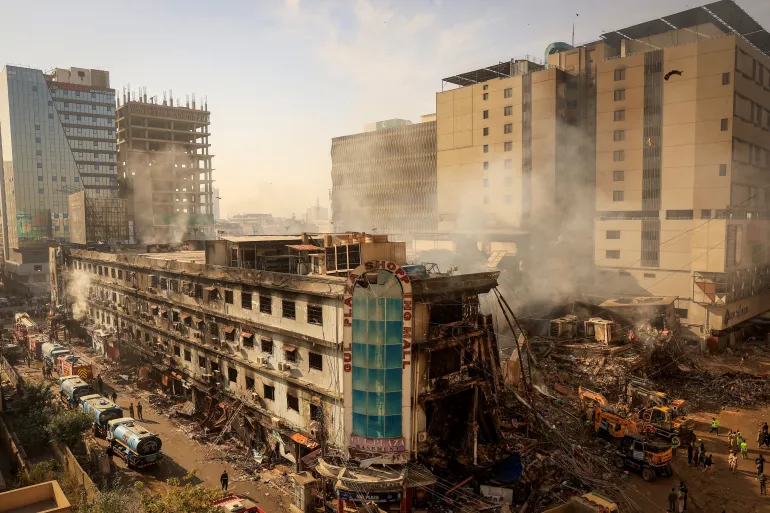
A Civil Defence official appearing before the Gul Plaza Judicial Commission has testified that Karachi’s fire and rescue services possessed advanced equipment but failed to effectively control the blaze or rescue those trapped inside the burning building on January 17.
Mirza Mursaleen Baig, a technical instructor at the Civil Defence department, provided his testimony under oath before the single-member commission headed by Justice Agha Faisal of the Sindh High Court, which is investigating the devastating fire that claimed dozens of lives.
Accusations Against Rescue Services
Baig stated that both the Karachi Metropolitan Corporation fire brigade and Rescue 1122 were equipped with specialized machinery, including oxygen masks with tanks and tools designed for such emergencies. However, he alleged that due to either lack of awareness or negligence, they failed to extinguish the fire effectively and rescue trapped individuals.
Following his testimony, the commission summoned the director general of Rescue 1122 and the chief fire officer to cross-examine the technical instructor, given the serious nature of his allegations.
Power Shutdown and Darkness Hampered Evacuation
The official testified that the premature shutdown of electricity, absence of emergency lighting, and closure of gates significantly worsened panic among those trapped inside the building and hindered evacuation efforts.
Based on available information, Baig classified the fire as Class B, involving highly flammable materials including plastic, rubber, melamine crockery, fabrics, and cosmetic products. He explained that while power is typically shut down in Class C fires caused by electrical short circuits, immediate disconnection is not necessarily required in Class B fires unless there is a direct electrical hazard.
The sudden power cut plunged the building into darkness. With no separate emergency lighting installed in passages and corridors—systems designed to activate during power failures—occupants were forced to navigate through smoke-filled areas without any visibility.
Building Safety Violations
Baig testified that Civil Defence conducted inspections of the building in 2024 and 2025 and found fire safety measures inadequate. The building management was directed to comply with safety regulations, but no effective action was taken.
He explained that while Civil Defence typically files legal challans before special courts in cases of non-compliance, this could not be done in this instance due to the unavailability of courts or judges. Although the courts became operational in July last year, the challan was never filed before the devastating fire occurred.
Severe Staffing Shortages
The official maintained that Civil Defence faces severe staff and resource shortages, making comprehensive building inspections impossible. He revealed there are only 88 personnel for the entire province, with just six officers assigned to the South district and no supporting staff.
Under applicable fire safety laws and standard operating procedures, Baig stated that building management is required to maintain firefighting capacity sufficient for approximately fifteen minutes before emergency services arrive.
Tragedy Background
The Gul Plaza fire broke out on January 17, 2026, in a multi-storey commercial building on MA Jinnah Road in Karachi, resulting in at least fifty-six deaths with dozens more still missing. The building housed over 1,100 shops selling highly combustible materials. Investigations have revealed multiple failures, including illegal building alterations, blocked exits, absence of firefighting systems, and poor enforcement of safety regulations.
The judicial commission continues its hearings to determine accountability and recommend measures to prevent future tragedies.
About Author