Shehbaz Sharif Says Youm-e-Takbeer Symbolises Pakistan’s Resolve to Defend Sovereignty
By Tahir Shah :
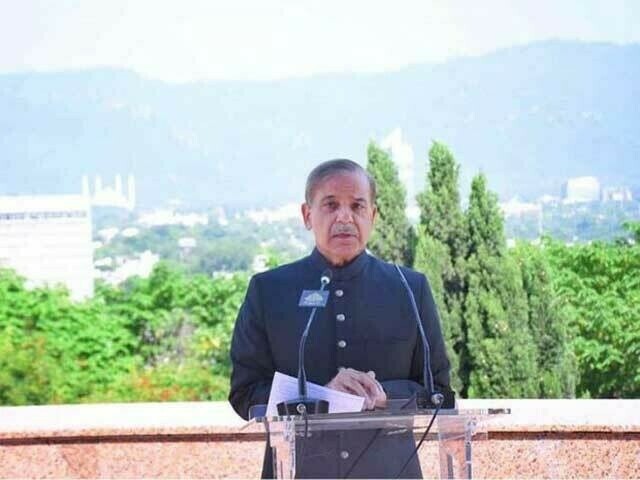
Prime Minister Shehbaz Sharif on Wednesday said Youm-e-Takbeer represents a defining chapter in Pakistan’s history, describing the country’s nuclear tests in 1998 as a demonstration of national unity, resilience and determination to safeguard sovereignty.
In a message issued on the occasion of Youm-e-Takbeer, observed annually on May 28, the prime minister said Pakistan emerged as a nuclear power in response to India’s nuclear tests, restoring what he described as the strategic balance in South Asia.
He stated that the nuclear tests conducted on May 28, 1998, sent a clear signal that Pakistan would not compromise on its defence or independence under any circumstances.
Youm-e-Takbeer commemorates Pakistan’s underground nuclear tests carried out in the Chagai district of Balochistan during the government of former prime minister Nawaz Sharif. The tests came shortly after India conducted a series of nuclear explosions earlier that month, intensifying tensions between the two neighbouring countries.
In his statement, Shehbaz Sharif said the day serves as proof that the country founded by Muhammad Ali Jinnah and envisioned by Allama Muhammad Iqbal remains secure and capable of defending itself against external threats.
The prime minister paid tribute to the political leadership, scientists and defence personnel associated with Pakistan’s nuclear programme. He praised the role of former prime minister Zulfikar Ali Bhutto, calling him the visionary behind the programme, while also acknowledging Nawaz Sharif’s decision to proceed with the nuclear tests despite international pressure and economic sanctions.
He also recognised the contributions of nuclear scientists Abdul Qadeer Khan and Samar Mubarakmand, along with engineers, researchers, members of the armed forces and technical staff involved in the programme.
According to the prime minister, Pakistan faced significant diplomatic pressure, threats of sanctions and financial incentives aimed at discouraging the nuclear tests, but the leadership at the time chose to prioritise national security and sovereignty.
Shehbaz Sharif described Youm-e-Takbeer as a symbol of self-respect, sacrifice and national unity, adding that Pakistan’s nuclear capability continues to serve as a deterrent against hostile intentions.
Referring to recent regional tensions, the prime minister said Pakistan had once again demonstrated unity and determination during what he called “Maarka-e-Haq”. He accused India of using the Pahalgam incident as a pretext for aggression and claimed that Pakistani forces responded effectively to threats against the country.
India has consistently rejected Pakistan’s allegations and maintains that its actions are directed towards countering militancy and protecting national security interests.
The prime minister praised the leadership of Pakistan’s armed forces, particularly Chief of Army Staff Asim Munir, saying the military had displayed professionalism and operational capability during recent tensions.
He also acknowledged the role of Zaheer Ahmed Babar and Naveed Ashraf in strengthening the country’s defence preparedness.
While emphasizing that Pakistan does not seek aggression, Shehbaz Sharif said the country reserves the right to defend its territory and sovereignty against any threat.
The prime minister further claimed that hostile elements were now relying on proxy networks to destabilise Pakistan, referring to militant groups including what he described as “Fitna al-Khawarij” and “Fitna al-Hindustan”. He alleged that some of these networks were receiving support from across the border, particularly from elements operating in Afghanistan.
He reiterated Pakistan’s commitment to counterterrorism operations and warned that security forces would continue taking action against militant groups and their facilitators.
Concluding his message, the prime minister called on the nation to renew its commitment to unity, peace, stability and national development, saying Pakistan’s strength lies in collective resolve and sacrifice.
About Author