
India Moves Ahead With Indigenous Fifth-Generation Fighter Jet Programme
By Tanveer Ahmed :
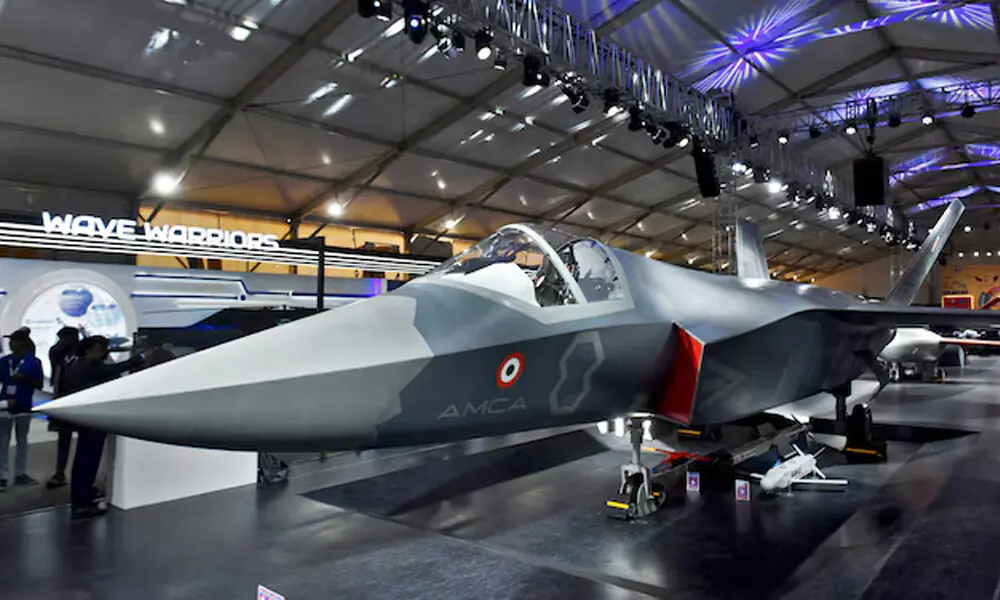
India has taken another step towards developing its own fifth-generation stealth fighter aircraft, with the government seeking initial proposals from selected domestic defence firms as part of a major military modernisation drive.
According to reports by Indian media outlet ANI citing defence officials, New Delhi has approached three shortlisted bidders for the ambitious programme, all of them involving Indian companies and industrial partnerships.
The shortlisted participants include Tata Advanced Systems, a joint venture involving Larsen & Toubro and Bharat Electronics, as well as a consortium between Bharat Forge and BEML.
The move forms part of India’s broader effort to reduce dependence on foreign military imports and strengthen its domestic defence manufacturing sector under Prime Minister Narendra Modi’s “Make in India” strategy.
India formally approved the stealth fighter programme last year and invited expressions of interest from defence companies only weeks after heightened military tensions with Pakistan, which renewed debate within Indian strategic circles over the need to modernise the country’s ageing air force fleet.
The proposed aircraft is expected to become a key component of the Indian Air Force’s future combat capabilities as the country attempts to replace older fighter jets and narrow what defence planners view as a growing operational gap.
Indian defence officials have repeatedly expressed concern over the shrinking strength of the air force, whose operational fleet has reportedly fallen below 30 squadrons in recent months. This remains significantly below the officially sanctioned strength of 42 squadrons considered necessary to meet India’s defence requirements on both western and northern fronts.
Much of India’s current air combat fleet consists of Russian-origin aircraft, including variants of the Sukhoi and MiG series, many of which have been in service for decades and require upgrades or replacement.
The development of a locally manufactured fifth-generation fighter is therefore being viewed by Indian policymakers as both a strategic and industrial priority.
The project also comes amid growing international competition for India’s defence market. The United States has offered India its advanced Lockheed Martin F-35 Lightning II stealth fighter, while Russia has proposed cooperation involving the Sukhoi Su-57.
However, India has so far maintained some distance from both offers, signalling its preference to focus on indigenous development while continuing to diversify defence partnerships.
Analysts say India’s strategy reflects an attempt to balance national security concerns with economic ambitions to expand domestic industrial capacity and reduce long-term reliance on imported military technology.
New Delhi has historically depended heavily on foreign suppliers for weapons systems, aircraft and military hardware, making it one of the world’s largest arms importers for many years.
In recent years, however, the Modi government has accelerated efforts to boost local defence production, encourage technology transfer and increase private-sector participation in military manufacturing.
According to Indian government figures, the country’s defence production reached a record value of approximately $16 billion during the financial year ending March 2025, reflecting rapid growth in domestic manufacturing capabilities.
Despite these gains, defence experts note that developing an indigenous fifth-generation fighter aircraft remains an extremely complex and expensive undertaking involving advanced stealth technology, avionics, engine systems and weapons integration.
Several countries, including China, the United States and Russia, have spent decades and billions of dollars developing operational stealth fighter programmes.
India’s proposed aircraft programme is therefore expected to require long-term investment, technological partnerships and extensive testing before entering operational service.
About Author