
Lahore High Court Rules FIA Cannot Stop Passengers from Travelling Abroad on Mere Suspicion
By Bilal Haider :
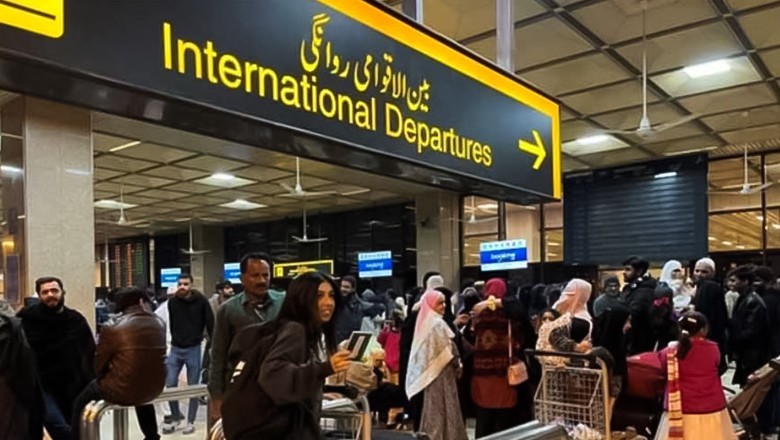
The Lahore High Court has ruled that immigration authorities cannot prevent citizens from travelling abroad on the basis of vague assumptions or unsupported suspicions, declaring the off-loading of a passenger at Sialkot International Airport unlawful.
In a detailed judgement, Justice Raheel Kamran held that the state’s power to stop passengers from boarding international flights must be exercised within constitutional and legal limits, stressing that discretionary authority cannot be used arbitrarily or without clear justification.
The case was brought before the court by Muhammad Abbas, who challenged the actions of officials from the Federal Investigation Agency after he was stopped from boarding a Nigeria-bound flight on January 31, 2026, despite carrying valid travel documents.
According to the petition, Abbas had completed all airline and immigration formalities at Sialkot International Airport, including clearance from immigration authorities and passport exit stamping, before being stopped by an FIA officer shortly before departure.
Court documents stated that immigration officials suspected the passenger might abscond in Dubai during transit and fail to return to Pakistan. However, the petitioner argued there was no legal basis for such an assumption.
Through his lawyer, Abbas told the court that he possessed a valid Pakistani passport, a Nigerian visit visa, a confirmed return ticket and supporting travel documents. He maintained that he intended to visit his brother-in-law residing in Nigeria and had not violated any law.
The petition further stated that there were no criminal cases, pending investigations, blacklisting orders or travel restrictions against him under the Exit Control List or Passport Control List.
Abbas argued that the FIA’s actions caused him financial losses as well as public humiliation and mental distress.
During the proceedings, the federal government defended the decision, arguing that immigration authorities have the power to scrutinise passengers in order to prevent illegal migration, visa misuse and human smuggling.
Government lawyers claimed the petitioner had failed to demonstrate sufficient financial resources and had not adequately explained the purpose of his foreign visit.
However, Justice Kamran observed that while immigration authorities do possess powers to stop passengers in certain circumstances, those powers must be exercised fairly, transparently and on the basis of objective evidence rather than speculation.
The court found that the reasons recorded by FIA officials in the off-loading form were vague and lacked supporting details. The judgement noted that authorities had failed to explain what constituted “insufficient funds”, whether any minimum financial requirement existed for travel to Nigeria or how the passenger’s explanation was considered unsatisfactory.
In the ruling, the judge remarked that no law, policy guideline, notification or standard operating procedure had been presented before the court specifying any fixed amount of money required for Pakistani citizens travelling to Nigeria on a visit visa.
Justice Kamran stated that in the absence of transparent and publicly available criteria, terms such as “insufficient funds” become subjective and cannot withstand judicial scrutiny.
The court emphasised that the right to travel abroad is protected under the Constitution of Pakistan and falls within guarantees relating to liberty, due process and freedom of movement.
The judgement referred to Articles 4, 9, 10-A and 15 of the Constitution, holding that any restriction imposed on a citizen’s right to travel must meet standards of legality, fairness and proportionality.
Allowing the petition, the court declared the off-loading unlawful and ruled that the incident could not be used as a continuing restriction on the petitioner’s future travel, although lawful immigration checks would still remain applicable.
The judgement also laid down broader guidelines for immigration authorities, directing FIA officials to provide clear, meaningful and detailed reasons whenever passengers are stopped from travelling abroad.
Justice Kamran observed that recording reasons is not merely a procedural formality but a necessary safeguard against arbitrary use of power.
In strongly worded remarks, the judge said reasons establish a clear link between the material available before an authority and the decision ultimately reached. He added that proper reasoning ensures transparency, demonstrates application of mind and allows affected individuals to understand the basis of adverse actions against them.
The court further noted that reasoned decisions also enable meaningful judicial review and help ensure that public officials exercise discretionary powers within the limits of law and fairness.
Legal experts say the ruling could have wider implications for immigration practices at Pakistani airports, particularly in cases where passengers are off-loaded without formal travel bans or clear legal grounds. The judgement is also being viewed as an important reaffirmation of constitutional protections against arbitrary administrative actions.
About Author