Pakistan Weighs Four-Day Workweek and Online Schooling to Conserve Fuel Amid Energy Supply Concerns
By Shahzad Paracha :

The government of Pakistan is considering introducing a four-day workweek and shifting educational institutions to online classes as part of potential energy conservation measures amid uncertainty over global fuel supplies.
The proposals were discussed on Thursday during a meeting of a special committee monitoring petroleum supplies, chaired by Finance Minister Muhammad Aurangzeb. Officials said the discussions come as tensions in the Middle East raise concerns about disruptions to shipments passing through the strategic Strait of Hormuz.
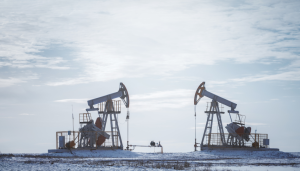
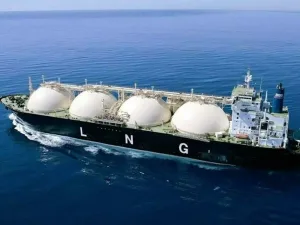
The committee examined several options aimed at reducing national consumption of petrol, diesel and liquefied natural gas (LNG), whose prices have surged due to supply constraints and geopolitical instability.
Debate over timing of conservation measures
Officials familiar with the meeting said committee members were divided over how aggressively conservation measures should be implemented.
Some members supported immediate action, arguing that delaying steps to reduce consumption could quickly erode Pakistan’s fuel reserves if supply disruptions intensify.
Others warned that drastic measures such as partially closing offices or educational institutions — could create public anxiety and potentially trigger panic buying of fuel.
Despite the differing views, most participants agreed that Pakistan would likely be unable to absorb rising global energy prices and that the increased costs would ultimately be passed on to consumers.
The committee reviewed nearly a dozen proposals, though officials acknowledged that several of the suggested measures lacked detailed projections about how much fuel they would actually save.
Four-day workweek and virtual learning proposed
Among the options under discussion was a shift to a four-day working week combined with shorter daily office hours.
Another proposal suggested temporarily closing educational institutions and moving classes online, similar to the arrangements adopted during the COVID-19 pandemic.
However, officials said there was currently no serious proposal to halt public transport services.
A separate recommendation involved reducing fuel allowances for government departments in order to preserve national stocks.
Pakistan’s current fuel reserves are estimated to cover roughly 25 days of consumption, according to officials briefed on the meeting.
Finance Minister Aurangzeb also suggested adopting a “cascading approach”, under which conservation measures would be introduced gradually rather than implemented all at once.
Government seeks alternative supply routes
At the same time, the government is exploring ways to secure additional fuel supplies through alternative shipping routes.
Officials said discussions are ongoing with energy suppliers in Saudi Arabia, Oman and the United Arab Emirates to maintain or expand existing supply arrangements.
Representatives from Pakistan State Oil, Pak-Arab Refinery Company and Pakistan Refinery Limited were also expected to hold discussions with Saudi counterparts in an effort to replenish stocks.
However, officials warned that new fuel purchases could be significantly more expensive.
Members of the committee were informed that the price of a single LNG cargo had surged to around $70 million, compared with roughly $30 million before the current crisis.
Recommendations to be sent to the prime minister
The meeting took place hours after Prime Minister Shehbaz Sharif appointed senior bureaucrat Hamed Yaqub Sheikh as the new petroleum secretary.
Officials said the committee would finalise its recommendations and submit them to the prime minister, after which a summary may be presented to the cabinet’s Economic Coordination Committee for approval.
In a statement, the Ministry of Finance Pakistan said the committee reviewed various supply and pricing scenarios to ensure the country is prepared for different contingencies while maintaining stable domestic energy supplies.
The ministry noted that heightened competition for energy cargoes — particularly in Asian markets — could increase pressure on Pakistan’s external accounts if volatility in global prices continues.
Authorities assure adequate fuel availability
Despite the uncertainty, officials insisted that national fuel reserves currently remain at comfortable levels.
According to the Oil and Gas Regulatory Authority (OGRA), Pakistan has petroleum stocks sufficient to meet around 28 days of national demand.
The regulator urged the public to avoid panic buying, saying authorities are closely monitoring the fuel supply chain.
However, officials confirmed that two crude oil shipments had been delayed due to shipping disruptions linked to tensions in the Strait of Hormuz.
Energy companies including Saudi Aramco and ADNOC are expected to help supply oil through alternative routes, while one refinery has already received cargo through the Red Sea.
Government orders inspections to prevent hoarding
Separately, the federal government has instructed provincial administrations to conduct inspections at petrol stations to prevent hoarding and profiteering.
Deputy commissioners across the country have been directed to monitor fuel stations and storage facilities, with strict action promised against illegal stockpiling.
OGRA warned that any premises found storing petroleum products outside licensed depots or authorised retail outlets would be sealed.
The regulator said its inspection teams are already monitoring depots and fuel stations to ensure supplies continue without disruption.
Industry groups raise concerns
Despite official assurances, some industry stakeholders have expressed concerns about declining deliveries.
The Oil Marketing Association of Pakistan warned that local refineries had introduced a new allocation system that was limiting supplies to oil marketing companies.
According to the association, many companies had relied on earlier supply commitments and therefore did not arrange import cargoes in advance.
As a result, the mandatory 21-day stock cover maintained by oil marketing companies has begun to decline.
Fuel retailers have also voiced concern. Leaders of the Pakistan Petroleum Dealers Association said diesel deliveries had dropped significantly in recent days, while petrol supplies had also been reduced.
They warned that if deliveries were not restored quickly, some petrol stations could face temporary closures.
However, government officials maintain that the supply situation remains stable for now.
Analysts say the outlook will largely depend on how long regional tensions persist and whether shipping through key oil routes remains disrupted.
About Author