
Cambridge Tech Week 2025 highlights AI breakthroughs and global technology partnerships
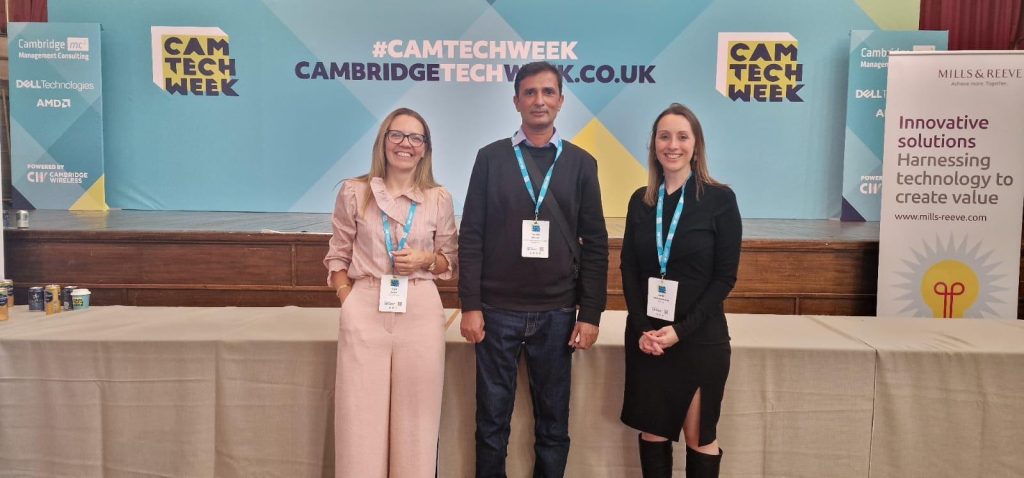
By Tanveer Ahmed :
Cambridge Tech Week 2025 brought together global technology leaders, researchers, investors and policymakers in the United Kingdom this week as the annual event showcased the latest advances in artificial intelligence, biotechnology, semiconductor research and sustainable innovation.
Held across multiple venues in Cambridge, the event reinforced the city’s reputation as one of Europe’s leading technology and research hubs. Organisers said this year’s conference attracted record participation from international technology companies, academic institutions and start-ups seeking collaboration opportunities in rapidly evolving sectors.
The week-long programme featured keynote speeches, panel discussions, networking forums and innovation showcases covering emerging technologies expected to shape industries over the coming decade. Topics ranged from artificial intelligence and quantum computing to climate technology, health innovation and advanced manufacturing.
Technology executives and researchers described the event as a major platform for strengthening cooperation between academia, investors and industry leaders at a time when governments worldwide are increasing investment in innovation and digital transformation.
One of the dominant themes throughout the conference was artificial intelligence and its growing impact on business, education, healthcare and public services. Speakers highlighted how AI tools are increasingly transforming industries through automation, predictive analytics and personalised digital services.
Industry experts also discussed the risks linked to AI development, including cybersecurity threats, misinformation, ethical concerns and the need for international regulatory frameworks. Several sessions focused on balancing innovation with responsible governance as countries race to become leaders in the global AI economy.
Representatives from leading technology firms stressed that collaboration between governments, universities and private companies would be critical in ensuring AI development remains safe, transparent and beneficial to society.
Cambridge has emerged as one of Europe’s most important centres for AI and deep technology research, supported by its strong academic ecosystem and a growing number of venture-backed start-ups. Organisers said the conference aimed to further strengthen the city’s position as a global destination for scientific and technological innovation.
The event also highlighted the increasing importance of semiconductor technology and supply chain resilience amid rising geopolitical competition over advanced chips and computing infrastructure.
Executives from chip design companies and manufacturing firms discussed growing global demand for semiconductors used in artificial intelligence systems, electric vehicles, telecommunications and consumer electronics.
Britain has been seeking to expand its role in advanced semiconductor research through partnerships between universities and technology companies, with Cambridge playing a central role because of its long-standing expertise in chip architecture and engineering.
Biotechnology and healthcare innovation formed another major focus of the conference, with researchers presenting developments in precision medicine, genomics and AI-assisted diagnostics.
Health technology companies showcased tools designed to improve disease detection, remote healthcare delivery and drug development through data-driven systems. Experts said the integration of artificial intelligence into medical research was expected to significantly accelerate healthcare innovation in the coming years.
Climate technology and sustainability also featured prominently at Cambridge Tech Week 2025 as businesses and policymakers explored ways technology could support environmental goals and carbon reduction efforts.
Panels examined the role of renewable energy systems, smart infrastructure, battery innovation and clean transportation in addressing climate change challenges. Start-ups working on carbon capture technologies and sustainable industrial processes presented their latest projects to investors and industry representatives.
Several speakers emphasised that technological innovation would play a crucial role in helping countries meet global climate commitments while maintaining economic growth.
The conference additionally served as an important networking platform for entrepreneurs and investors, with venture capital firms meeting start-ups seeking funding in areas such as fintech, robotics, biotechnology and AI software development.
Industry analysts noted that investment in technology companies has remained resilient despite global economic uncertainty, particularly in sectors linked to artificial intelligence and digital infrastructure.
International participation at the event reflected growing global interest in the Cambridge technology ecosystem, often referred to as “Silicon Fen” because of its concentration of research institutions and high-tech businesses.
Delegations from Europe, North America, Asia and the Middle East attended the conference to explore partnerships in research, investment and commercial technology development.
University-led innovation remained central to many discussions during the event. Representatives from University of Cambridge highlighted the role academic research continues to play in generating commercially successful technologies and attracting global investment.
Experts said stronger collaboration between universities and businesses would become increasingly important as competition intensifies in strategic sectors such as AI, quantum computing and biotechnology.
Cybersecurity was another major topic discussed during the conference, particularly as governments and companies face increasing threats linked to digital infrastructure and AI-driven cyberattacks.
Security specialists warned that technological progress must be accompanied by stronger cyber resilience measures to protect sensitive systems and data from increasingly sophisticated threats.
The conference also addressed workforce challenges facing the technology industry, including skills shortages and the growing need for specialised talent in software engineering, semiconductor design and data science.
Industry leaders called for greater investment in education and digital training programmes to prepare future workers for technology-driven economies.
Several sessions focused on diversity and inclusion within the technology sector, with speakers stressing the importance of expanding opportunities for women, minority groups and young entrepreneurs in science and technology industries.
Organisers said one of the goals of Cambridge Tech Week was to encourage broader participation in innovation ecosystems while supporting the next generation of technology leaders.
Alongside formal discussions, the event featured exhibitions showcasing emerging products and prototypes from start-ups and research laboratories. Demonstrations included robotics systems, AI-powered applications, medical technologies and sustainable energy solutions.
Attendees said the conference provided valuable opportunities for collaboration at a time when technological change is accelerating across nearly every sector of the global economy.
Business leaders also highlighted the importance of maintaining international cooperation in technology development despite increasing geopolitical tensions and trade competition between major powers.
Many speakers warned against technological fragmentation, arguing that global innovation depends heavily on cross-border research partnerships and open scientific collaboration.
As Cambridge Tech Week 2025 concluded, organisers described the event as one of the largest and most internationally connected editions in its history.
They said the conference reflected not only the rapid pace of technological advancement but also the growing recognition that collaboration between governments, researchers, investors and private companies will be essential in shaping the future digital economy.
Analysts believe the discussions and partnerships emerging from the event could influence innovation strategies and investment priorities well beyond the United Kingdom, particularly in fast-growing fields such as artificial intelligence, healthcare technology and sustainable infrastructure.
With competition intensifying globally for leadership in advanced technologies, Cambridge Tech Week once again demonstrated how research-driven innovation hubs are becoming increasingly central to economic growth, scientific progress and international cooperation in the digital age.
About Author