
Monsoon Rains in North-West Pakistan Leave 18 Dead as Landslides Sever Key Routes
ES Mag :
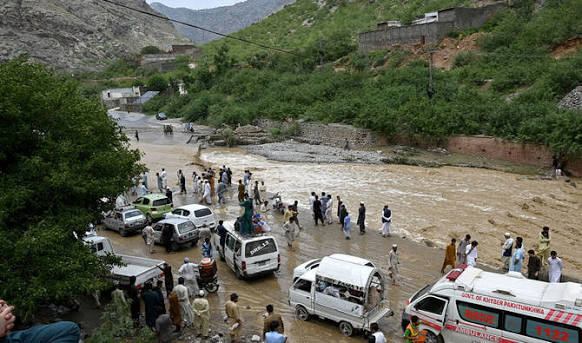
At least 18 people have died and 19 others have suffered injuries following four days of heavy monsoon downpours and flash flooding across Pakistan’s north-western Khyber Pakhtunkhwa province, disaster management officials have confirmed.
The Provincial Disaster Management Authority reported on Wednesday that the current weather spell, which began on 19 July, has damaged or completely destroyed dozens of homes across the region, while also causing the loss of vital livestock in rural communities.
Among the latest victims were four members of a single family—a couple, their son, and their daughter—who were killed when the roof of their home collapsed under the weight of intense rainfall in the Bangiwala area of Upper South Waziristan, near the town of Sararogha.
Critical Infrastructure and Trade Routes Severed
The torrential rain has triggered severe localized disruption across Lower South Waziristan, where major mountain landslides have choked the Wana-Gomal Zam Road. The thoroughfare serves as one of the most critical economic arteries and transport links for the region, connecting remote border districts with broader commercial networks.
Rising floodwaters and falling boulders have inflicted widespread structural damage along the route, collapsing protective retaining walls, undermining bridges, and washing out key culverts. Commuters and local residents reported being stranded alongside deep potholes and heavy rockfall, exacerbating long-standing frustrations over the road’s poor maintenance, which had already left it barely passable prior to the arrival of the seasonal rains.
Engineering teams from the regional Communication and Works department have begun deploying heavy earth-moving equipment and tractors to clear the debris. Local officials indicated that while intense flooding continues to hamper recovery operations, they aim to reopen the route for essential transit by Thursday.
Beyond the transport network, swollen mountain streams, including the high-volume Tanai and Spin watercourses, have overflowed into low-lying agricultural valleys, inundating crops and jeopardizing rural livelihoods.
Emergency Operations and Forecast
Forecasters at the Pakistan Meteorological Department expect the current monsoon system to persist over Khyber Pakhtunkhwa until at least 23 July, keeping the region vulnerable to sudden downpours and secondary hazards such as soil erosion and riverine flooding.
While provincial monitoring agencies report that major river systems currently remain within safe flow thresholds, local administrative units across all districts have been ordered to maintain emergency control rooms and remain on heightened alert. Authorities have also opened dedicated public helplines to coordinate emergency responses and issue real-time weather advisories to vulnerable mountain communities.
At the national level, Planning Minister Ahsan Iqbal convened an emergency session of the National Emergencies Operations Centre alongside the leadership of the National Disaster Management Authority to evaluate provincial readiness, drainage management, and the distribution of relief supplies.
Speaking after the meeting, Mr Iqbal confirmed that federal authorities were tracking rainfall patterns continuously to mitigate risks to life and infrastructure. He added that strict instructions had been issued to energy and water management departments to ensure immediate operational response should reservoir levels or local drainage networks reach critical thresholds.
About Author