Auto Industry Challenges Customs Decision on Range-Extended Vehicle Imports
By Shahzad Paracha :
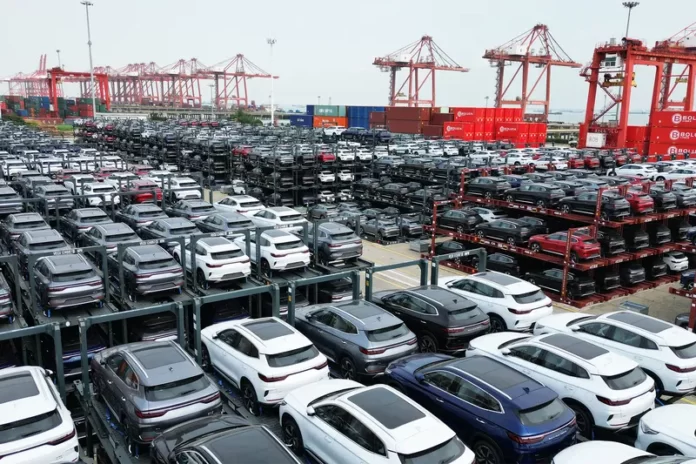
A dispute has emerged between Pakistan’s automotive sector and customs authorities over how to classify a new generation of electric vehicles, with local manufacturers warning that a recent ruling could disrupt the market and harm domestic assembly operations.
The Customs Classification Committee has placed range-extended electric vehicles in the same tariff category as battery electric vehicles, a decision that makes them eligible for substantially lower duty rates than traditional hybrids.
Understanding Range-Extended Technology
Range-extended electric vehicles represent a relatively new category in the automotive market. These vehicles are always driven by an electric motor but include a small petrol engine that never directly powers the wheels. Instead, this engine functions exclusively as a generator, activating only when the battery charge runs low to replenish it.
The committee based its determination on the fact that propulsion comes solely from an electric motor, with the internal combustion engine serving merely as a generator. This interpretation follows practices already adopted in several other countries including the United States and European Union members.
However, the Pakistan Automotive Manufacturers Association has pushed back against this decision, arguing that any vehicle equipped with a combustion engine cannot be classified as a pure electric vehicle and therefore should not receive incentives meant for zero-emission models.
Financial Stakes Behind the Dispute
The association highlighted that the importer declared the vehicle under a code attracting twenty-five percent customs duty, while the exporter in China classified the same vehicle under a hybrid category carrying fifty percent duty.
Industry representatives point out that the internal combustion engine generator reportedly makes up at least fifteen percent of the vehicle’s total value, making it fundamentally different from conventional battery electric vehicles.
An industry insider noted that range-extended vehicles typically come with a forty-five litre fuel tank and, when operating without external charging, produce emissions and fuel efficiency comparable to standard hybrids. The source also mentioned that exporting countries and United Nations regulations classify these vehicles as hybrids.
Policy Concerns Raised
The association contends that the ruling may violate the National Electric Vehicle Policy, which limits incentives to vehicles operating exclusively on battery power without any combustion engine.
Current import duties for completely built-up battery electric vehicles below fifty kilowatt-hours stand at twenty-five percent customs duty plus twelve and a half percent general sales tax. For completely knocked-down units, the rates drop to one percent duty on specific components and ten percent knockdown duty, with zero federal excise tax—benefits designed specifically to encourage zero-emission vehicles.
Industry representatives warn that extending these same advantages to range-extended vehicles could lead to a flood of low-duty imports, potentially undermining the economic viability of local knockdown operations across multiple vehicle categories including conventional engines, hybrids, plug-in hybrids, and battery electric vehicles.
International Guidance Sought
Pakistan’s customs authorities sought guidance from the World Customs Organization in Brussels on the matter. The organization confirmed that under the current Harmonized System, such vehicles fall under the electric vehicle classification. Notably, the 2028 amendment package will introduce a new dedicated subheading specifically for vehicles with combustion engines used solely for charging batteries.
The Customs Classification Committee has emphasized that its decision applies only to tariff classification and acknowledged that the World Customs Organization plans to assign a separate code by 2028. Any extension of fiscal incentives ultimately requires approval from the federal government and cabinet.
Awaiting Policy Direction
This classification controversy has surfaced as discussions continue on the Auto Policy 2026-31, which will determine future tariff structures, sales tax treatment, and concessions for various electric vehicle categories.
Automakers are now looking to the Engineering Development Board and the Ministry of Industries and Production for clarity, particularly since the forthcoming policy must align with international commitments, receive cabinet approval, and achieve consensus among key industry stakeholders.
The Pakistan Automotive Manufacturers Association has formally requested that the ruling be suspended and reviewed to ensure fiscal benefits remain restricted to genuine zero-emission vehicles and to prevent market distortions.
About Author