National Assembly Passes 46 Bills, Strengthens Parliamentary Oversight in Second Year
By Muhammad Awais :
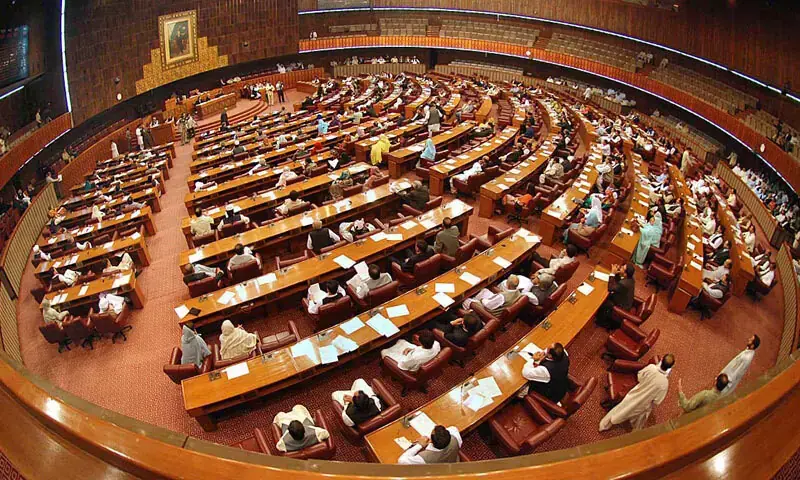
In the second year of the 16th National Assembly of Pakistan, which concluded on Tuesday, lawmakers successfully enacted 46 bills, including 40 government-sponsored and six private members’ bills. During the same period, the House also approved 27 resolutions.
A total of 159 bills were introduced over the year, with 59 government bills tabled in the National Assembly of Pakistan and 14 sent from the Senate of Pakistan. The Assembly held 11 regular sittings and three joint sittings, amounting to 130 working days with a combined duration of 237 hours and 36 minutes.
As part of legislative oversight, members submitted 7,625 questions, of which 1,710 were addressed on the floor. Lawmakers also filed 329 calling attention notices, with 49 taken up for discussion. Fifteen adjournment motions were moved, 13 of which were rejected. Of 33 privilege motions submitted, six were referred to standing committees, 18 remain under review, six were rejected, and two were withdrawn. Additionally, 263 motions under Rule 259 were received, with four added to the Order of the Day and three debated.
The FY2025-26 budget session featured a detailed discussion on the annual budget. Notably, a joint committee composed of finance committee members from both houses was formed for the first time to review the Finance Bill in detail, presenting its recommendations after extensive deliberations.
Key legislation included the 27th Constitutional Amendment and updates to the Pakistan Army Act 1958. Speaker Ayaz Sadiq presided over the sessions, fostering dialogue between government and opposition on critical national issues.
To enhance ministerial accountability, Question Hour procedures were strengthened, including summoning relevant secretaries when answers were pending. Parliamentary forums such as the Women Parliamentary Caucus, Parliamentary Caucus on Child Rights, Young Parliamentarians Forum, and the Task Force on Sustainable Development Goals were actively engaged in organizing policy dialogues, legislative workshops, public consultations, and international outreach. Provincial caucuses were also established to expand engagement.
On the international front, the Speaker promoted parliamentary diplomacy by attending a conference in Türkiye in solidarity with Palestine, and undertaking official visits to Saudi Arabia and Azerbaijan, as well as representing Pakistan at the Sixth World Conference of Speakers of Parliament in Geneva.
This productive year underscored the Assembly’s efforts to strengthen legislative oversight, promote inclusive governance, and enhance Pakistan’s parliamentary diplomacy.
About Author