
BNP secures landslide victory in Bangladesh’s first competitive election in years
By Web Desk :
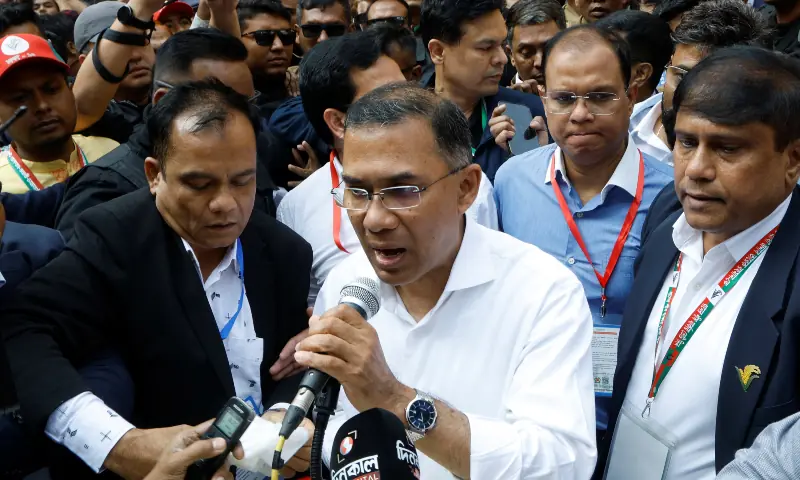
The Bangladesh Nationalist Party (BNP) recorded a sweeping win in Friday’s general elections, securing a two-thirds majority in a vote widely seen as the country’s first genuinely competitive poll in years. The result is expected to bring political stability after months of turmoil that followed the removal of former prime minister Sheikh Hasina during a youth-led uprising.
According to preliminary results broadcast by local television channels, the BNP and its allies captured at least 212 of the 299 parliamentary seats. The Jamaat-e-Islami-led alliance emerged as the main opposition bloc with around 70 seats in the Jatiya Sangsad, or national parliament.
Returning to power after two decades, the BNP thanked voters for their support but urged restraint. In a statement, the party asked supporters to avoid rallies or victory marches and instead observe special prayers for national unity and progress.
The decisive outcome was viewed as crucial for restoring order in the Muslim-majority nation of around 175 million people, where months of unrest had disrupted daily life and hit key sectors such as the garment industry, Bangladesh’s second-largest export earner.
BNP leader Tarique Rahman is expected to take office as prime minister. Son of party founder and former president Ziaur Rahman, he returned to Dhaka in December after nearly 18 years abroad.
Bangladesh had been under interim leadership since Nobel Peace Prize laureate Muhammad Yunus assumed charge following Hasina’s departure to India in August 2024. Hasina had dominated national politics for years, alongside Rahman’s mother and former premier Khaleda Zia.
Manual counting of paper ballots continued into Friday, but officials said the overall outcome was unlikely to change. The BNP’s performance surpasses its 2001 victory, when it won 193 seats, marking one of its strongest electoral showings in history.
Jamaat-e-Islami leader Shafiqur Rahman conceded defeat, promising a constructive role in parliament. “We will practice positive politics,” he told reporters, pledging cooperation rather than confrontation.
Voter turnout was reported to be above 60%, significantly higher than the previous election. Alongside the polls, a referendum on constitutional reforms also took place, with early media reports suggesting strong public support for changes including term limits for prime ministers and stronger judicial independence.
About Author