Govt to Train One Million Non-IT Professionals in AI: IT Minister
By Tanveer Ahmed :
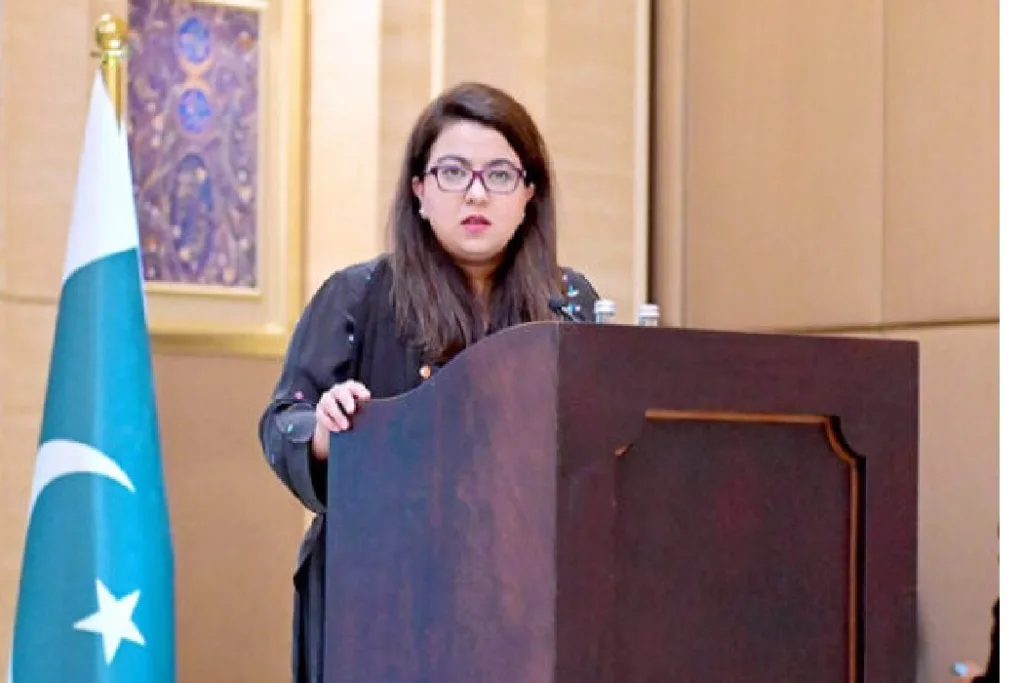
Minister for Information Technology and Telecommunication Shaza Fatima Khawaja on Tuesday announced that the federal government will launch a nationwide programme to train one million professionals from non-technical backgrounds in artificial intelligence, aimed at improving productivity and creating new economic opportunities.
Speaking to university students during Indus AI Week 2026 in Islamabad, the minister said the last two years had marked a major transformation in emerging technologies, with artificial intelligence rapidly reshaping economies, education systems and labour markets across the globe.
She said Pakistan was addressing these changes through a coordinated “whole-of-government” strategy under the prime minister’s leadership to ensure integrated planning and effective execution of digital reforms.
Shaza Fatima highlighted that Parliament passed the Digital Nation Pakistan Act last year, laying the foundation for the country’s long-term digital transformation. As part of this framework, Pakistan’s first National Artificial Intelligence Policy was approved by the federal cabinet in September 2025.
“The policy addresses all major aspects, including digital infrastructure, data centres, computing capacity, skills development, education reforms, global partnerships, and ethical use of AI,” she said, adding that the government was now focused on delivering measurable outcomes.
She said the prime minister had also announced a $1 billion investment to build Pakistan’s AI ecosystem. Key initiatives include training one million young people in AI, offering fully funded PhD scholarships, and integrating AI education into schools and higher education institutions across the country.
According to the minister, the national strategy is built on two parallel tracks: strengthening implementation mechanisms while preparing Pakistan’s workforce for the future digital economy.
Explaining the vision behind Indus AI Week, she said the platform was designed around three major objectives. The first is to project Pakistan’s technological readiness globally by highlighting its large youth population, growing startup culture, and digital potential.
The second objective is international policy engagement, with more than 50 global technology leaders, ministers, CIOs, CTOs and CEOs participating in strategic discussions, which resulted in the Islamabad Declaration outlining Pakistan’s position on AI governance and cooperation.
The third pillar focuses on youth engagement, featuring technology exhibitions, women empowerment programmes such as AI for Her, defence technology showcases, startup pitching sessions, and accelerator initiatives providing cloud credits and technical mentorship.
Shaza Fatima also drew attention to the fast-growing e-sports and gaming sector, calling it a trillion-dollar global industry. She said regional e-sports competitions attracted over 3,000 participants, with prize money of Rs4.5 million distributed through Ignite and the Ministry of IT.
She added that Centres of Excellence for Gaming and Animation have been set up in Karachi and Lahore, offering high-end software, shared workspaces and free training to students.
On financial inclusion, the minister said Pakistan is developing verified digital identity systems using blockchain and public key infrastructure, which will enable centralised e-KYC, improve trust, and expand private-sector lending, especially in agriculture and finance.
She also noted that the government is supporting data analytics platforms, strengthening intellectual property protection, and funding innovation through the Pakistan Startup Fund and national digitisation programmes.
Addressing concerns about job displacement, Shaza Fatima said artificial intelligence would not replace people, but those who understand AI would replace those who do not.
“Our biggest challenge is how fast we can reskill our workforce,” she said, adding that nearly 300,000 young Pakistanis are already receiving AI training under existing digital skills initiatives.
She said Pakistan’s large youth population, if equipped with modern AI skills, could significantly boost national productivity and position the country as one of the world’s largest AI-enabled labour forces.
Explaining the symbolism behind the name Indus AI Week, the minister said it reflected Pakistan’s historic legacy as one of the world’s earliest centres of innovation.
“Our roots are in innovation, and this is the legacy we want to carry forward by shaping the future of artificial intelligence,” she said, urging young people to actively engage with government, academia and industry to scale Pakistan’s AI ecosystem globally.
About Author