Pakistan to Invest $1 Billion in Artificial Intelligence by 2030: PM Shehbaz
By Tanveer Ahmed :
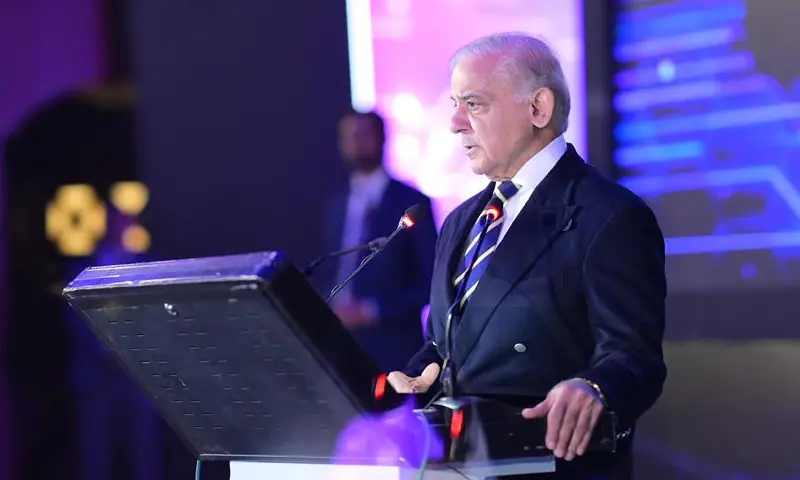
Prime Minister Shehbaz Sharif on Monday unveiled a major national plan to invest $1 billion in artificial intelligence (AI) by 2030, signalling Pakistan’s intention to position itself as a competitive player in the global digital economy.
Speaking at the opening ceremony of Indus AI Week 2026 in Islamabad, the prime minister said the initiative marked a decisive shift in Pakistan’s development strategy, with technology and innovation placed at the centre of future growth.
Indus AI Week, running from February 9 to 15, has been launched as Pakistan’s first official national platform dedicated entirely to artificial intelligence. The week-long event features international conferences, startup showcases, research exhibitions, policy dialogues, and training workshops, bringing together government officials, academics, global tech companies, investors, and young innovators from across the country.
National Roadmap for AI
Addressing the gathering, PM Shehbaz said the government would allocate $1 billion over the next five years to build a strong AI ecosystem, including infrastructure, education, research, and industry partnerships.
“This investment is not just about technology. It is about transforming our economy, empowering our youth, and ensuring Pakistan’s future competitiveness,” he said.
As part of the roadmap, the prime minister announced that AI education will be introduced across all federally administered schools, as well as in institutions in Azad Jammu and Kashmir and Gilgit-Baltistan. He added that special outreach programmes would be launched in underserved regions, particularly in Balochistan, to bridge the digital divide.
The government will also offer 1,000 fully funded PhD scholarships in artificial intelligence by 2030, aimed at developing advanced research capacity and producing globally competitive scientists and engineers.
In addition, a national upskilling programme will train one million non-IT professionals in basic and intermediate AI tools, enabling workers in fields such as healthcare, agriculture, finance and manufacturing to integrate intelligent systems into daily operations.
Key Sectors to Benefit
PM Shehbaz highlighted agriculture, mining, education, healthcare, and public administration as priority sectors for AI deployment.
He said AI-driven systems could significantly boost crop yields, improve water management, enhance mineral exploration, and streamline government services. He also emphasised the role of AI in expanding employment opportunities for women and enabling small businesses to compete in digital markets.
“Youth make up nearly 60 per cent of our population. If we equip them with cutting-edge skills, Pakistan can become a regional hub for innovation and digital services,” he said.
Indus AI Week: A National Platform
Indus AI Week includes keynote sessions by global AI experts, technology demonstrations by local startups, hackathons, and policy roundtables focusing on data governance, ethical AI, cybersecurity, and public sector applications.
Several memorandums of understanding (MoUs) were also signed during the opening day between Pakistani universities and international technology firms for joint research projects, faculty exchange programmes, and industry-led training.
The event is being organised by the Ministry of Information Technology and Telecom in collaboration with the Pakistan Software Export Board (PSEB), Higher Education Commission (HEC), and private sector partners.
Ministers Highlight Strategic Importance
IT Minister Shaza Fatima Khawaja said Indus AI Week was designed to create stronger linkages between academia, industry, and government.
She revealed that the Pakistan Digital Authority is currently preparing a National Digital Master Plan, which will outline long-term goals for data infrastructure, digital governance, cloud services, and AI regulation.
Planning Minister Ahsan Iqbal said the world had entered a new phase where intelligence itself had become a core factor of production.
“In the past, nations competed on land, labour and capital. Today, they compete on data, algorithms and innovation,” he said, describing artificial intelligence as a more powerful disruptor than electricity or the internet.
He noted that Pakistan’s digital transformation began over two decades ago with early IT policies, the creation of Nadra, and investments in human capital, but said AI now required a far more coordinated and ambitious national approach.
Policy Framework and Challenges
The government approved the National AI Policy in July 2025, aiming to democratise access to AI technologies, improve public service delivery, and encourage private sector innovation.
However, officials acknowledge that implementation has faced delays due to institutional restructuring and limited provincial participation. Indus AI Week is being positioned as a catalyst to accelerate adoption, build awareness, and mobilise stakeholders across the country.
PM Shehbaz concluded by reaffirming his government’s long-term commitment to digital transformation.
“Our journey towards an AI-powered Pakistan has begun. We will continue to invest, reform, and innovate until Pakistan secures its rightful place in the global knowledge economy,” he said.
About Author