Daesh planner behind Islamabad suicide attack taken into custody : Mohsin Naqvi
BY Sadia Khan :
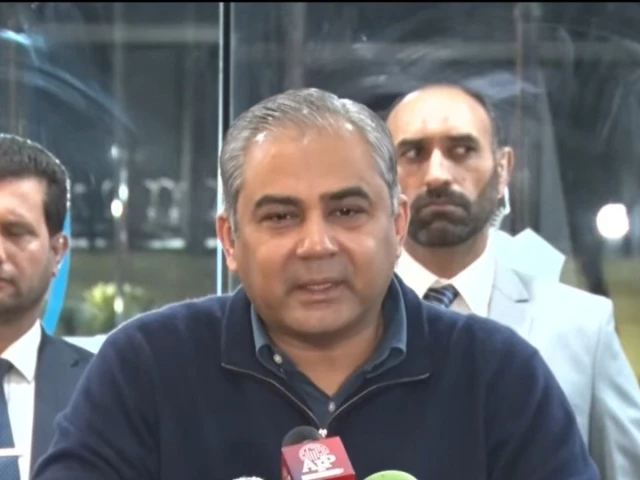
Interior Minister Mohsin Naqvi said on Saturday that the main planner behind the deadly attack on an Islamabad imambargah has been taken into custody.
The suicide bombing at Imambargah Khadijah al-Kubra during Friday prayers killed at least 32 people and left around 169 injured, according to officials. The explosion occurred when worshippers had gathered for Jumma prayers, followed by gunfire that caused panic in the area.
This was the deadliest terror incident in Islamabad in over ten years and the most lethal nationwide since the Peshawar mosque attack in January 2023.
Security officials revealed earlier that four facilitators linked to the attack, along with an Afghan national described as the mastermind and affiliated with the Islamic State (Daesh), were arrested during intelligence-based operations in Peshawar and Nowshera. The raids were conducted using both technical surveillance and human intelligence.
According to the sources, the attacker was trained and radicalised in Afghanistan by Daesh. During the operations, one police officer lost his life and three others were injured.
Speaking at a press conference after a high-level security meeting, Naqvi confirmed the arrests and paid tribute to the martyred officer. He described the attack as a tragic moment for the nation and said investigations were progressing rapidly.
He stated that Counter-Terrorism Department (CTD) and Khyber Pakhtunkhwa police teams worked overnight and successfully dismantled the network involved in the attack.
Naqvi said the arrested Afghan national was directly connected to ISIS and was responsible for planning the operation. He added that Pakistan had prior intelligence about the group but did not expect the arrests to happen so swiftly.
The interior minister claimed that the entire local network of Islamic State had now been neutralised and stressed the importance of community cooperation in preventing terrorism.
He further alleged that India was financially supporting Islamic State activities in Pakistan, providing both funding and operational targets. According to Naqvi, these funds were transferred in foreign currency and used to destabilise the country.
Naqvi also criticised Indian media for amplifying propaganda content produced by banned militant groups like the Balochistan Liberation Army (BLA), saying such material was used to project a false narrative about Pakistan’s security situation.
He rejected claims that terrorists had control over any part of the country, asserting that security forces were successfully eliminating threats.
Naqvi warned that terrorism was becoming a regional issue and urged the international community to take the threat seriously before it spread further.
India’s foreign ministry dismissed Pakistan’s allegations, while Afghan authorities strongly condemned the attack and denied any involvement.
Pakistan has repeatedly accused an Afghanistan–India nexus of backing militant groups operating within its borders. In past statements, military officials have warned that militant organisations are being sheltered across the border and are using abandoned foreign weapons.
Pakistan’s leadership maintains that while it respects the Afghan people, it holds the current Afghan regime responsible for failing to curb militant activities.
Recent UN reports have also highlighted the growing presence of Afghan nationals within the ranks of banned groups such as the Tehreek-e-Taliban Pakistan (TTP), lending support to Pakistan’s claims about cross-border terrorism.
About Author