Sindh Police Launch Major Operation Against Riverine Criminal Networks
By Sabeeh Zanair :
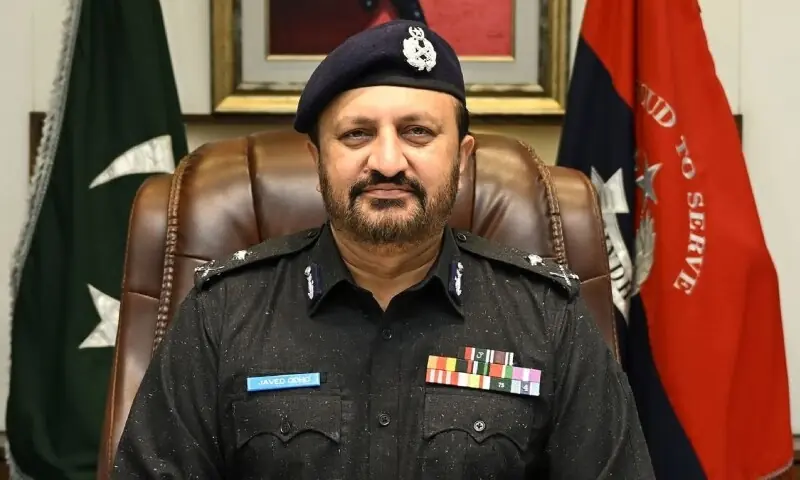
Sindh Inspector General of Police Javed Alam Odho said on Friday that a large-scale operation against riverine criminals was launched last month on the instructions of the provincial government.
Addressing a press conference at the Central Police Office, the provincial police chief revealed that since the start of the operation, police had engaged in 113 encounters with armed criminals. As a result, 27 kidnappers were killed, 82 were wounded, and 77 were taken into custody.
He added that 123 bandits had voluntarily surrendered to authorities as part of the government’s policy to restore law and order. Odho stressed that those involved were not minor offenders but highly dangerous criminals.
The police chief further disclosed that 15 kidnapped individuals had been safely recovered, noting that some victims had remained in captivity for as long as three years.
Future strategy
Referring to previous anti-bandit operations that failed to achieve lasting results, Odho said the current campaign was based on a long-term strategy that also focused on social and economic reforms in affected areas.
He pledged that the operation would continue until criminal networks in the riverine belt were completely dismantled. According to him, these areas, where advanced weapons were commonly used, would be fully disarmed.
He also pointed out that tribal disputes had historically served as breeding grounds for criminal groups by providing manpower and weapons. These conflicts, he said, often stemmed from personal rivalries, land disputes and minor disagreements.
Odho said some tribal elders had supported police efforts, while those refusing cooperation would face legal action.
To prevent the return of criminal groups, he announced the permanent deployment of law enforcement personnel and the creation of a specialised “riverine police unit”.
He claimed that previously inaccessible regions such as Bagarji and Ranwati had now been cleared of criminals, and several notorious gangs had been neutralised.
He added that a development plan for riverine communities was also in the works. The proposed Ghotki-Kandhkot bridge over the Indus River, he said, would improve police access and help sustain long-term security.
Odho further stated that infrastructure projects, including roads, schools and healthcare facilities, would be launched. Several non-governmental organisations in Karachi had committed to supporting education initiatives in these remote regions.
He recalled that similar development efforts, backed by oil and gas companies in Ghotki in 2003, had helped improve living conditions and reduce crime, particularly in the Chachar community.
The Sindh police chief said the riverine belt stretches over approximately 450 kilometres, but criminal hideouts were concentrated in only about 50 to 60 kilometres.
He identified two major challenges for law enforcement: the complex terrain with water channels and islands, and the proximity of these areas to borders with other provinces, especially Punjab.
He added that following discussions with the newly appointed Punjab police chief, both sides had agreed to enhance coordination and conduct joint operations in border regions.
An aerial surveillance unit using drones would also be established to monitor remote areas, he said.
Responding to a question about political backing for criminals, Odho acknowledged that some individuals might support bandits due to family ties or land disputes. However, he maintained that the government had granted police full autonomy and that there was no institutional pressure.
He also expressed hope that recent security operations in Balochistan would curb the flow of heavy weapons into Sindh’s riverine belt, adding that the federal government would assist in sealing gaps in disarmament efforts.
Odho said around 150,000 people lived in riverine areas and that the provincial government planned to rehabilitate them. If necessary, residents would be allocated state land to help sustain their livelihoods.
Karachi crime
The Sindh police chief also addressed the issue of street crime in Karachi, calling it another major challenge for law enforcement.
He recalled a time when organised crime and terrorism had dominated the city, with certain areas completely inaccessible to police.
He said peace was restored in Karachi due to the sacrifices of more than 1,100 police officers.
While acknowledging that crime still existed, he said incidents had declined and vowed to further improve security in the provincial capital.
About Author