Political, Religious Leaders Unite in Condemnation After Islamabad Blast
By Sadia Khan :
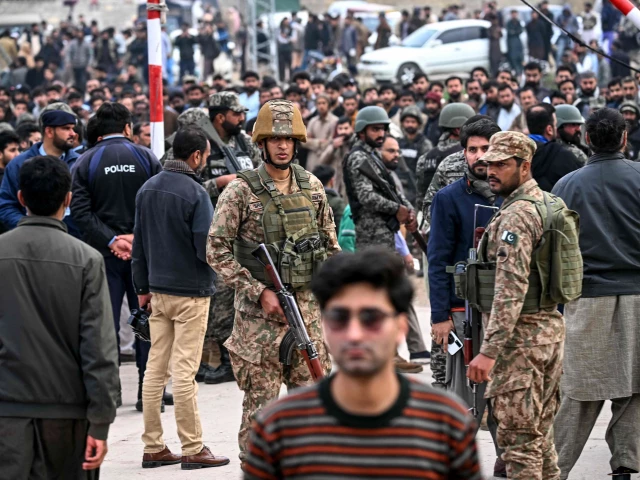
Condemnations continued to pour in on Friday after a devastating suicide attack struck Imambargah Khadijah-tul-Kubra in Islamabad’s Tarlai area during Friday prayers, leaving at least 31 people dead and 169 others injured, according to official sources.
President Asif Ali Zardari expressed deep sorrow over the tragedy and extended condolences to the families of the victims. In a message shared by the Pakistan Peoples Party on X, he said that attacking innocent people was a grave crime against humanity and directed authorities to ensure that all possible medical assistance was provided to those injured.
Prime Minister Shehbaz Sharif also strongly denounced the bombing and conveyed his sympathies to the bereaved families. During a meeting with Interior Minister Mohsin Naqvi, he instructed that a thorough investigation be carried out to identify and apprehend those responsible. He further ordered that the injured receive the highest standard of medical care, adding that the health minister would personally oversee the situation. The prime minister warned that no individual or group would be allowed to create instability or fear in the country.
Deputy Prime Minister and Foreign Minister Ishaq Dar described the attack as a cowardly act and said that targeting worshippers and religious sites was a heinous offense and a clear violation of Islamic teachings. He stressed that Pakistan remained united in its fight against terrorism and that those involved would be held accountable.
Balochistan Chief Minister Sarfraz Bugti condemned the incident, calling it one of the worst forms of terrorism and an inhumane act. He expressed solidarity with the affected families and prayed for the swift recovery of the injured, reaffirming that the nation stood firmly with its security forces.
Khyber Pakhtunkhwa Chief Minister Sohail Afridi also condemned the blast, stating that an attack on a place of worship reflected extreme brutality and intolerance, which had no place in any religion or civilised society.
National Assembly Speaker Ayaz Sadiq expressed grief over the loss of lives and offered heartfelt condolences to the families of those who were martyred, while praying for the speedy recovery of the wounded.
Information Minister Attaullah Tarar termed the bombing a cowardly act and said the prime minister had directed authorities to ensure that those responsible were brought to justice. He added that the state remained committed to safeguarding lives and religious spaces under a zero-tolerance policy against terrorism.
Leaders of Jamiat Ulema-i-Islam (F), including Maulana Rashid Mahmood Soomro and Maulana Nasir Mahmood Soomro, also condemned the attack and demanded immediate action against the perpetrators, along with stronger security for religious sites.
The Pakistan Ulema Council described the bombing as a brutal crime against Islam, humanity and the sanctity of places of worship. In a video message, PUC Chairman Allama Tahir Ashrafi said those behind the attack had no connection with Islamic or human values.
The Pakistan Bar Council expressed condolences to the victims’ families and prayed for the departed souls and the recovery of the injured. The Islamabad Bar Association announced a day of mourning and a strike, calling for a transparent and comprehensive investigation.
Public anger and grief were also visible on the streets, as protests erupted in several parts of the country. In Karachi, demonstrators blocked major roads and intersections, demanding justice for the victims and stronger action against terrorism. Large gatherings were reported at Malir 15, Shahrah-i-Pakistan, Abul Hasan Isphahani Road near Abbas Town, and Numaish.
The protests, organised by groups including Majlis Wahdat-i-Muslimeen, Jafferia Alliance, Imamia Students Organisation and the Shia Ulema Council, drew large crowds, including women and children, who raised slogans against terrorism and criticised security failures.
Demonstrations were also held in Gilgit, Skardu, Hunza and Nagar, where protesters blocked parts of the Karakoram Highway and other major roads. In Skardu, religious scholars and community leaders demanded the immediate arrest of those responsible and announced three days of mourning in Baltistan, along with a peaceful protest on Saturday.
In Hunza and Nagar, protesters staged road blockades and burned tyres, while in Gilgit, demonstrators described the attack as an assault on humanity and Islamic values.
Gilgit-Baltistan Governor Syed Mehdi Shah, caretaker Chief Minister Yar Muhammad, Assembly Speaker Nazir Ahmed Advocate and other political and religious figures also condemned the bombing and called for exemplary punishment for the culprits.
Separately, a rally was held in Nawabshah by the Shia Ulema Council, condemning the attack and demanding swift action.
Meanwhile, Sindh police said security at mosques, imambargahs and other religious locations across the province had been tightened in the aftermath of the Islamabad incident.
About Author