No breakthrough in US-Iran talks as JD Vance says Tehran rejects key terms
By Tahir Shah :

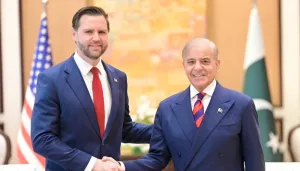
Talks between the United States and Iran in Islamabad have ended without an agreement after more than 20 hours of negotiations, with US Vice President JD Vance saying Tehran had declined to accept Washington’s terms.
In a statement posted on social media on Sunday, Mr Vance said there was “no deal” following the مذاکرات, pointing to unresolved issues and a lack of consensus. He made no reference to any immediate resumption of the talks.
Earlier, Iranian state media had indicated that discussions could continue, but a later statement from Tehran confirmed that the مذاکرات had concluded for now. It added that technical teams from both sides would exchange documents and continue engagement despite remaining differences, though no timeline for further talks was announced.
According to officials familiar with the mediation process, Mr Vance, along with US special envoy Steve Witkoff and Jared Kushner, held meetings with Iranian Parliament Speaker Mohammad Bagher Ghalibaf and Foreign Minister Abbas Araghchi, including a key session lasting about two hours before a break.
The apparent breakdown represents a setback after earlier signs that the مذاکرات might move into a more detailed phase, with both sides preparing written proposals to narrow gaps on critical issues.
Pakistan had been hosting the talks at the invitation of Prime Minister Shehbaz Sharif, following a two-week ceasefire announced on 8 April after weeks of conflict involving US and Israeli strikes on Iran and retaliatory actions by Tehran.
Officials had earlier suggested the discussions could extend beyond an initial one-day schedule, acknowledging the complexity of a dispute spanning nearly five decades. Law Minister Azam Nazeer Tarar said such deeply rooted tensions could not be resolved quickly and that both delegations remained in close contact with their respective governments throughout the process.
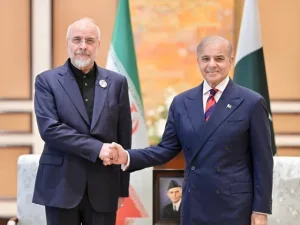
Mr Sharif held separate meetings with both delegations, reiterating Pakistan’s commitment to facilitating dialogue and expressing hope that the مذاکرات would help build momentum towards lasting regional peace.
Despite the lack of agreement, both sides signalled a willingness to continue engagement. Iranian officials described the talks as entering a more technical stage, focused on exchanging detailed proposals aimed at bridging differences.
Key disagreements remain over Iran’s nuclear programme, economic sanctions and control of the Strait of Hormuz — a vital global shipping route. Washington is seeking strict limits on Iran’s nuclear activities and broader security assurances, while Tehran is demanding full sanctions relief and recognition of its regional and strategic interests.
The مذاکرات, closely watched by the international community, are seen as a critical test of whether a fragile ceasefire can be transformed into a more durable political settlement in the Middle East.
About Author