Islamabad hosts high-stakes US-Iran talks amid tight security
By Tahir Shah :
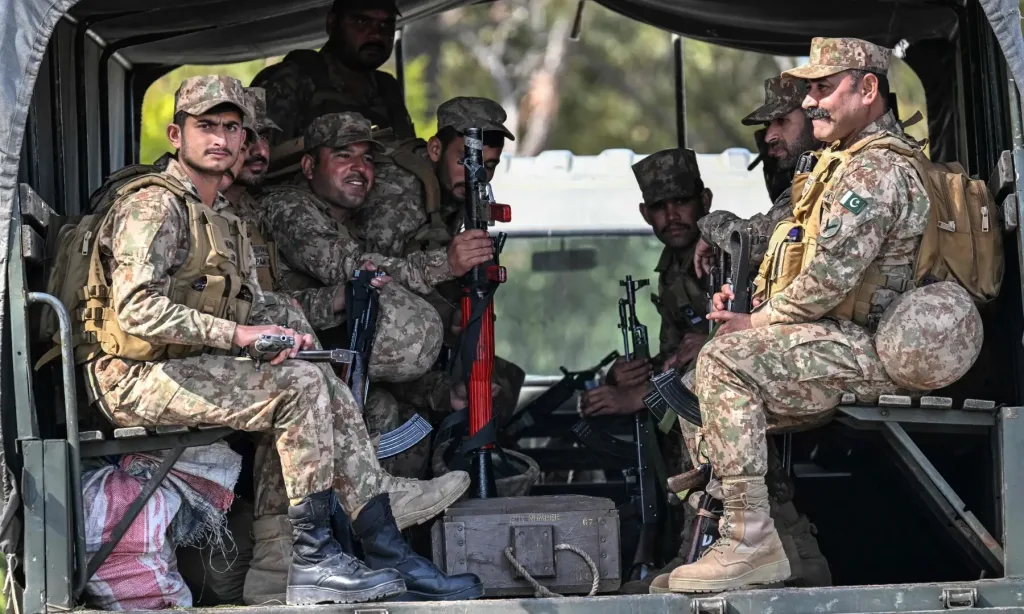
Pakistan’s federal capital Islamabad is set to host negotiations today (11 April) aimed at ending a conflict that has threatened to engulf much of the Middle East. The talks will bring together delegations from the United States and Iran.
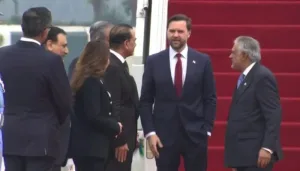
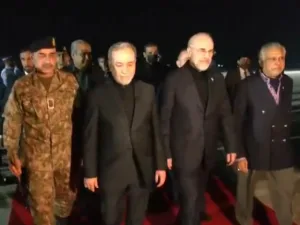
Late on Friday night, the Iranian delegation, led by Mohammad Bagher Ghalibaf, arrived at Islamabad’s Nur Khan Airbase, where they were received by Pakistan’s Deputy Prime Minister Ishaq Dar and Field Marshal Asim Munir.
Pakistan has helped broker a two-week ceasefire between the United States and Iran, and the delegations have travelled to Islamabad at the invitation of the Pakistani prime minister to begin negotiations.
The city is presenting an unusual scene as it prepares to host the high-level meeting. A public holiday has been declared in Islamabad and its twin city Rawalpindi, leaving roads noticeably quieter than usual.
Islamabad’s Red Zone, which houses key government buildings, has been completely sealed off and its boundaries temporarily expanded to include nearby residential areas. According to a government notification, all businesses and both public and private offices in the area will remain closed on Saturday.
Responsibility for security in the Red Zone has been handed to the army. Major routes connecting Nur Khan Airport with the Red Zone have also been placed under strict security and closed to regular traffic.
Across the city, banners displaying the words “Islamabad Talks” have been placed at prominent locations, while officials say comprehensive security arrangements have been finalised.
In the days leading up to the arrival of the American delegation, several aircraft carrying security personnel and protocol teams landed in Islamabad. A government official told the BBC that a US C-17 military cargo aircraft arrived at Nur Khan Airbase from the Al Udeid Air Base in Qatar on Thursday.
The official said the large transport aircraft carried vehicles intended for the US delegation during its stay in Pakistan. Similar aircraft later arrived from Qatar and a US military base in Germany carrying additional vehicles as well as security and protocol staff.
“These vehicles will primarily be used by members of the US delegation during their stay in Pakistan,” the official said, adding that the team forms part of the advance security and protocol preparations for the visit.
After the delegation leaves Pakistan, the vehicles will be transported back on the same aircraft. During the visit, the security of the US vice president and members of the delegation will be managed jointly by Pakistani authorities and their own security teams.
Officials also confirmed that an advance team from Iran had arrived earlier to finalise security and protocol arrangements ahead of the delegation’s arrival.
Global media attention has turned to Islamabad, with journalists from across the world arriving to cover the talks. Authorities have arranged a media centre at the Jinnah Convention Centre, where the main hall has been specially prepared to support journalists covering the negotiations. Large screens have also been installed inside the hall.
Pakistan’s foreign ministry has said that journalists from countries participating in the talks will be granted visas on arrival during the negotiations.
However, the closure of the Red Zone and hotels within it has created difficulties for some foreign reporters. One journalist from a US broadcaster told the BBC that he was staying at a hotel in Sector F-8, close to the newly expanded Red Zone.
“We asked the hotel for a location to broadcast live from where Islamabad could be seen, but they demanded such a high price that we refused,” he said, claiming the hotel asked for $25,000 per day.
Another journalist from a major US media organisation said his team had struggled to secure visas in time to travel to Islamabad.
“There is considerable confusion surrounding Pakistan’s new visa offer,” he said, adding that a lack of coordination between different authorities had created complications.
Outside the Red Zone, life in Islamabad appears largely normal, although many residents have faced difficulties due to road closures.
According to guidelines issued to international media, journalists will not be allowed to use private transport inside the Red Zone, and filming or video coverage in the area will also be restricted.
About Author