Punjab Introduces Artificial Intelligence Curriculum in Schools
By Tanveer Ahmed :
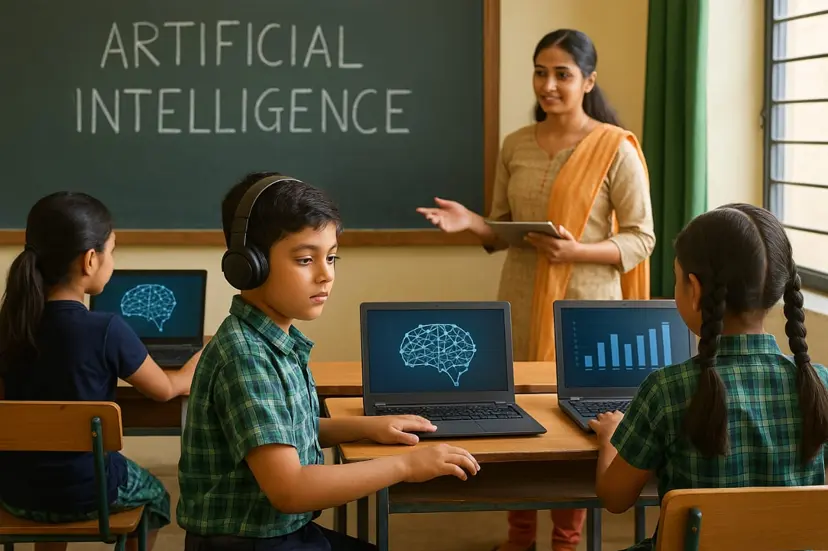
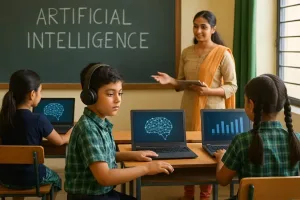
Punjab has introduced a new artificial intelligence curriculum aimed at equipping students with modern digital skills and preparing them for a rapidly evolving technological landscape.
The Punjab Education, Curriculum, Training and Assessment Authority (PECTAA) said the programme follows a timeline set by Chief Minister Maryam Nawaz to ensure early integration of digital education in the province’s schools.
The first draft of the curriculum was presented by PECTAA Chief Executive Officer Muhammad Musa Ali Bokhari to the provincial education minister and the parliamentary secretary during a briefing on the initiative.
According to the authority, the curriculum has been designed to gradually introduce students to key technological concepts in line with their age and learning capacity. It includes foundational computing knowledge along with emerging fields such as data science, machine learning, robotics and ethical artificial intelligence.
Officials said the framework blends international standards with local educational needs. Alongside technical knowledge, the programme emphasises responsible digital citizenship, governance, creativity and problem-solving skills to help students navigate the digital world more effectively.
PECTAA added that the objective is to move beyond basic computer literacy and encourage students to apply technology in innovative and practical ways while adapting to future digital challenges.
The development comes as other provinces also move to modernise their technology education. Earlier this year, the elementary and secondary education department in Khyber Pakhtunkhwa revised its computer science curriculum to include artificial intelligence from grades six to twelve.
Officials in KP estimated that around Rs7.25 billion would be required to support the programme. The funding proposal covers the establishment of new computer laboratories, recruitment of teachers, strengthening of IT infrastructure and the development of online artificial intelligence platforms.
The plan also includes restoring 325 non-functional IT laboratories and providing internet access to 958 schools across the province.
Education officials said earlier learning frameworks for students in grades six to eight lacked core artificial intelligence concepts, prompting the introduction of new material to build essential knowledge and skills in the field.
For students in grades nine to twelve, existing AI-related content has been expanded to strengthen competencies and align the curriculum with current technological developments.
However, authorities acknowledge a major shortage of qualified teachers. Officials say more than 10,600 instructors are required for IT subjects across the province, but only about 3,050 are currently available, leaving a gap of over 7,500 teachers at different school levels.
About Author