Iran Rejects US Ceasefire Proposal as Regional War Intensifies
By Tahir Shah :
Iran has rejected a United States proposal for a ceasefire aimed at ending the ongoing conflict, insisting instead on a permanent settlement to the war, according to Iran’s official news agency IRNA.
Tehran conveyed its response through Pakistan, which has been acting as an intermediary in efforts to ease tensions between the two sides. The conflict between Iran and the US, now entering its sixth week, has triggered widespread instability across the Middle East and sent global energy markets into turmoil.
Iran’s response reportedly includes a 10-point framework outlining its conditions for peace. The proposals call for a permanent end to hostilities in the region, secure passage through the Strait of Hormuz, the removal of international sanctions on Iran and support for post-war reconstruction.
Washington has been pressing Tehran to reopen the strategically vital Strait of Hormuz, a key route for global oil shipments. US President Donald Trump warned that Iran could face severe consequences if it failed to reach an agreement by 20:00 Eastern Time on Tuesday to allow shipping to resume through the waterway.
Iranian officials have resisted those demands. Foreign ministry spokesman Esmaeil Baghaei said Tehran had already conveyed its position through diplomatic channels, stressing that its proposals were based on national interests. He said earlier US demands, including a reported 15-point plan, were rejected because they were considered excessive.
Speaking at a press briefing, Baghaei said Iran’s stance should not be interpreted as a willingness to compromise but rather as a reflection of confidence in defending its position. He added that further details of Iran’s response would be announced later.
A senior Iranian official also told Reuters that Tehran would not reopen the Strait of Hormuz as part of a temporary ceasefire and would not accept deadlines or pressure to reach a deal. The official claimed Washington had not shown readiness for a permanent end to the conflict.
The diplomatic effort led by Pakistan emerged after intensive overnight contacts involving Pakistan’s Chief of Army Staff Field Marshal Asim Munir. According to a source familiar with the discussions, he held talks throughout the night with US Vice President JD Vance, US special envoy Steve Witkoff and Iranian Foreign Minister Abbas Araghchi.
The proposal reportedly suggests an immediate ceasefire followed by negotiations on a broader peace agreement that could be finalised within two to three weeks.
However, a White House official said the plan was only one of several options being considered and had not yet been approved by President Trump. The official added that the US military operation against Iran, known as “Operation Epic Fury”, remained ongoing.
Financial markets reacted cautiously to the developments. Brent crude oil prices fell slightly to about $108.67 per barrel as investors weighed the possibility of a ceasefire.
The war has continued to escalate across the region. Iranian state media reported that Majid Khademi, the intelligence chief of Iran’s Revolutionary Guards, had been killed, with Israel claiming responsibility for the attack.
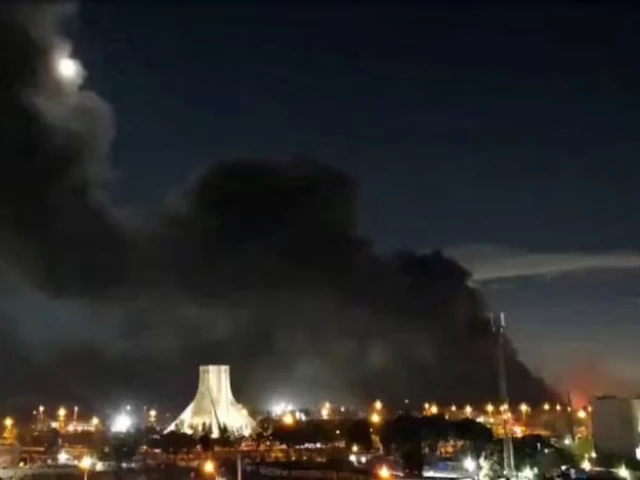
Iran also said two of its petrochemical facilities had been targeted. A fire at the South Pars complex in Asaluyeh was brought under control by emergency crews, according to Iran’s National Petrochemical Company, which said no casualties were reported. The complex temporarily lost power after companies supplying electricity, water and oxygen were hit in separate attacks.
State media also reported damage at the Marvdasht petrochemical complex following a strike attributed to US and Israeli forces.
Israeli Defence Minister Israel Katz warned that Israel would continue targeting Iranian infrastructure and pursue the country’s leadership individually. Meanwhile, Iranian officials said attacks had also struck infrastructure linked to the country’s artificial intelligence network at Tehran’s Sharif University of Technology.
Russia has expressed concern over the widening conflict. Kremlin spokesman Dmitry Peskov said the war was expanding geographically and economically, describing the Middle East as “on fire” amid continued US and Israeli strikes on Iran.
The conflict has caused heavy casualties. A US-based human rights organisation, HRANA, said more than 3,500 people had been killed in Iran, including at least 244 children.
In Israel, emergency services reported that four people were killed overnight when a missile struck a residential building in the northern city of Haifa. The attack brought the total number of Israeli civilian deaths from Iranian and Hezbollah strikes to 23.
Fighting has also spilled into neighbouring countries. Israel has carried out military operations in southern Lebanon against Hezbollah, an Iranian-backed group. Lebanese authorities say the violence has killed more than 1,400 people, including at least 124 children, while 13 US service members have also died during the wider conflict.
About Author