Global Strategic Shift: President Trump Signals De-escalation Strategy for Iran Conflict
By Tahir Shah :
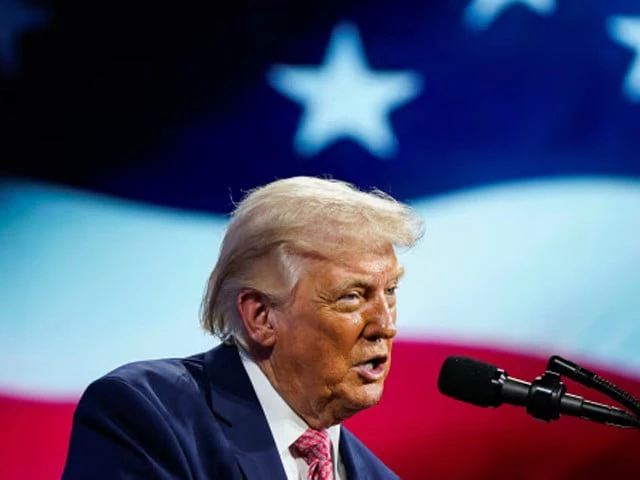
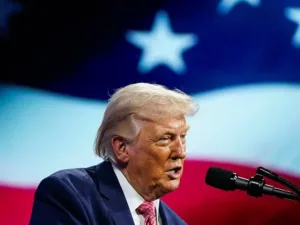
In a significant pivot that could redefine the current Middle Eastern security architecture, U.S. President Donald Trump has signaled a willingness to conclude military operations against Iran without requiring the immediate reopening of the Strait of Hormuz. Sources within the administration indicate that the White House has reassessed the tactical necessity of the chokepoint, concluding that a forced reopening would likely extend combat operations well beyond the President’s established four-to-six-week timeline. This strategic recalibration suggests that Washington is prioritizing the neutralization of specific military assets over the immediate restoration of maritime trade routes.
White House Press Secretary Karoline Leavitt confirmed that the administration remains focused on an April 6 deadline for a comprehensive settlement. While Tehran’s public rhetoric remains defiant, Leavitt noted that private diplomatic channels show more promise than official state media suggests. The primary objectives for the U.S. military have now shifted toward a permanent crippling of the Iranian Navy and the destruction of its long-range missile stockpiles. Once these functional military goals are met, the Trump administration plans to transition the burden of economic and diplomatic pressure to European and Gulf allies to lead the restoration of regional commerce.
The shift in policy arrives amidst continued volatility in the Persian Gulf, exemplified by the recent drone strike on the Kuwait-flagged tanker Al-Salmi off the coast of Dubai. Though the resulting fire was contained without casualties, the incident caused a temporary surge in global crude prices and highlighted the persistent threat to energy security. In response to such maritime aggression, President Trump issued a severe ultimatum via social media, warning that if the Strait is not “Open for Business” by the deadline, the U.S. military is prepared to systematically obliterate Iran’s critical industrial infrastructure, including electric generating plants, oil wells on Kharg Island, and desalination facilities.
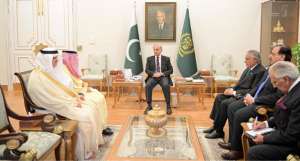
On the ground, the arrival of the elite 82nd Airborne Division in the Middle East provides the Pentagon with expanded options for ground intervention even as peace proposals are exchanged. These proposals, reportedly facilitated by the foreign ministers of Pakistan, Egypt, Saudi Arabia, and Turkey, have been characterized by Iranian officials as unrealistic but remain the only active path toward a ceasefire. Domestically, the Trump administration is facing a legislative battle over a $200 billion war funding request, prompting the White House to explore the possibility of requesting that Arab partner nations subsidize the substantial costs of the ongoing military campaign.
About Author