Strait of Hormuz Closure Deepens Global Energy Crisis as Iran Tightens Grip
By Sabeeh Zanair :
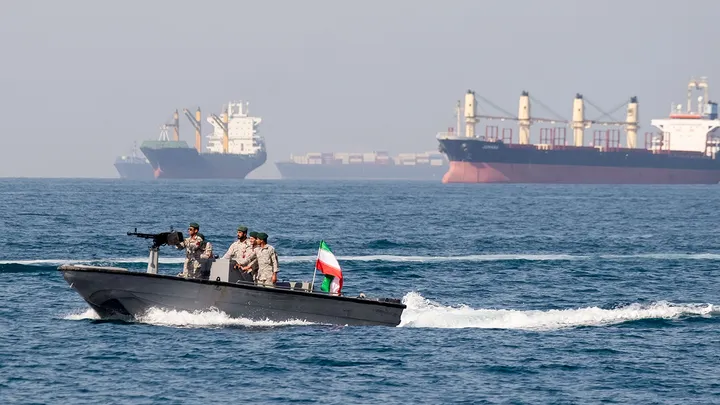
The Strait of Hormuz, one of the world’s most critical maritime routes for energy supplies, has been effectively closed for nearly four weeks, disrupting global oil markets and raising concerns about a prolonged energy crisis.
The narrow waterway, which carries around 20% of the world’s oil and natural gas shipments, has seen most commercial traffic halt after Iran threatened and attacked vessels in the Gulf, making transit too risky for many shipping companies.
As tensions mount, US President Donald Trump has highlighted diplomatic efforts aimed at ending the blockade while also deploying thousands of additional troops to the Middle East and considering the use of US Navy escorts for oil tankers passing through the region.
Geography Gives Iran Strategic Advantage
Analysts say Iran holds a significant strategic advantage due to the geography of the strait and its unconventional military tactics.
At its narrowest point, the Strait of Hormuz is about 24 miles wide, according to shipping analytics firm Vortexa, with most vessels forced to travel through two tightly confined shipping lanes.
“This is described as a chokepoint for a good reason,” said Nick Childs, a senior fellow at the International Institute for Strategic Studies (IISS), noting that the waterway has virtually no alternative routes for global energy shipments.
The limited manoeuvring space makes vessels particularly vulnerable. Experts say Iran can effectively monitor and target ships moving through the narrow lanes without needing to actively search for them.
Coastal Terrain and Military Capabilities
Iran’s nearly 1,000 miles of coastline along the Gulf further strengthens its position. The terrain includes mountains, islands and built-up coastal areas, which make it easier to conceal mobile anti-ship missile systems and other weapons.
Military analysts say Iran can also rely on unconventional warfare methods, including drones, sea mines, explosive-laden unmanned boats and fast attack vessels, which are relatively inexpensive but capable of causing significant disruption.
“These systems mean ships could face attacks with very little warning,” said Kevin Rowlands, a maritime security expert at the Royal United Services Institute.
Threats to Commercial Shipping
Since the conflict began, Iran has reportedly attacked at least 19 vessels near the Strait of Hormuz, the Persian Gulf, and the Gulf of Oman.
Experts warn that even limited threats are enough to disrupt global trade. Shipping companies are unlikely to resume normal operations as long as the risk of attacks remains high, even if most vessels are not directly targeted.
Some ships linked to Iran, China, India and Pakistan have reportedly managed to pass through the strait, sometimes after coordinating with Iranian authorities.
Reports from Lloyd’s List Intelligence suggest that at least 16 vessels have crossed the waterway, including one that allegedly paid $2 million for safe passage, although these claims could not be independently verified.
Global Shipping Backlog
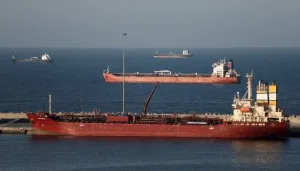
The disruption has created a massive shipping backlog. According to the International Maritime Organization, nearly 2,000 vessels are currently trapped inside the Persian Gulf, waiting for safe passage.
Even if traffic resumes soon, analysts say it could take weeks or months to clear the congestion.
Military Build-Up in the Region
The United States and its allies, including the UK, France and Bahrain, are working on plans to protect commercial shipping.
Experts say any escort operation would likely involve a layered defence system, including satellite surveillance, patrol aircraft, drones and mine-clearing operations, rather than traditional naval convoys.
Meanwhile, the US has begun deploying additional forces to the region. Two US officials said the 11th Marine Expeditionary Unit and the Boxer Amphibious Ready Group are heading to the Middle East, while another Marine unit aboard the USS Tripoli assault ship has also been dispatched.
Diplomatic Efforts and Escalation Risks
The Trump administration says diplomatic discussions are progressing, although Iran insists it is not engaged in direct negotiations with Washington, acknowledging only indirect communication through mediators.
At the same time, Trump has warned that the US could target additional Iranian oil facilities if Tehran continues to block shipping in the strait.
Last week, US forces struck military installations on Kharg Island, which handles about 90% of Iran’s crude oil exports. Oil infrastructure itself was not targeted, but officials have indicated that such facilities could become potential targets if tensions escalate further.
About Author