President Zardari Chairs High-Level Meeting on Economic Pressures and Energy Security
By Tahir Shah :
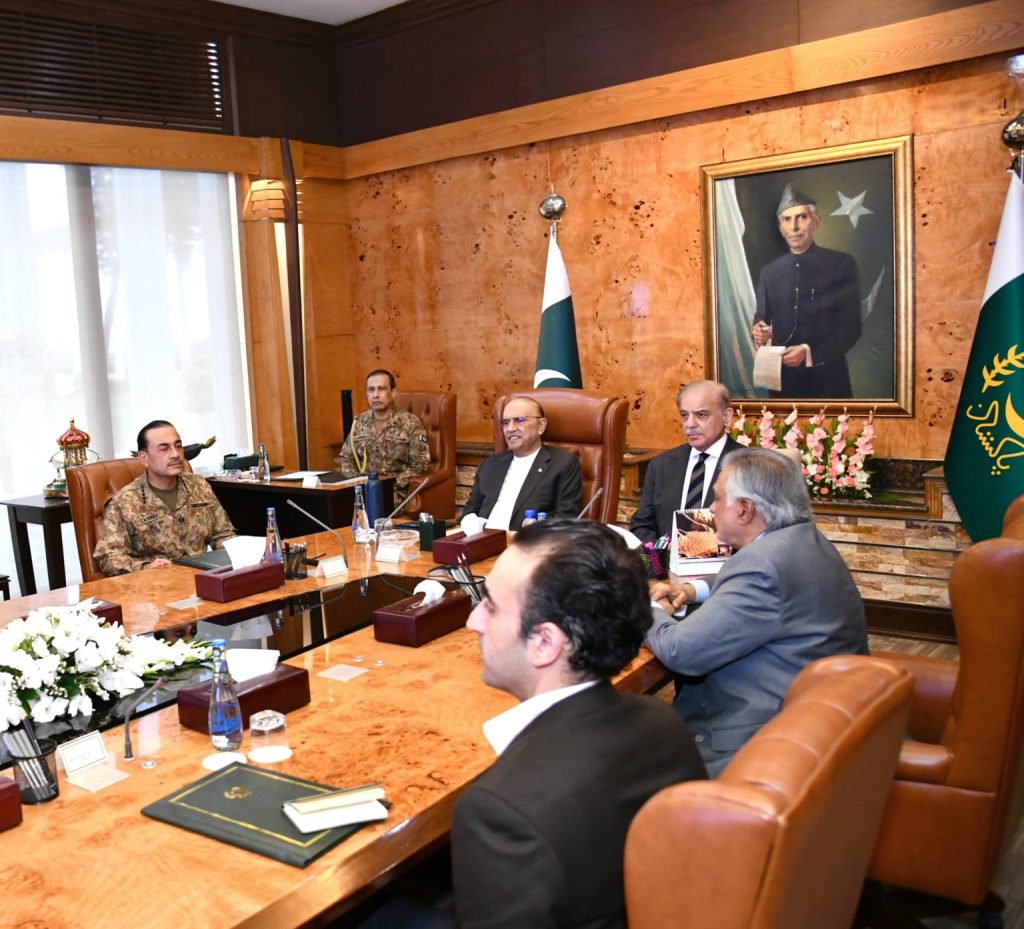
President Asif Ali Zardari chaired a high-level consultative meeting at Aiwan-e-Sadr on Thursday to assess Pakistan’s economic and energy situation amid global oil supply constraints, rising petroleum prices and evolving regional security dynamics.
According to a statement from the President House, the meeting was attended by Prime Minister Shehbaz Sharif and Chief of the Army Staff and Chief of Defence Forces Field Marshal Syed Asim Munir.
Senior government officials also participated, including Deputy Prime Minister and Foreign Minister Ishaq Dar, Pakistan Peoples Party Chairman Bilawal Bhutto Zardari, Interior Minister Mohsin Naqvi, Finance Minister Muhammad Aurangzeb, Petroleum Minister Ali Pervaiz Malik, Economic Affairs Minister Ahad Khan Cheema, and the Finance Secretary.
Focus on Energy Prices and Inflation
During the meeting, participants reviewed the impact of fluctuations in global oil and gas supply and prices on Pakistan’s economy. Discussions focused on managing inflationary pressures while ensuring the country’s energy security.
The finance and petroleum ministers briefed attendees on government efforts to stabilise petroleum prices, limit the broader economic impact of rising fuel costs and maintain fiscal discipline through austerity measures aimed at reducing expenditure.
Regional Situation Also Discussed
Officials also examined the regional geopolitical situation and its potential implications for Pakistan’s security environment, economic outlook and food supply stability.
Participants stressed the importance of a coordinated national strategy, noting that economic and security policies must work together to maintain stability while protecting public interests.
Call for National Coordination and Public Awareness
The meeting emphasised the need to strengthen institutional coordination and national consensus in response to emerging regional challenges.
Participants agreed that economic management, energy planning, food security and security considerations should remain closely aligned to address the current situation effectively.
The discussion also highlighted the importance of public awareness campaigns to reduce fuel consumption, encourage the use of public transport and promote ride-sharing initiatives to help ease pressure on energy resources.
About Author