Shipping Through Strait of Hormuz Falls 95% Amid Iran-US-Israel Conflict
By Sabeeh Zanair :
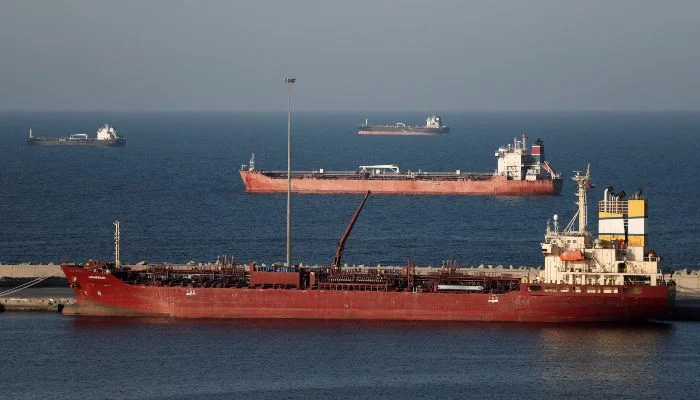
Shipping traffic through the Strait of Hormuz has dropped sharply since the outbreak of war involving Iran, the United States and Israel, with only a small number of vessels managing to pass through the strategic waterway.
Data from maritime analytics firm Kpler shows that between 1 March and 23 March, just 144 commodity-carrying ships crossed the strait a decline of about 95% compared with normal peacetime traffic.
The 167-kilometre (104-mile) passage is one of the world’s most important energy corridors, with roughly one-fifth of global oil and liquefied natural gas shipments usually travelling through it.
Limited Traffic Through Strategic Waterway
Of the 144 recorded crossings, 91 involved oil and gas tankers, according to Kpler. More than half of those ships were carrying cargo, with most travelling eastwards out of the strait.
Maritime publication Lloyd’s List said shipping activity in the area remains “severely disrupted”.
On Monday, a small number of vessels continued to navigate the route, including two Indian-flagged tankers transporting liquefied petroleum gas and a carrier bound for China.
One of them, the Panama-flagged Bright Gold, was reportedly carrying about 40,000 tonnes of methanol and is expected to reach China by 13 April.
A Chinese-owned container ship, Newvoyager, also passed through the strait after reportedly making a payment to Iranian authorities, according to Lloyd’s List. The exact amount and method of the payment could not be confirmed.
Possible Iranian-Approved Corridor
Recent vessel movements suggest that ships are increasingly using a northern route around Larak Island near the Iranian coastline.
Lloyd’s List reported tracking more than 20 vessels using this corridor, including ships owned by companies in Greece, India, Pakistan and Syria.
Iranian authorities are believed to be processing transit requests individually, while some countries, including India, are reportedly negotiating broader passage arrangements with Tehran.
Last week, Lloyd’s List reported that at least one vessel paid about $2 million for safe passage through the strait.
Two ships passing on Monday — Bright Gold and the Indian tanker Pine Gas — kept their automatic identification system (AIS) transmitters active, something rarely seen among non-Iranian vessels operating in the area during the current crisis.
Iranian Ships Dominate Traffic
Most of the vessels passing through the strait since the conflict began have been Iranian-flagged or Iranian-owned, followed by ships from Greece and China, according to Lloyd’s List Intelligence analyst Bridget Diakun.
“Although Iran is continuing to control the strait and export its own oil, most other traffic remains largely halted,” analysts said.
An AFP review of shipping data suggests that more than 40% of vessels passing through the waterway since the start of the war have been under sanctions imposed by the United States, European Union or the United Kingdom.
Among oil and gas tankers alone, nearly 59% were sanctioned vessels.
Oil and Gas Flows Shift Towards Asia
Market analysts say the majority of oil shipments still moving through the strait are destined for Asian markets, particularly China.
JPMorgan analysts estimate that about 98% of the observable oil traffic through the waterway in early March was Iranian crude, averaging around 1.3 million barrels per day.
At the same time, global energy routes are shifting. MarineTraffic data shows that at least 11 liquefied natural gas (LNG) cargoes originally intended for Europe have been redirected to Asian markets since 3 March.
The diversions come as supply constraints and rising spot prices reshape global energy flows during the ongoing conflict.
About Author