Kamran Tessori’s Removal as Sindh Governor Signals Wider Political Calculations
By Zeeshan Naseem :
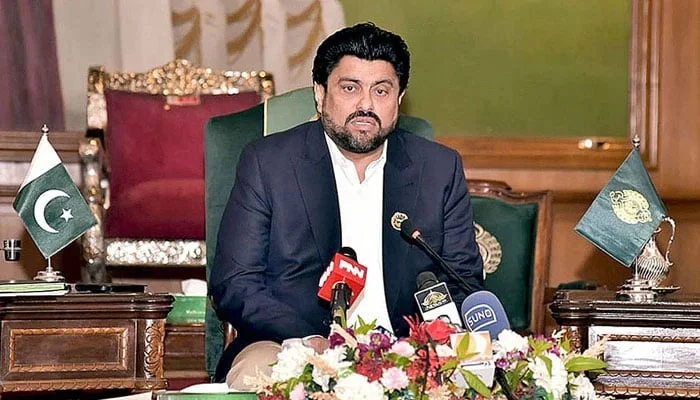
The removal of Kamran Tessori as governor of Sindh appears to reflect broader political manoeuvring within Pakistan’s ruling coalition rather than a simple concession to a coalition partner.
Last week, the government led by Shehbaz Sharif replaced Tessori with senior Pakistan Muslim League–Nawaz leader Nehal Hashmi, who took oath as the province’s new governor on Friday.
Analysts say the decision may be linked to wider political negotiations involving constitutional changes and discussions over the distribution of financial resources between the federation and the provinces.
Appointment and tenure
Tessori, who was associated with Muttahida Qaumi Movement–Pakistan, was appointed governor in October 2022 by then-president Arif Alvi on the advice of the government formed by the Pakistan Democratic Movement.
Although not among the party’s senior leadership at the time, he remained in office for nearly two years despite opposition from Pakistan Peoples Party, which governs Sindh and had repeatedly called for his removal.
After the 2024 Pakistani general election, the new federal government initially allowed Tessori to continue in the role.
MQM-P reaction
Leaders of MQM-P said they were not consulted before the decision to replace Tessori, learning of Hashmi’s appointment through media reports.
The development triggered an immediate reaction from some party lawmakers, who staged a walkout from the National Assembly of Pakistan. Senior MQM-P figure Farooq Sattar also questioned the party’s continued participation in the ruling coalition.
However, MQM-P chairman Khalid Maqbool Siddiqui later adopted a more measured tone, saying only that the party had not been taken into confidence over the decision.
“He left the Governor House with dignity and made history,” Siddiqui said, without announcing any immediate change in the party’s political stance.
Political negotiations in the background
According to party sources, discussions about replacing Tessori had been underway since late last year, with the government informing MQM-P of its intention to appoint its own nominee.
Some MQM-P leaders believe the decision may be tied to negotiations over upcoming constitutional reforms, including a possible 27th Amendment of the Constitution of Pakistan, future changes to the National Finance Commission, and other legislative measures.
They argue that the government may need the support of the PPP in parliament for such initiatives, making political compromises necessary.
Efforts to ease tensions
Amid signs of tension within the ruling alliance, Mohsin Naqvi travelled to Karachi to meet MQM-P leaders and encourage dialogue.
He accompanied Siddiqui to a meeting with Asif Ali Zardari at Bilawal House, where discussions officially focused on security, law and order, and regional developments.
While MQM-P leaders said Tessori’s removal was not discussed during the meeting, observers believe the contact helped ease tensions within the coalition.
Criticism from rivals
Opposition figures have portrayed the episode as a sign of MQM-P’s limited influence within the federal government.
Afaq Ahmed, leader of the Mohajir Qaumi Movement, criticised the party, suggesting that it lacked the political leverage to protect its own nominee.
Despite the criticism, MQM-P leaders say they remain part of the ruling alliance and will continue pursuing their demands, including greater powers for local governments in urban Sindh.
About Author