SBP keeps policy rate unchanged at 10.5% amid global oil price uncertainty
By Shahzad Paracha :
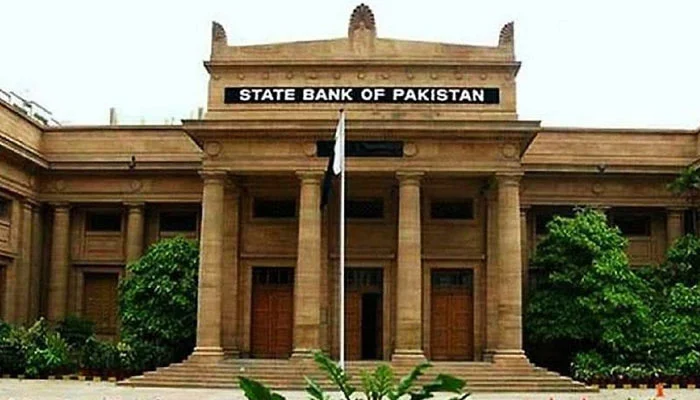
The State Bank of Pakistan (SBP) on Monday decided to maintain its key policy interest rate at 10.5%, signalling a cautious approach as the country navigates economic recovery alongside rising global uncertainties.
In a brief statement issued after its latest meeting, the central bank said the Monetary Policy Committee (MPC) had decided to keep the benchmark rate unchanged.
“The Monetary Policy Committee has decided to keep the policy rate unchanged at 10.5%,” the SBP said on its official website, adding that a comprehensive statement explaining the decision would be released later.
The decision comes after a period of aggressive monetary easing over the past year, as inflation pressures in Pakistan eased significantly from historic highs.
Major rate cuts since 2024
Since mid-2024, the central bank has reduced the policy rate by a cumulative 1,150 basis points, bringing it down from a record 22% in 2023.
The rate cuts were introduced gradually as inflation, which had surged to multi-decade highs during the economic crisis, began to moderate.
Economic analysts say the easing cycle helped support business activity and domestic demand, which had been heavily constrained by tight monetary conditions.
However, the SBP’s decision to pause further cuts reflects growing concerns about external risks that could once again fuel inflationary pressures.
Global tensions raise oil price risks
One of the key risks highlighted by economists is the escalating geopolitical tension in the Middle East, particularly concerns over disruptions to global oil supply routes.
Shipping through the Strait of Hormuz one of the world’s most critical energy transit corridors could be affected if regional conflict intensifies.
Any disruption to the strategic waterway could significantly raise global oil prices.
For Pakistan, which imports the majority of its energy requirements, higher global oil prices translate directly into increased domestic inflation.
Energy costs influence transportation, electricity production, and manufacturing, making the country’s inflation rate highly sensitive to changes in international fuel prices.
Fuel price hike adds pressure
The SBP’s policy decision also comes shortly after the federal government increased domestic fuel prices.
On Friday, the Government of Pakistan raised consumer prices for petrol and diesel by nearly 20%, citing rising international oil prices linked to the regional conflict involving Iran.
Under the revised rates, petrol prices increased to Rs321.17 per litre, up from Rs266.17, while diesel prices rose to Rs335.86 per litre, compared with the previous rate of Rs280.86 per litre.
The increase is expected to place additional pressure on inflation in the coming months, as higher fuel costs typically lead to increased transportation and production expenses across multiple sectors.
Growth outlook remains positive
Despite these challenges, the central bank remains cautiously optimistic about the country’s economic growth prospects.
SBP Governor Jameel Ahmad has previously projected that Pakistan’s economy could expand between 3.75% and 4.75% in the fiscal year 2026.
According to the central bank, stronger domestic demand and the earlier reduction in interest rates are expected to support economic activity.
However, officials have also warned that inflation could temporarily rise above the central bank’s target range during the current year.
The SBP aims to maintain inflation between 5% and 7%, though recent developments in global energy markets may push prices above that range in the short term.
Economists say the central bank’s decision to keep interest rates steady reflects a careful balancing act between supporting growth and preventing inflation from accelerating again.
IMF programme influence
Pakistan’s monetary policy decisions are also closely linked to the country’s ongoing economic reform programme with the International Monetary Fund (IMF).
The country is currently implementing a $7 billion IMF programme, which includes commitments to maintain disciplined fiscal and monetary policies.
Under the agreement, the IMF has urged Pakistani authorities to keep monetary policy tight and data-driven in order to stabilise inflation expectations and strengthen the country’s external financial position.
Maintaining adequate foreign exchange reserves and controlling inflation are key conditions of the programme.
Policy analysts say the SBP’s cautious stance aligns with these commitments.
Market expectations
Financial markets had widely expected the central bank to hold interest rates steady in the current review.
Many economists believe the SBP may wait to observe the impact of recent fuel price increases and global energy market developments before making further policy adjustments.
“If oil prices continue rising due to geopolitical tensions, the central bank may need to remain cautious about further rate cuts,” said a senior economic analyst in Islamabad.
Others argue that if inflation continues to decline over the next few months, the SBP could resume its easing cycle later in the year to support economic growth.
Inflation outlook
Pakistan’s inflation rate has been gradually declining since reaching record levels during the economic crisis of 2023.
The easing was largely driven by stabilisation in the exchange rate, improved supply conditions, and tighter monetary policies implemented earlier.
However, economists warn that rising fuel prices and global geopolitical uncertainty could slow the pace of disinflation.
Because fuel prices influence transportation costs and the price of essential goods, any sustained increase in global oil prices could quickly feed into domestic inflation.
Balancing growth and stability
The SBP now faces the challenge of balancing two competing objectives: supporting economic recovery while ensuring that inflation remains under control.
Maintaining the policy rate at 10.5% suggests the central bank is adopting a wait-and-see approach while monitoring global developments.
In the coming months, policymakers will closely track inflation data, energy prices, and international economic conditions before deciding whether to resume rate cuts or maintain current monetary settings.
For businesses and consumers, the central bank’s decision offers temporary stability in borrowing costs but also signals that economic uncertainty remains a key concern.
As global energy markets continue to react to geopolitical tensions, Pakistan’s economic outlook will remain closely tied to developments beyond its borders.
About Author