Iran confirms Mojtaba Khamenei as Supreme Leader, drawing cautious US response and sharp Israeli warning
By Sabeeh Zanair :
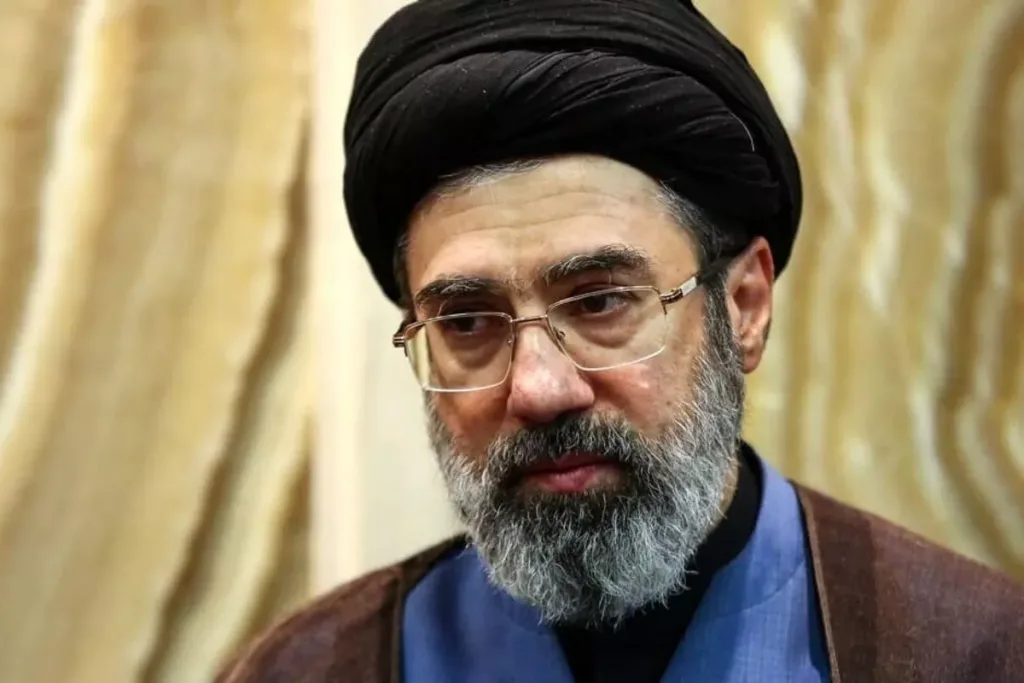
Iran has confirmed the selection of Mojtaba Khamenei as the country’s new Supreme Leader, a development that has triggered contrasting reactions from United States and Israel, reflecting differing strategies toward Tehran’s evolving leadership.
The decision marks a significant moment in Iran’s political trajectory following the era dominated by the late Supreme Leader Ali Khamenei. Analysts say the appointment of Mojtaba Khamenei, widely regarded as a powerful insider within Iran’s clerical and security establishment, signals continuity rather than change in the country’s strategic direction.
While Washington has responded with measured caution, Israeli officials have adopted a far more confrontational tone, warning that Iran’s leadership will remain under direct scrutiny and potential military pressure.
Washington’s cautious response
In the United States, President Donald Trump has avoided directly condemning Mojtaba Khamenei’s succession, instead focusing his public remarks on broader geopolitical implications such as global stability and energy markets.
Shortly after Tehran’s announcement, Trump posted on the social media platform Truth Social, suggesting that temporary increases in oil prices were a relatively small price to pay for maintaining global security and stability.
The comment appeared aimed at calming concerns about potential shocks to international energy markets following the leadership change in Tehran.
However, in an interview with ABC News earlier on Sunday, Trump hinted that the next Iranian leader would require a degree of acceptance from Washington, suggesting the United States maintains influence over what it considers acceptable political outcomes in the region.
While he described Mojtaba Khamenei’s expected appointment as troubling, Trump refrained from issuing direct military threats against Iran.
Analysts say the measured tone reflects a calculated strategy by Washington to balance multiple priorities simultaneously.
The United States is currently attempting to manage domestic political messaging, reassure regional allies, stabilize global oil markets, and prevent an already volatile Middle East situation from escalating into a full-scale war.
Foreign policy experts note that a direct confrontation with Iran at this stage could further destabilize energy markets and risk widening regional conflict.
Instead, Washington appears to be pursuing a strategy focused on maintaining diplomatic leverage while avoiding overt military escalation.
Israel’s direct warning
Israel, by contrast, has responded far more aggressively to Tehran’s leadership transition.
Israeli Defense Minister Israel Katz warned that any new leader connected to Iran’s ruling elite would be considered a potential military target.
Speaking shortly after the announcement, Katz said that individuals associated with Iran’s leadership would be held personally accountable for actions taken against Israel and its allies.
“Any leader who continues the hostile policies of Tehran’s regime will be viewed as an unequivocal target for elimination,” he warned.
The statement reflects Israel’s long-standing doctrine of preemptive and targeted military action against figures it believes pose direct security threats.
The Israel Defense Forces also emphasized that successors to Iran’s leadership would be held responsible for decisions made by the country’s military and proxy forces.
Even before Mojtaba Khamenei’s formal confirmation, Israel had intensified military operations targeting Iranian-linked infrastructure and allied groups across the region.
Observers say these actions demonstrate Jerusalem’s willingness to apply pressure not only on Iran’s policies but also on individuals within the country’s power structure.
Continuity within Iran’s power structure
Mojtaba Khamenei has long been regarded as a key figure within Iran’s political and security establishment.
He is widely believed to maintain close ties with the Islamic Revolutionary Guard Corps, the powerful military organization that plays a central role in shaping Iran’s regional strategy and domestic security policies.
Many analysts view his appointment as a sign that Iran intends to maintain the ideological and strategic course established by his father.
Under Ali Khamenei’s leadership, Iran pursued a policy combining regional influence, strategic deterrence, and ideological resistance to Western pressure.
Mojtaba Khamenei’s elevation suggests that this framework will remain largely intact.
Regional analysts say the decision reinforces the dominance of Iran’s clerical establishment and security institutions, which together form the core of the country’s governing system.
Domestic expectations and frustrations
Within Iran, the leadership transition has also sparked debate among political observers and segments of the public.
Some Iranians had hoped that the end of Ali Khamenei’s long tenure might open the door to structural political reforms.
In particular, reform-minded groups had advocated for a system that would place greater authority in the hands of elected officials rather than clerical figures.
However, the selection of Mojtaba Khamenei appears to signal that the existing power structure will remain firmly in place.
Experts say the ongoing regional tensions and external pressure from Western powers have strengthened the position of hardline factions within Iran’s leadership.
In such an environment, the ruling establishment has prioritized stability and continuity over experimentation with political reforms.
Diplomatic challenges ahead
For Washington and its allies, the appointment of Mojtaba Khamenei presents significant diplomatic challenges.
A leader closely associated with Iran’s security apparatus and ideological establishment is unlikely to pursue major policy shifts toward reconciliation with the West in the near future.
Moreover, the broader geopolitical context complicates any potential diplomatic engagement.
The Middle East is currently experiencing heightened tensions involving multiple regional actors, increasing the risk of miscalculation or escalation.
Policy experts note that Mojtaba Khamenei’s personal and political background may also influence his approach to international relations.
Reports indicate that members of his family have been affected by previous US and Israeli military actions targeting Iranian interests in the region.
Such experiences could further harden Tehran’s stance toward Western governments.
Strategic calculations in Washington
The cautious tone adopted by the United States suggests a deliberate effort to keep diplomatic options open while maintaining pressure on Iran.
Washington’s strategy appears focused on preserving its influence through economic sanctions, diplomatic coordination with allies, and careful management of regional security dynamics.
At the same time, US policymakers are seeking to prevent energy market disruptions that could impact the global economy.
Oil prices often react sharply to political developments in Iran, which remains a key player in the international energy landscape.
By framing the leadership transition primarily in terms of stability and energy markets, the White House appears intent on reassuring investors and international partners.
A volatile regional environment
The leadership transition in Tehran is taking place against the backdrop of a broader geopolitical crisis involving multiple Middle Eastern actors.
Recent military confrontations and proxy conflicts have already heightened tensions across the region.
Israel’s aggressive rhetoric and continued military operations signal that it intends to maintain strong pressure on Iran regardless of the leadership change.
Meanwhile, the United States is attempting to balance deterrence with diplomacy in order to prevent the situation from spiraling into open warfare.
Analysts say the coming months will be crucial in determining how Mojtaba Khamenei shapes Iran’s foreign and security policies.
Looking ahead
While the appointment of Mojtaba Khamenei consolidates the authority of Iran’s existing power structure, it also introduces new uncertainties into regional politics.
The divergent responses from Washington and Jerusalem highlight the complexity of international reactions to Tehran’s leadership transition.
For now, the United States appears committed to a cautious strategy aimed at managing risks without escalating tensions.
Israel, on the other hand, continues to signal that it is prepared to confront Iran’s leadership directly if it perceives a threat to its security.
As the new Supreme Leader begins his tenure, the world will be closely watching how Iran navigates a period of intense geopolitical pressure and shifting regional alliances.
About Author