Pakistan Railways Raises Fares After Diesel Price Surge
By Shahzad Paracha :
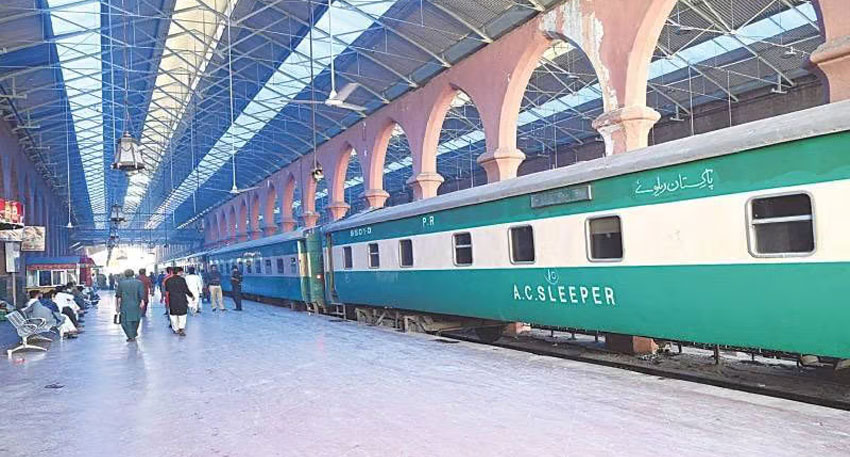
Pakistan Railways has announced an increase in fares for both passenger and freight services following a sharp rise in diesel prices, a move expected to further strain household budgets across the country.
The railways department confirmed on Saturday that fares for economy-class passenger trains will rise by 5 per cent, while air-conditioned classes will see a 10 per cent increase. Freight train charges, meanwhile, will rise by 20 per cent, according to a spokesperson for the national rail operator.
The revised fares will come into effect from March 9 for all passenger and freight services. However, passengers who have already booked tickets will not be affected by the new rates.
“The increase in train fares was inevitable following the rise in diesel prices,” the spokesperson said, adding that the additional operational cost of passenger train services would largely be absorbed by Pakistan Railways itself.
Fuel price surge triggers transport cost hike
The decision follows a steep increase in fuel prices announced a day earlier by the Government of Pakistan.
Authorities raised the price of diesel and petrol by Rs55 per litre, representing a jump of nearly 20 per cent. Officials said the increase is linked to global market volatility caused by the escalating conflict involving the United States, Israel and Iran, which has disrupted oil supply chains and pushed crude prices to a two-year high.
The railways sector, which relies heavily on diesel-powered locomotives, has been particularly affected by the sudden rise in fuel costs.
Public feels the impact
The surge in petroleum prices has already begun to ripple across local markets, pushing up transport fares and the cost of essential goods.
Residents in several cities reported disputes at petrol pumps, where attendants were refusing to dispense fuel worth less than one litre.
According to motorists, many customers attempted to purchase petrol worth Rs150 or Rs200, but pump staff declined, explaining that fuel is dispensed according to fixed nozzle rates. The situation has led to frequent arguments between customers and pump operators.
Food prices rise as transport costs jump
The increase in fuel prices has also raised the cost of transporting fruits, vegetables and other everyday items.
Shopkeepers said the cost of bringing produce to markets has risen sharply.
“Earlier, transporting fruits and vegetables cost around Rs1,000 per trip, but now it has increased to between Rs2,500 and Rs3,000,” one vendor said.
As a result, prices of fresh produce and other basic goods have begun climbing in retail markets, placing additional pressure on consumers already struggling with inflation.
School transport and daily travel affected
Parents have also reported increases in the cost of school transport services.
Drivers providing pick-and-drop services for schoolchildren have raised their monthly fees, citing the higher price of petrol.
Residents said the rising costs are ultimately being passed on to ordinary citizens.
“The entire burden is being shifted to the public,” one resident said.
Citizens voice concern
Many citizens say the fuel price increase has made it increasingly difficult to manage household budgets.
Speaking to Media, residents including Amir, Babar, Intikhab, Zahoor and Rashid said salaries had remained stagnant while living costs continued to climb.
Amir said he previously purchased petrol worth Rs1,000, which would last around 15 days.
“Now the same amount does not last even four days,” he said.
Rashid, who works in loading and unloading goods, said employment opportunities were already limited and transport costs were becoming unaffordable.
“Work is scarce, and now transport fares are rising. How much more can people pay?” he asked.
Growing pressure on households
The latest fuel price increase has intensified concerns about the cost of living in Pakistan, where inflation has already affected food, energy and transport expenses.
Economists warn that rising global oil prices could trigger further increases in fuel costs in the coming weeks, potentially pushing up transport fares and commodity prices even more.
For many households, the latest fare hike by Pakistan Railways is another sign of the economic pressure being felt across the country as global conflicts and market volatility continue to influence domestic prices.
About Author