Iran Mourns as Supreme Leader’s Family Members Killed in US-Israeli Strikes, Regional Tensions Soar
By Tahir Shah :
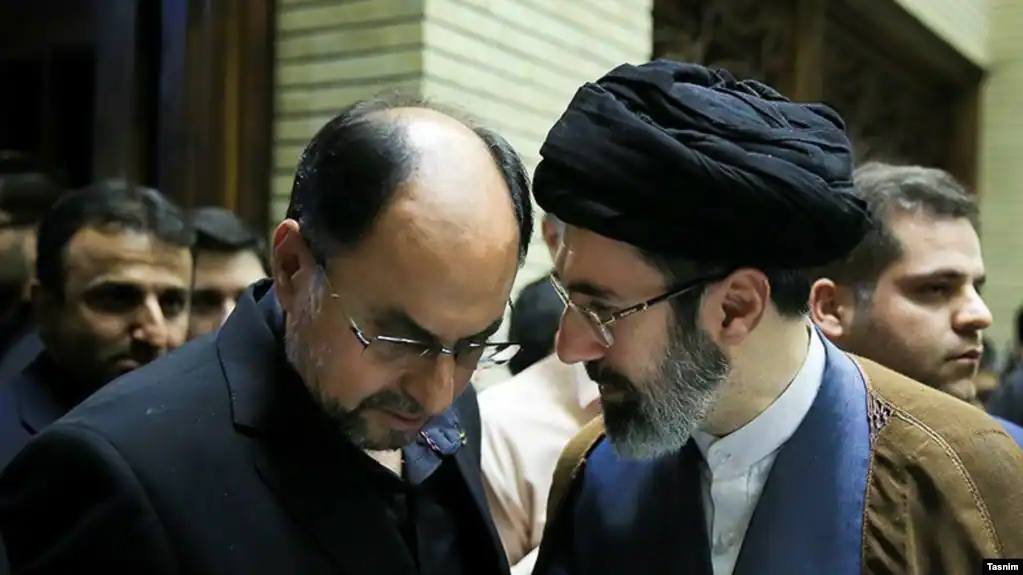
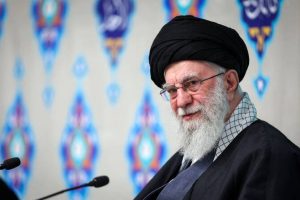
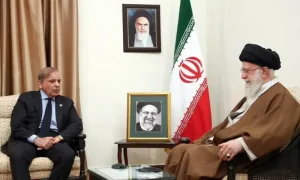
The spokesperson for the Iranian Embassy in Islamabad has confirmed that members of Supreme Leader Ayatollah Ali Khamenei’s family were killed in the recent American and Israeli strikes on Tehran, as the Middle East teeters on the brink of a wider regional conflagration.
According to the spokesperson, Zahra Haddad Adel, wife of Mojtaba Khamenei and daughter-in-law of the Supreme Leader, was among those killed in the attacks. The Supreme Leader’s son-in-law also lost his life in the same strikes.
Israeli media had earlier claimed that Mojtaba Khamenei was also targeted. However, Iranian officials have not formally confirmed or denied this report.
Wider Family Casualties Confirmed
Iranian state-affiliated media outlets have reported that multiple family members of the Supreme Leader were killed in the bombardment. Fars News Agency and other Iranian outlets stated: “After establishing contact with informed sources in the Supreme Leader’s household, the news of the martyrdom of the daughter, son-in-law, and granddaughter of the Revolutionary Leader has unfortunately been confirmed”.
The strikes targeted the Supreme Leader’s compound in central Tehran, with at least four buildings hit by bombs. The compound was reportedly destroyed in what Israeli Prime Minister Benjamin Netanyahu described as Israel’s largest-ever aerial campaign against Iran, involving approximately 200 fighter jets.
Uncertainty Over Supreme Leader’s Fate
While US President Donald Trump has declared on Truth Social that Khamenei himself is dead, calling it “justice for the people of Iran” and “for all great Americans,” Iranian authorities have not officially confirmed or denied the Supreme Leader’s fate.
A post on Khamenei’s official X account suggested he remains alive, but Iranian state media has reported that a 40-day national mourning period has been declared and seven public holidays announced. The Fars news agency reported that Khamenei “was carrying out his assigned duties and was present at his workplace” at the time of the attack.
A senior Israeli official earlier told Reuters that Khamenei’s body had been recovered following the aerial assault. Israeli media reported that the Supreme Leader had been in an underground bunker when approximately 30 bombs were dropped on his compound, and he was reportedly killed along with dozens of associates.
Mourning Spreads Across Iran
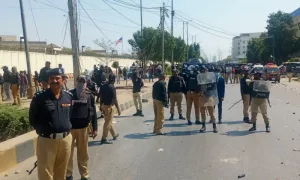
Following the confirmation of family casualties, mourners have begun gathering in Revolution Square in Tehran and at the shrine of Imam Reza in Mashhad. Footage shared by Press TV showed supporters crying, wailing, and collapsing in grief.
However, reports have also emerged of celebrations and fireworks in parts of Tehran, reflecting deep divisions within Iranian society. Khamenei and his security forces had been blamed by critics for ordering crackdowns on protesters in recent weeks.
Regional Retaliation and Further Strikes
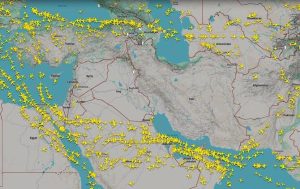
Iran has launched retaliatory missile and drone attacks toward Israeli territory and Gulf states hosting US bases. The Israel Defense Forces confirmed multiple waves of missiles fired from Iran, activating defense systems across the country. Sirens blared across Israeli cities, with residents instructed to enter protected shelters.
In the Gulf, explosions were reported across multiple states. The UAE confirmed casualties, with at least one person killed at Abu Dhabi’s Zayed International Airport and four injured at Dubai International Airport. Falling debris earlier killed a Pakistani national in Abu Dhabi.
Qatar’s Al Udeid Air Base, the largest US military facility in the Middle East, was targeted, though Qatari defense systems reportedly intercepted most of the 65 missiles and 12 drones launched toward the Gulf state.
Bahrain confirmed a service center of the US Fifth Fleet was struck, and in Kuwait, three soldiers and 12 other people were wounded when a drone struck the international airport and a base housing US personnel.
Israeli Strikes Continue
Israeli officials have described the attacks as initial operations and claimed that around 30 important Iranian personalities were targeted. The Israeli military stated it struck more than 30 sites across western and central Iran, including ballistic missile arrays, air defense systems, and military headquarters.
Israel’s Home Front Command has issued mobile alerts, instructing residents in affected areas to enter protected shelters and remain there until further notice.
International Response
The UN Security Council held an emergency session, with Secretary-General Antonio Guterres warning of a “grave threat to international peace and security.” He urged all sides to “act responsibly and together to pull the region and our world back from the brink”.
Pakistan’s representative at the UN, Asim Iftikhar Ahmad, condemned the strikes on Gulf states and expressed condolences for the Pakistani national killed in the UAE.
Iraqi cleric Muqtada al-Sadr offered condolences and announced three days of mourning in Iraq, with red lights—symbolizing revolution—lit on holy shrines across the country.
What Comes Next
Analysts say this incident may push the region into a new and dangerous phase, with possible global consequences if tensions continue to rise. Emotions in Iran are running high, and pressure is mounting on Tehran to respond firmly.
US officials have indicated that strikes are expected to continue over several days. President Trump has warned that heavy bombing “will continue, uninterrupted throughout the week or, as long as necessary” to achieve “PEACE THROUGHOUT THE MIDDLE EAST AND, INDEED, THE WORLD!”.
With missiles still being exchanged and diplomatic channels strained, fears are mounting that the conflict could spiral into a broader Middle East war with potentially catastrophic consequences for the entire region.
About Author