US and Israel Launch Coordinated Military Strikes Against Iran, Triggering Regional Crisis
By Tahir Shah :
The United States and Israel have launched joint military operations against Iran, plunging the Middle East into a new confrontation and effectively ending diplomatic efforts to resolve Tehran’s nuclear dispute with Western powers.
US President Donald Trump confirmed the strikes Saturday, announcing in a video statement that American forces had initiated “major combat operations in Iran.” He stated the objective was defending the American people by eliminating what he described as imminent threats from the Iranian regime.
Israeli Defence Minister Israel Katz confirmed his country’s involvement, stating that Israel had launched a pre-emptive attack to remove threats against the state. He declared a special and immediate state of emergency throughout Israel. An Israeli defence official told Reuters that the operation had been coordinated with Washington for months, with the launch date determined weeks ago.
Details of the Attack
According to US officials, the strikes are being conducted by air and sea in what is expected to be a multi-day campaign. One American official described the operation as significant in scale.
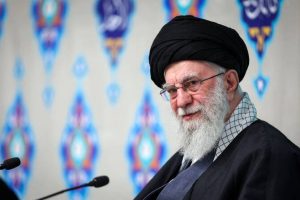
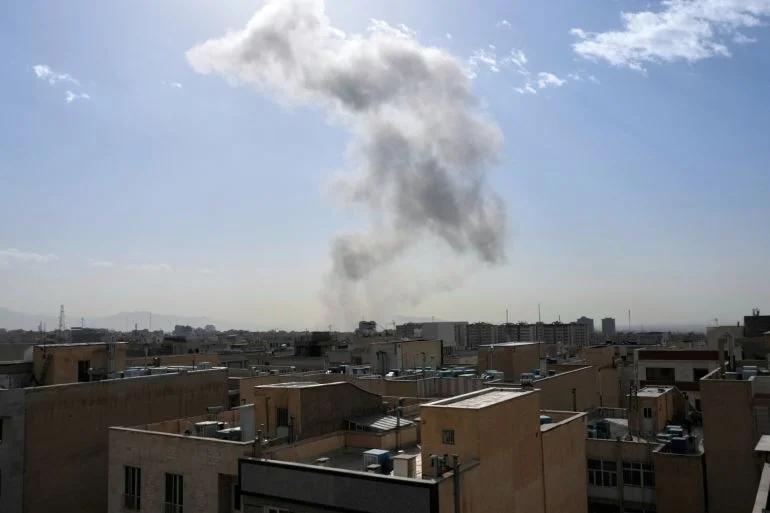
Multiple explosions have been reported across Iran, including in the capital Tehran, as well as Isfahan, Qom, Karaj, and Kermanshah. Iranian news agency Fars reported seven missile impacts in Tehran districts where the residence of Supreme Leader Ayatollah Ali Khamenei is located.
An Iranian official confirmed to Reuters that Khamenei was not in Tehran and had been moved to a secure location. Thick smoke has been observed rising from areas containing key government installations.
The head of Iran’s national security commission warned on social media that Tehran would retaliate, stating that the path initiated by the attackers was no longer within their control.
Airspace Closures and International Response
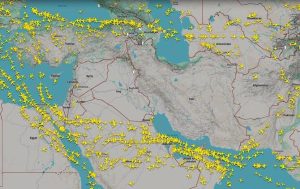
Iran has closed its airspace for at least six hours, according to a Civil Aviation Organisation spokesperson. Israel has also shut its airspace to civilian flights, with airport authorities advising citizens not to travel to any airports.
Iraq’s transport ministry announced the closure of its national airspace, while Kuwait suspended all flights to Iran until further notice. Russia’s transport ministry confirmed that Russian carriers had suspended flights to both Iran and Israel, with alternative routes prepared for flights to Persian Gulf countries.
The US embassies in Qatar and Bahrain implemented shelter-in-place orders for all personnel and advised American citizens to do the same.
Pakistan Issues Travel Advisory
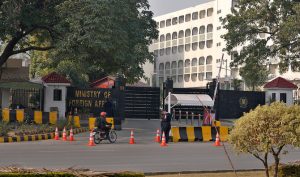
The Foreign Office issued an immediate travel advisory for Pakistani nationals in Iran, urging them to avoid all non-mandatory travel to the country. Pakistani citizens currently in Iran are advised to exercise caution, remain vigilant, minimise non-essential travel, and maintain regular contact with Pakistani missions. Emergency contact details for embassies in Tehran, Zahidan, and Mashhad have been provided.
Separate Strikes on Lebanon
Israel’s military also announced strikes on what it described as Hezbollah infrastructure in southern Lebanon, claiming the action responded to violations of ceasefire understandings. Israel and Hezbollah agreed to a ceasefire in November 2024, but Israel has continued regular strikes, asserting it is enforcing provisions against the group rearming.
Diplomatic Efforts Collapse
The strikes follow renewed US-Iran negotiations in February aimed at resolving the long-standing dispute through diplomacy. However, American and Iranian officials held mediated talks in Switzerland on Thursday that ended without progress.
Trump had expressed dissatisfaction with the talks Friday morning, stating he would prefer not to use force but acknowledging that sometimes force becomes necessary.
Israel had insisted that any US agreement with Iran must include dismantling Tehran’s nuclear infrastructure, not merely halting enrichment, and lobbied Washington to include restrictions on Iran’s missile programme. Iran maintained it was prepared to discuss nuclear curbs in exchange for sanctions relief but ruled out linking the issue to missiles.
Western powers have long accused Iran of secretly seeking nuclear weapons, a charge Tehran denies, insisting its nuclear programme serves only civilian purposes such as energy production.
Context of Escalation
Saturday’s attack comes approximately eight months after American forces bombed three Iranian nuclear facilities during Israel’s 12-day war with Iran in June 2025. Those strikes marked the most direct US military action ever against the Islamic Republic. Iran retaliated by launching missiles toward the US Al Udeid air base in Qatar, the largest in the Middle East.
A preliminary classified US report later found that Iran’s nuclear programme had been set back by only a few months, with much of its uranium moved before the strikes.
Regional Stability at Risk
Gulf States hosting American bases fear the strikes could provoke retaliation against them. Experts warn that an attack on Iran could draw the United States into protracted conflict, as Iran’s leadership commands extensive military capabilities and a network of regional proxy forces.
Iran possesses one of the largest missile stockpiles in the Middle East, with medium-range ballistic missiles capable of traveling more than 1,200 miles, placing American bases across the region within range.
Israeli opposition leader Yair Lapid called for national unity, stating that in such moments the country stands together with no political divisions.
The situation remains fluid, with multiple Iranian news agencies reportedly hacked or offline. Authorities have urged citizens to stay updated through official channels as Pakistan’s Foreign Office continues to monitor developments closely.
About Author