The Other Side of the Digital Divide: Why Pakistani Women’s Connectivity is a Rights Issue
By Tanveer Ahmed :
There is a moment in every conversation about Pakistan’s digital future when the tone shifts. Someone mentions the numbers eight million new women internet users, the gender gap dropping from 38 to 25 percent and the room fills with cautious optimism . And then someone else asks the question that hangs in the air like smoke: access to what, exactly?
Because connectivity without rights isn’t progress. It’s just a different kind of exclusion.
The Numbers Game
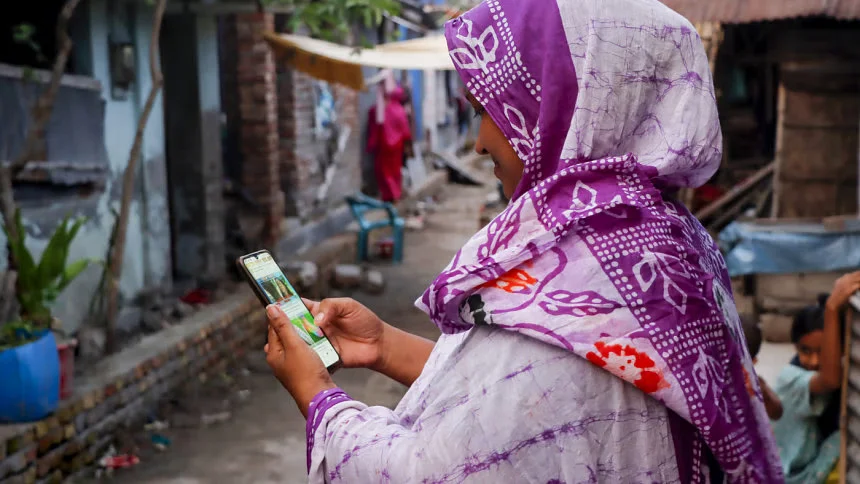
Let me acknowledge what’s real. Pakistan has made genuine strides. The GSMA Mobile Gender Gap Report 2025 confirmed that for the first time since 2021, the mobile internet gender gap narrowed substantially from 38 percent to 25 percent in a single year. Eight million women began using mobile internet, most of them in rural areas . The Benazir Income Support Programme is rolling out digital wallets to ten million women, many of whom are interacting with formal finance for the first time in their lives.
These are not small things. They matter. A woman who controls her own money, who doesn’t have to wait for a male relative to collect her stipend, who can receive a payment directly on a phone registered in her name that woman has moved one small step closer to economic autonomy.
But numbers can also deceive.
The Architecture of Exclusion
The Digital Nation Act, 2025, was sold as Pakistan’s grand vision for digital governance. It creates the Pakistan Digital Authority, mandates data exchange, and promises efficiency. What it doesn’t do, according to lawyer and researcher Waiza Rafique, is recognise women as a distinct category of rights holders in digital ecosystems.
There are no mandated gender impact assessments. No explicit safeguards against misuse of personal data. No recognition that women face higher risks of surveillance, blackmail, and technology-facilitated violence. In a country where women already navigate harassment online and monitoring offline, a digital framework that ignores these realities isn’t neutral it’s actively harmful.
Pakistan is a signatory to CEDAW, which obligates the state to address structural conditions that disproportionately disadvantage women. Yet the current digital governance framework does not require consent-based data processing, does not mandate protections against algorithmic bias, and does not create enforceable user rights around privacy, access, or correction.
When a woman’s biometric data is collected for a digital wallet, where does it go? Who can access it? What happens if it’s misused? These questions don’t have answers because the legal architecture doesn’t require them.
The Two-Tier Internet
The Asian Development Bank’s recent report on Pakistan’s digital ecosystem paints a sobering picture. While 80 percent of the population has access to mobile internet, actual usage remains low due to affordability and gender disparities. Only 53 percent of women own mobile phones compared to 86 percent of men, and internet access stands at just 33 percent for women.
But even among those who are connected, the quality of that connection matters. The same report notes that Pakistan ranks lowest in 4G coverage in the region and is unprepared for 5G rollout. Fixed broadband access is barely 1.3 percent. Fiber optic penetration remains minimal.
This creates a two-tier digital experience one for those who can afford high-quality, reliable connectivity, and another for those who make do with patchy mobile data on affordable smartphones. Guess which tier women disproportionately occupy.
The Autonomy Question
The BISP digital wallet initiative is genuinely innovative. As of December 2025, more than 4.2 million women had received free SIMs registered in their own names. By mid-2026, quarterly stipends will transfer directly into these wallets, reducing reliance on intermediaries and giving women direct control over their money.
But here’s what keeps me awake: a SIM card and a wallet don’t guarantee autonomy. They require a phone. They require digital literacy. They require networks that work and agents who don’t exploit. They require legal frameworks that protect, not just facilitate.
The International Monetary Fund has noted that well-targeted, digitally delivered cash transfers can strengthen social safety nets. True. But “well-targeted” and “digitally delivered” are technical terms. “Dignity” and “autonomy” are human ones. The success of this initiative, as journalist Aoun Sahi notes, may ultimately be measured not in transactions but in whether women feel that the money meant for them truly belongs to them.
What Rights-Based Connectivity Looks Like
Other countries offer reference points. The EU’s General Data Protection Regulation classifies biometric data as “special category data,” subject to strict limitations and enhanced safeguards. India’s Digital Personal Data Protection Act, despite its limitations, introduces notice and purpose requirements that constrain arbitrary data use. Pakistan’s framework lacks comparable protections.
A rights-based approach to women’s connectivity would include: explicit safeguards against data misuse, with religious belief and gender identity treated as sensitive categories requiring heightened protection; mandated gender impact assessments for all major digital initiatives; independent oversight of data governance, not regulatory capture by executive authority; enforceable user rights the ability to access, correct, and erase personal data; and digital literacy programs that go beyond basic navigation to genuine understanding of privacy, security, and consent.
Federal Minister for IT Shaza Fatima Khawaja has said repeatedly that “when a woman is empowered, the positive impact extends to her entire family”. She’s right. But empowerment requires more than access. It requires agency. And agency requires rights.
In the final analysis
Pakistan has made undeniable progress. The gender gap is narrowing. Women are connecting. Digital wallets are reaching millions. These are victories worth celebrating.
But connectivity without rights is like a library without books infrastructure without purpose. If women are online but exposed to harassment without recourse, if their data is collected without protection, if their digital presence is monitored without accountability, then connection becomes another form of vulnerability.
The next phase of Pakistan’s digital transformation must be about more than numbers. It must be about architecture the legal and regulatory frameworks that determine whether connectivity liberates or constrains.
Because the question isn’t just how many women are online. It’s whether, when they get there, they find a space that respects their dignity, protects their privacy, and amplifies their voice.
That’s not a technical question. It’s a rights question. And Pakistan’s answer will determine whether the digital future includes all of its citizens, or only those who already hold power.
About Author