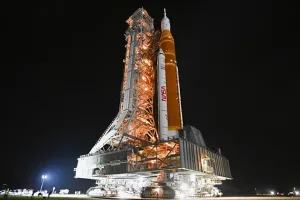
Historic Crewed Moon Mission Faces Delay Following Fuel Leak Problems
By Web Desk :
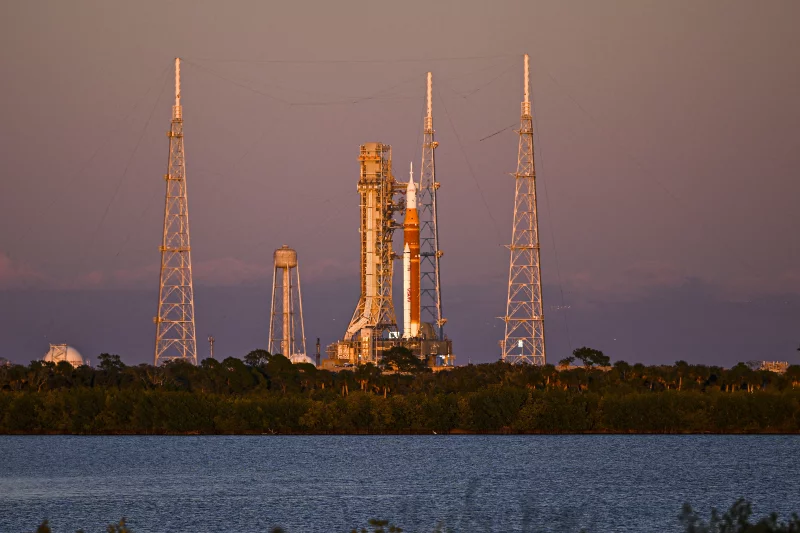
NASA has pushed back the earliest possible launch of its landmark Artemis II mission to March, delaying humanity’s first crewed journey beyond Earth orbit in more than 50 years.
The space agency announced the revised timeline after completing a critical wet dress rehearsal of the Space Launch System (SLS), the massive rocket that will carry four astronauts around the Moon. The mission had initially been expected to lift off in early February.
NASA officials said several technical issues emerged during the test, which began later than planned due to cold weather. Engineers faced hydrogen fuel leaks while loading the rocket with cryogenic propellant, forcing teams to halt the simulated countdown and gather additional data.
NASA Administrator Jared Isaacman said the challenges were anticipated given the long gap between SLS launches.
“These tests exist to uncover problems before flight,” Isaacman wrote on X. “It’s exactly why we run rehearsals at this stage.”
During a press briefing, agency leaders said they are still evaluating whether the rocket must be moved back to the Vehicle Assembly Building for further maintenance. If the launch slips beyond March, certain batteries on the upper stage would need replacement, which would require a rollback.
Once cleared for flight, Artemis II will carry NASA astronauts Reid Wiseman, Victor Glover, and Christina Koch, along with Canadian astronaut Jeremy Hansen, on a 10-day mission looping around the far side of the Moon. The journey is expected to set a new record for the greatest distance humans have ever traveled from Earth.
The crew had been in quarantine since January 21 but will now return home until a new launch date is confirmed. NASA said astronauts will re-enter isolation roughly two weeks before the next attempt.
The agency previously identified March 6, 7, 8, 9, and 11 as possible launch opportunities.
The wet dress rehearsal involved filling the rocket with more than 700,000 gallons of super-cooled liquid hydrogen and oxygen and running a full countdown simulation. Officials described the test as the first true opportunity to see how the complete system performs on the launchpad.
However, hydrogen leaks — a known issue with the SLS due to the fuel’s extremely small molecular size — disrupted the process. Additional delays occurred when technicians encountered problems with a venting valve while preparing the crew capsule.
Ultimately, the automated countdown stopped with about five minutes remaining due to a renewed spike in hydrogen leakage.
NASA said another rehearsal will be conducted to complete the remaining test objectives before an official launch date is announced.
Despite the setbacks, agency leaders stressed that uncovering issues now is far preferable to facing them during an actual crewed mission, as Artemis II represents a major milestone in NASA’s return to deep-space exploration.
About Author